
How Much Does Attic Air Sealing Cost in Whittier?
Attic Air Sealing services in Whittier, CA typically run between $950 and $2,800 for a single-family home, with most jobs we complete landing between $1,200 and $1,900 depending on attic square footage, accessibility, and how many penetrations need to be addressed. That range covers labor, materials (closed-cell foam, caulk, and rigid foam board where needed), and the blower-door test – a pressurization reading that shows, in one number, how much conditioned air your home is losing before and after the work. Most Whittier homes we’ve sealed since 2016 show a 30-to-50 percent reduction in air changes per hour after a complete attic air-sealing scope.
Attic Air Sealing Cost Breakdown (2026)
The prices below reflect actual jobs completed in the Whittier market. They are not national averages pulled from an aggregator. Square footage is the attic floor area being sealed, not the living space below it.
| Scope of Work | Typical Attic Size | Price Range (2026) |
|---|---|---|
| Basic air sealing (top plates, obvious penetrations) | 600-900 sq ft | $950 - $1,350 |
| Standard air sealing (top plates, can lights, plumbing/HVAC boots, attic hatch) | 900-1,400 sq ft | $1,350 - $1,900 |
| Full envelope air sealing (all of the above + knee walls, dropped soffits, chase sealing) | 1,400-2,200 sq ft | $1,900 - $2,800 |
| Add-on: Before-and-after blower-door test | Any size | Included on applicable jobs |
| Add-on: Attic hatch insulation and weatherstrip upgrade | Per hatch | $85 - $175 |
| Add-on: Can light (recessed light) air sealing caps | Per fixture | $18 - $35 per can |
| Add-on: Plumbing and HVAC boot sealing only | Per penetration | $12 - $28 per penetration |
A few things push a Whittier job toward the higher end of those ranges. Homes built between 1955 and 1975 – which make up a significant share of the housing stock in neighborhoods like Greenleaf Village, Rancho Whittier, and Murphy Ranch – often have open-web trusses or framed attics with a lot of interior partition wall top plates that need to be individually foam-sealed. Those take more time. Homes with original recessed lighting (not IC-rated) also add cost because each can light gets an airtight cap before it gets covered with insulation. On the lower end, a newer tract home with a clean, accessible attic floor and few penetrations can come in well under $1,200.
One number worth knowing: California’s Title 24 residential energy code requires that air barriers be installed wherever insulation is added to an existing attic – so if a contractor is quoting you insulation without air sealing, they may not be quoting you a code-compliant job. We have never installed insulation over an unsealed attic floor. That is not a sales point; it is the order of operations.
What Affects Attic Air Sealing Pricing in Whittier
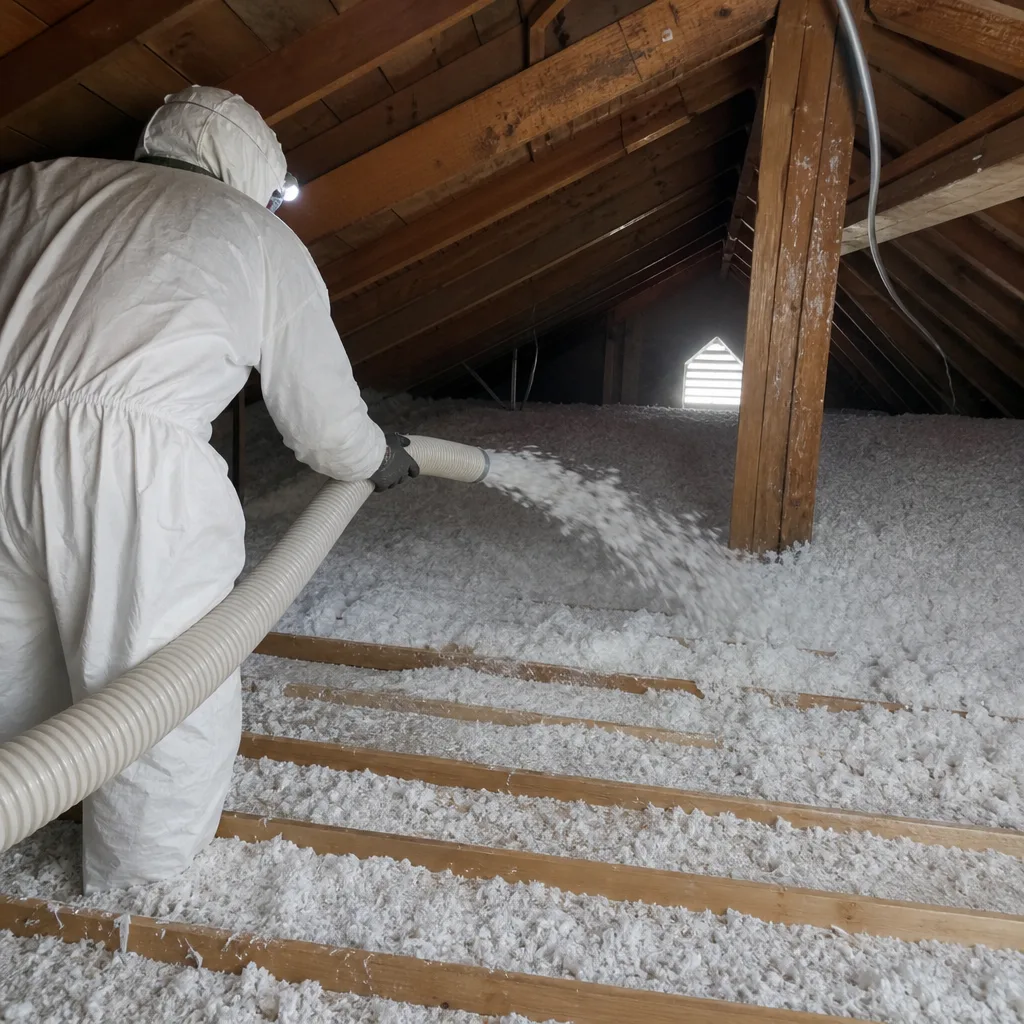
- Attic square footage and height: A low-pitch attic on a post-war bungalow in East Whittier requires a technician to work in tight, sometimes 18-inch clearances. That slows the job. Taller, walk-up attics on larger homes near Friendly Hills move faster per square foot.
- Number and type of penetrations: Every pipe, wire, duct, and can light that punches through the attic floor is a potential air pathway. A 1,200-square-foot attic with 40 recessed lights costs more to seal than one with 8, regardless of overall size.
- Existing insulation depth: If your attic already has insulation that needs to be temporarily moved or removed to access the framing beneath, that adds labor. We document what we find with photos before we touch anything, so you can see the starting condition.
- Dropped soffits and interior chases: Older Whittier homes sometimes have framed soffits over kitchen cabinets or HVAC chases that open directly into the attic – essentially a direct channel for conditioned air to escape. Sealing these is more involved and uses rigid foam board in addition to spray foam, which affects both material cost and time.
- Accessibility: Attic hatches under 22 x 30 inches, located in tight closets, or requiring a pull-down stair to be temporarily removed for equipment access can add $100 to $200 to the labor side of a quote.
- Whittier’s climate zone (CEC Climate Zone 8): Whittier sits in California Energy Commission Climate Zone 8, which means the dominant energy load is cooling rather than heating. That makes air sealing the attic floor particularly high-return here – every gap in the thermal boundary lets attic air that can reach 140-150°F in July bleed into your living space. Contractors familiar with this market quote accordingly; those who treat Southern California like a heating-dominated climate may underestimate the penetration count that actually matters for your bill.
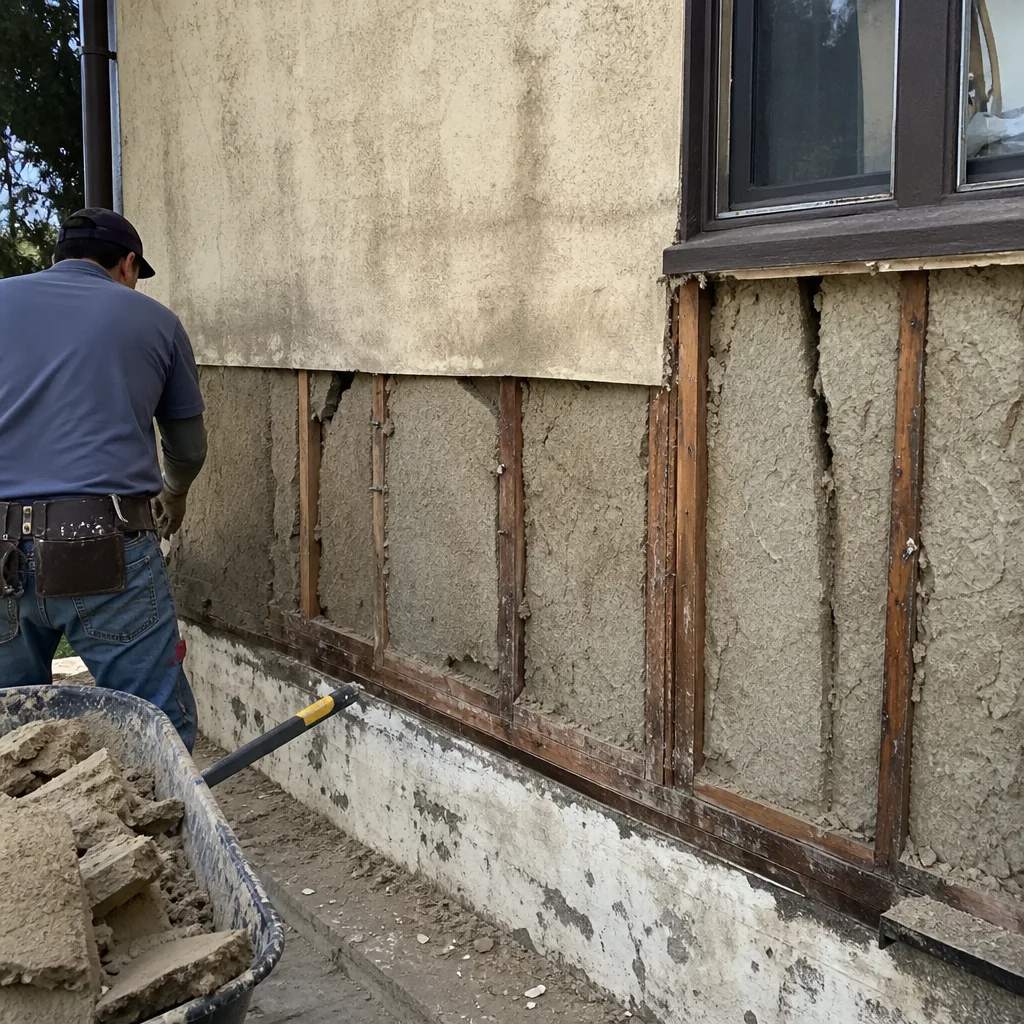 Before
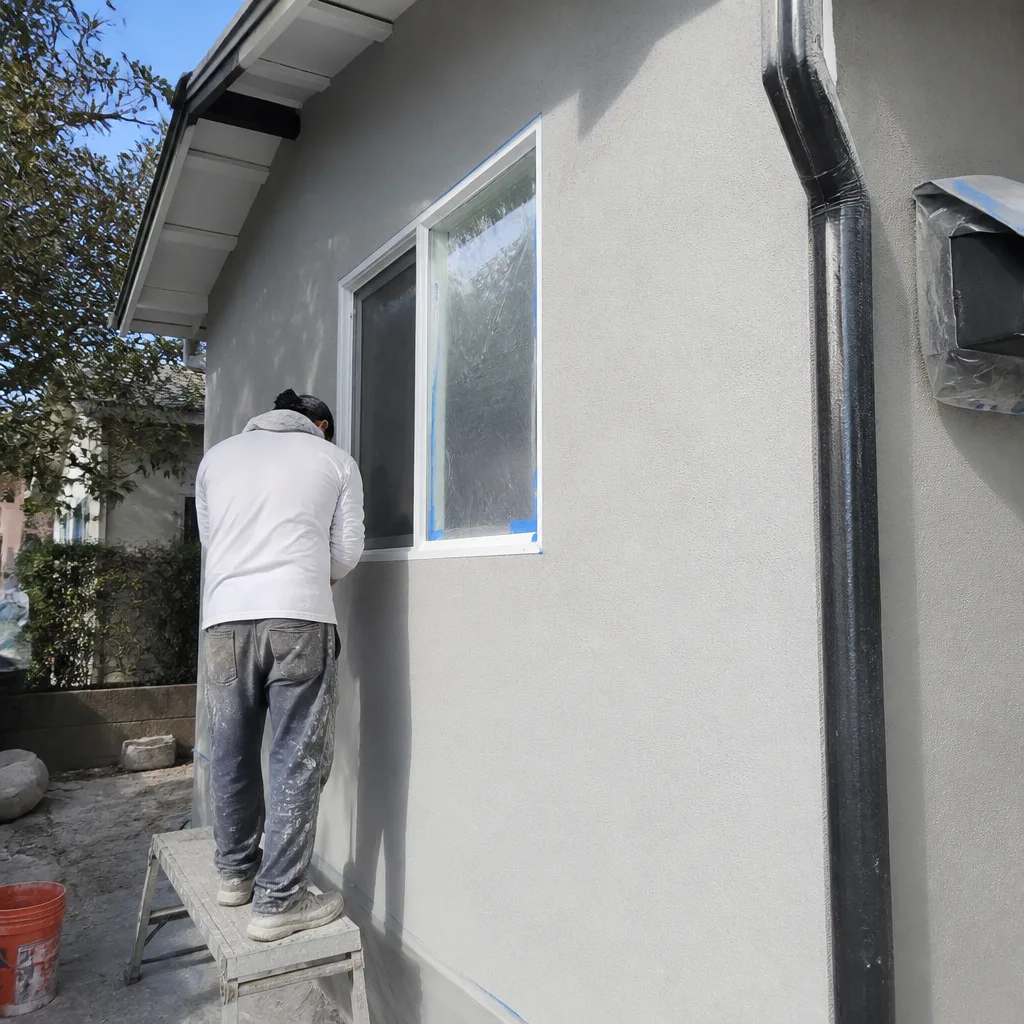 After
AfterHow to Save on Attic Air Sealing in Whittier
Bundle Air Sealing With Insulation – But in the Right Order
The single most effective way to reduce the per-project cost of attic air sealing is to schedule it at the same time as an insulation upgrade. When a crew is already in your attic staging materials and equipment, the marginal labor cost of completing a full air-sealing scope before the insulation goes in is lower than two separate mobilizations. What we will not do is reverse that order – insulation first, air sealing later – because it defeats the purpose and makes the sealing work significantly harder to perform correctly.
Ask for a Written Scope Before Anyone Touches Anything
Under Haven Standard Clause 1, every job at Envelope Insulation Co. starts with a flat price and a written scope before any work begins. That matters for budgeting: you know exactly what’s included and what’s not, which means no mid-job surprises. If you’ve received a written estimate from another contractor, we’ll read it with you as part of a free second opinion – not to undercut it, but to make sure the scope actually matches what your attic needs.
Check Southern California Gas and SCE Rebate Programs
As of 2026, Southern California Gas (SoCalGas) and Southern California Edison (SCE) both offer rebate programs that can offset air sealing costs when work is paired with insulation upgrades and documented with a post-project blower-door test. Rebate amounts shift year to year, but $200 to $600 in utility rebates on a qualifying Whittier job is a realistic range. The key requirement most programs share: the air sealing has to be documented, which is why the before-and-after blower-door readings we publish on every applicable job matter beyond the technical result – they are the evidence the rebate application requires.
Don’t Skip the Blower-Door Test to Save Money
Some contractors will quote air sealing without a blower-door test because it saves them time. The problem is that without a pressurization reading, neither you nor the contractor can confirm the work actually changed anything. You’re paying for a result you cannot verify. The test costs less than the uncertainty of not knowing whether the job was done effectively. On applicable jobs, we include before-and-after blower-door numbers – a pre-sealing CFM50 reading and a post-sealing CFM50 reading – in the Documented Photo Record that every customer receives when the crew leaves.
Get the Estimate First, Then Decide
Pricing a Whittier attic accurately requires a look at the attic. We’ll tell you what we find, what it costs, and what the work includes – in writing, before we start. Call (424) 349-7262 to schedule a free estimate. No commitment required to get a number on paper.
What the Whittier Attic Air Sealing Job Actually Looks Like
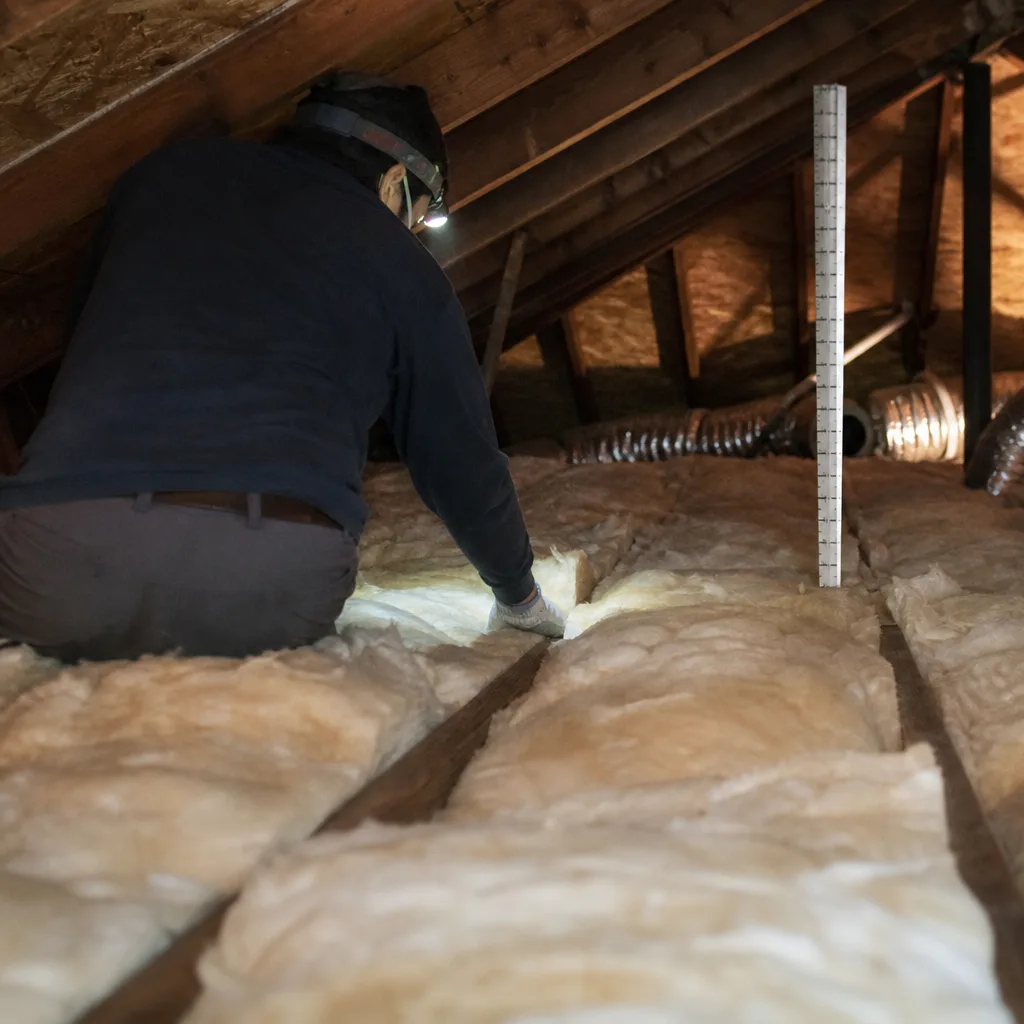
Because this page is about cost, it’s worth being specific about what you’re paying for – not in abstract terms, but in the actual sequence of work.
A standard Attic Air Sealing in Whittier job begins before anyone opens the attic hatch. The technician – background-checked, uniformed, and named in the booking confirmation – runs an initial blower-door test with the house at normal conditions. That gives us a baseline CFM50 reading: the volume of air, in cubic feet per minute, moving through every gap in your building envelope when the house is depressurized to 50 pascals. It’s a single number that describes your home’s total leakage. We write it down.
Then we go into the attic. Every top plate – the framing members that sit on top of interior walls and open into the attic cavity – gets foam-sealed along its full length. Every recessed light fixture that isn’t airtight gets capped with an IC-rated air-sealing cover before it gets buried under insulation. Every plumbing stack, electrical chase, HVAC boot, and penetration gets addressed with either two-part closed-cell spray foam or fire-rated caulk depending on gap size and location. Dropped soffits and any open interior wall cavities that communicate with the attic get rigid foam board and foam-sealed edges.
When the sealing is complete, we run the blower-door test again. The post-sealing CFM50 reading goes into your Documented Photo Record alongside the photos taken throughout the job. In East Whittier homes we’ve worked on recently, it’s common to see starting readings of 3,800 to 5,200 CFM50 drop to 2,100 to 3,000 CFM50 after a full attic air-sealing scope – a 35-to-45 percent reduction in whole-house air leakage from one service on one part of the envelope.
If insulation is being added the same day (and it usually is), it goes in after the sealing is confirmed – never before. Owens Corning, Johns Manville, Knauf, and GreenFiber blown-in products are what we typically spec for attic floors in Whittier, selected based on depth requirements and the existing framing configuration, not on which product has the highest margin for the installer.
Why Whittier Homes Leak More Than You’d Expect
Whittier’s housing stock skews older than much of Los Angeles County. A meaningful portion of homes in Friendly Hills Estates, Uptown Whittier, and the streets east of Painter Avenue were built between 1945 and 1970, during an era when attic air sealing wasn’t part of residential construction practice. Insulation was installed, but the framing cavities, top plates, and penetrations beneath it were never addressed.
Decades later, those homes have also accumulated additional sources of leakage: recessed lights added during kitchen and bath remodels, HVAC systems rerouted through the attic with boots that were never properly sealed, and attic hatches that have been opened and closed enough times that the original weatherstripping is either compressed flat or missing entirely.
The result, on a blower-door test, is often surprising even to homeowners who have added insulation in the past. Adding R-38 blown-in over an unsealed attic floor reduces radiant heat transfer – but it doesn’t reduce air exchange. The two mechanisms are different, and insulation addresses only one of them. We explain this before we quote anything, because a homeowner who understands why both steps matter is in a better position to evaluate any quote they receive, including ours.
We are also, transparently, the attic insulation home for this service line in the greater Whittier area – which means when you call us, you’re talking to someone who works on Whittier attics specifically, not a regional dispatcher routing jobs across five counties.
What You Receive When the Job Is Done
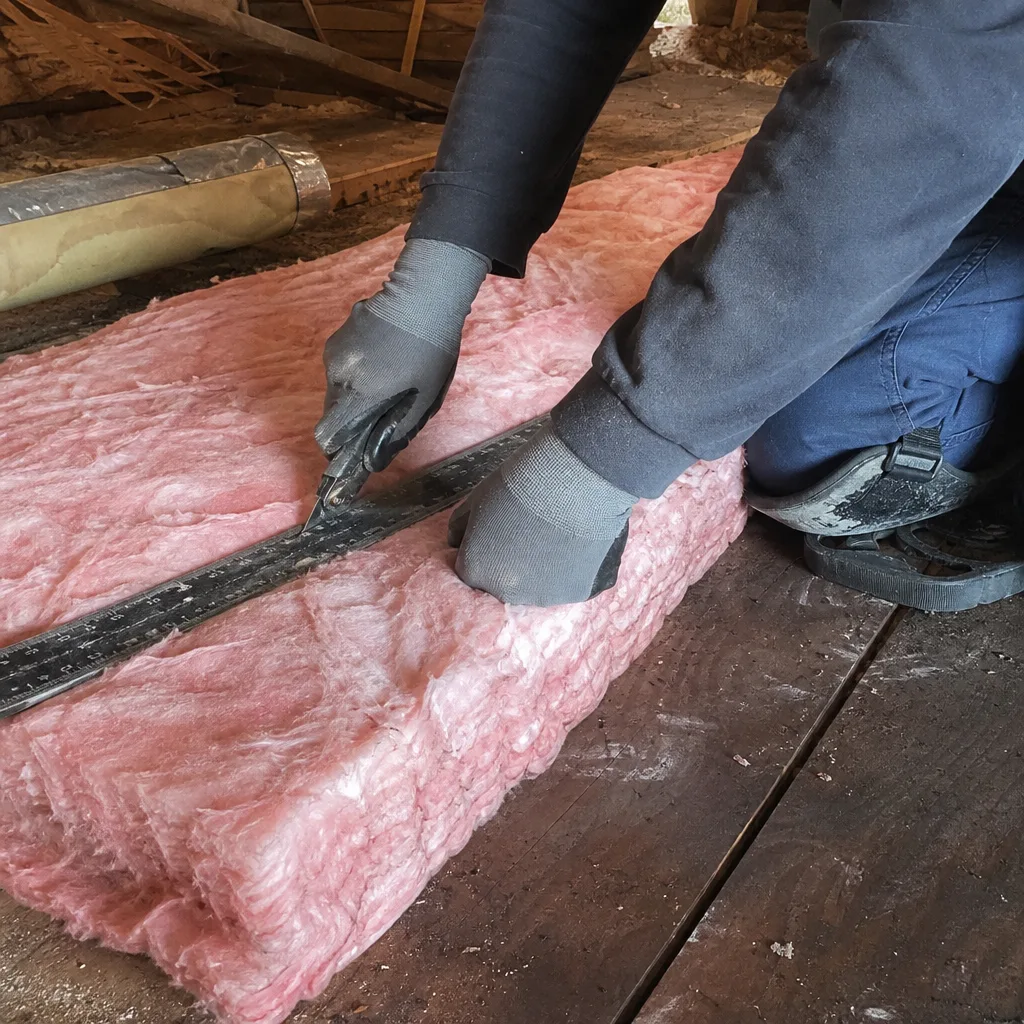
The 365-Day Done Right Promise applies to every completed job. If the work isn’t right, we make it right – and that promise is in writing before we start, not offered after the fact. What that looks like in practice:
- A written scope and written warranty delivered before any work begins (Haven Standard Clause 1).
- A before-and-after blower-door reading on every applicable job – not available on request, included by default.
- A Documented Photo Record covering the attic condition before work, mid-job after sealing, and post-insulation (where applicable) – delivered to you when the crew leaves.
- A named technician and a text when they’re on the way (Haven Standard: Arrive on schedule).
- A live person who answers calls 24/7 – no voicemail loops, no callback windows.
Since 2016, more than 9,000 homes have been sealed and insulated under these terms, every one with a written price before work started and a documented record when the crew left. That’s not a testimonial; it’s an operational fact about how the business runs.
FAQs – Attic Air Sealing Cost in Whittier
How much does attic air sealing cost in Whittier, CA?
Attic air sealing in Whittier typically costs between $950 and $2,800, with most single-family homes landing between $1,200 and $1,900. The main variables are attic square footage, the number of penetrations (recessed lights, plumbing stacks, HVAC boots), and whether there are dropped soffits or interior chases that need to be addressed. A basic scope on a smaller, accessible attic in a post-2000 home can come in under $1,200; a full envelope scope on a 1960s Friendly Hills home with 35 recessed lights and a complex framing plan can reach $2,500 or above. Call (424) 349-7262 and we’ll give you a written number after a look at your attic – no commitment required.
Is attic air sealing worth the cost in a Southern California climate?
Yes – arguably more so here than in colder climates. Whittier sits in CEC Climate Zone 8, where attic temperatures can exceed 140°F in July and August. Every gap between the attic and your living space is a channel for that heat to move downward, directly increasing your cooling load. Homes we’ve tested in Whittier commonly show a 35-to-50 percent reduction in whole-house air leakage after a full attic air-sealing scope, measured by a before-and-after blower-door test. At current SoCal Edison rates, the payback period on a $1,500 to $1,900 air-sealing job is typically 4 to 8 years in energy savings alone – before any utility rebates are factored in.
Can I get attic air sealing and insulation done at the same time?
Yes, and bundling the two services on one mobilization is the most cost-efficient way to do both. The important thing is the order: air sealing has to be completed and verified before insulation goes in. Blowing insulation over an unsealed attic floor reduces radiant heat transfer but does nothing for air exchange – the two mechanisms are separate, and insulation doesn’t fix air leakage. We complete and document the air sealing first, confirm the blower-door result, and then install insulation. We have not once reversed that order.
How do I know the air sealing actually worked?
The answer is a blower-door test – a pressurization reading, measured in CFM50 (cubic feet per minute at 50 pascals of pressure), that shows total building air leakage in a single number before and after the work. A Whittier home that reads 4,400 CFM50 before sealing and 2,600 CFM50 after has a documented, measurable result. We include before-and-after blower-door readings in the Documented Photo Record on every applicable job. If a contractor is quoting you air sealing without a post-work blower-door test, you have no way to confirm the job achieved anything.
Does Whittier have any local permits or code requirements for attic air sealing?
California’s Title 24, Part 6 (the state’s residential energy code) requires air barriers wherever insulation is added to an existing attic. In Whittier, the City’s building department generally does not require a separate permit for attic air sealing and insulation work that falls below certain thresholds, but any scope that involves modifications to electrical fixtures (such as recessed light cap installations) should be completed in a way that is consistent with local inspection requirements. If your project involves a larger scope – such as attic hatch replacement or HVAC duct reconfiguration – a permit may apply. We’ll flag this in the written scope if it’s relevant to your job, before any work starts.
Written by Wes Okafor, Owner at Envelope Insulation Co. / Topside Attic Insulation Whittier, serving Whittier, CA since 2016. Pricing reflects the Whittier market as of 2026. Topside Attic Insulation Whittier offers free estimates – call (424) 349-7262.
What Our Customers Say
"Two other companies quoted to blow more insulation on top of what was there. These were the only ones who said the existing material had to come out first, and explained why."
- Clifford E."They air-sealed the attic floor before insulating and showed me the blower-door number before and after. The upstairs is finally the same temperature as downstairs."
- Marisol D."The winter gas bill dropped by about a third. They had estimated a quarter, so they under-promised."
- Genevieve R.