
How Much Does a Home Energy Audit Cost in Whittier?
A Home Energy Audit in Whittier, CA typically costs between $250 and $650 for a standard blower-door diagnostic with a written report. Homes over 2,500 square feet, older construction in the Uptown Whittier corridor, or properties flagged for crawl space issues will land toward the higher end of that range. Most audits are completed in a single visit lasting two to four hours, and you leave with a documented findings report the same day.
Home Energy Audit Cost Breakdown (2026)
Here is how the pricing stacks up across common audit types and add-ons in the Whittier market. These figures reflect what homeowners are actually paying in 2026 for properties in the 90601-90606 zip codes, not regional averages pulled from national data sets.
| Audit Type / Component | Typical Price Range | Notes |
|---|---|---|
| Basic visual inspection only (no instruments) | $0 – $100 | Offered by some utilities; limited findings, no blower-door data |
| Standard diagnostic audit with blower-door test | $250 – $400 | Most common for Whittier homes under 2,000 sq ft |
| Full diagnostic audit (blower-door + duct blaster + infrared) | $400 – $650 | Recommended for 1960s-1980s construction common in South Whittier |
| Large home surcharge (2,500+ sq ft) | $75 – $150 added | More depressurization time, additional zones to document |
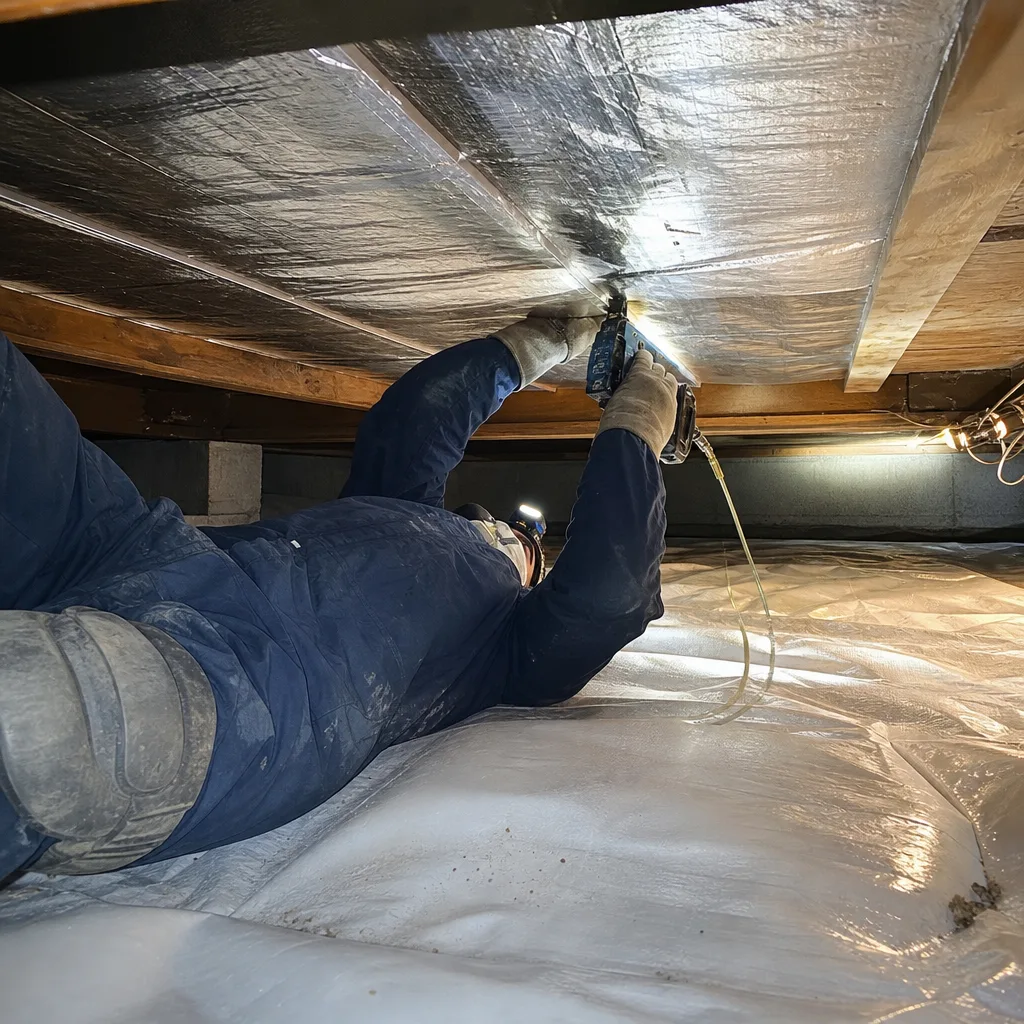
| Crawl space inspection add-on | $50 – $125 added | Relevant for older Whittier Narrows-area homes on raised foundations |
| HERS rating (CalGreen / permit compliance) | $350 – $600 | Requires a state-certified HERS rater; separate from a diagnostic audit |
| Utility-rebate-qualifying audit (SCE/SoCalGas program) | $0 – $150 out-of-pocket | Subsidy amount changes annually; confirm directly with your utility |
What Pushes the Price Higher or Lower
The single biggest variable is whether the auditor uses instruments or just walks through with a clipboard. A visual-only inspection costs almost nothing but tells you almost nothing useful – you will not know your home’s actual air infiltration rate, and any insulation contractor working from that report is guessing about the sequencing of work.
A blower-door test – a pressurization reading that shows, in one number (CFM50), how much air your building envelope is losing – is the instrument that turns an audit from a sales pitch into a diagnostic. For a 1,600-square-foot Whittier bungalow, a blower-door test adds roughly 45-90 minutes to the visit and accounts for a meaningful share of the total cost. It is worth it. In Whittier’s climate zone 9, attic temperatures regularly hit 140 degrees Fahrenheit in July and August; an audit that cannot quantify your home’s air-sealing deficit cannot prioritize the work that will actually drop your Edison bill.
Infrared thermography – a camera that reads surface temperature differentials to locate missing insulation or moisture intrusion behind walls – adds cost but eliminates guesswork. In older construction along Mar Vista Avenue or in the neighborhoods north of Whittier Boulevard, IR cameras routinely find wall cavities that were never insulated during the original build.
What Affects Home Energy Audit Pricing in Whittier
- Home size and configuration: Larger homes require longer depressurization cycles and more measurement points. A 3,200-square-foot two-story in the Friendly Hills area takes noticeably longer to audit than a 1,100-square-foot single-story in East Whittier, and that time difference is reflected in the price.
- Age of construction: Whittier has a dense stock of homes built between 1945 and 1985. Pre-1978 construction typically has uninsulated or under-insulated attics, original single-pane windows, and top plates that were never sealed – all of which require more documentation time and generate more findings in the report.
- Foundation type: Raised-foundation homes – common in the Uptown Whittier and Whittier Narrows areas – have accessible crawl spaces that need to be inspected separately. Slab-on-grade construction skips that step. A crawl space add-on runs $50 to $125 in this market.
- HVAC accessibility and duct location: Homes with duct systems running through unconditioned attics (the majority of Whittier’s single-family housing stock) benefit from a duct blaster test – a companion measurement to the blower-door that isolates how much conditioned air you are losing specifically through duct leaks before it ever reaches a room. That test adds cost but produces a number that justifies whether duct sealing is worth doing.
- Utility rebate program eligibility: Southern California Edison and SoCalGas both operate energy efficiency programs that can subsidize audit costs for qualifying homeowners. The subsidy structure changes from year to year, and income-qualified households in Whittier sometimes receive audits at no direct cost. These programs reduce your out-of-pocket but do not reduce the actual audit fee – the utility pays a portion on your behalf.
- Certification type required: A diagnostic audit performed by an insulation contractor is not the same as a HERS rating performed by a state-certified Home Energy Rating System rater. If you are pulling a permit in Whittier for an addition or an HVAC replacement, you may need a HERS rating specifically – which runs $350 to $600 and must be conducted by a Title 24-qualified rater. Know which document you need before you book.
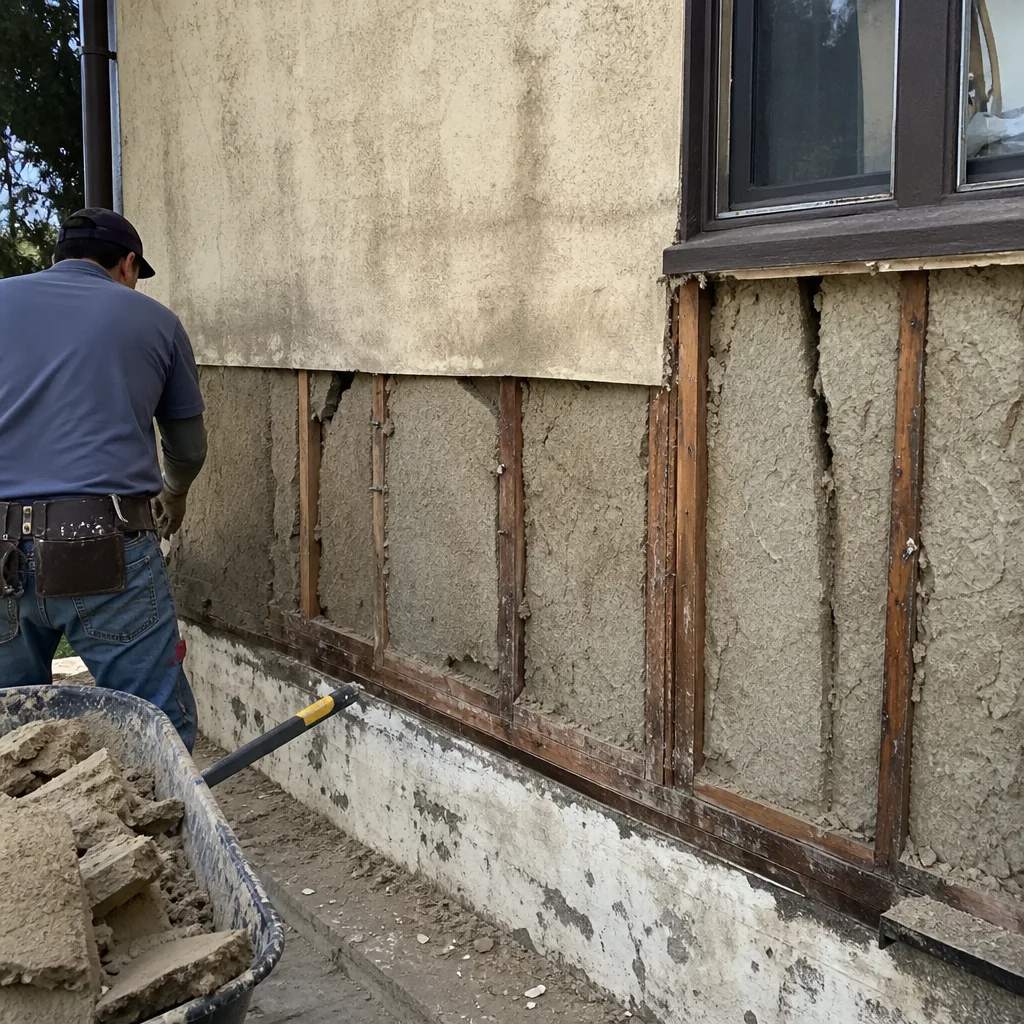 Before
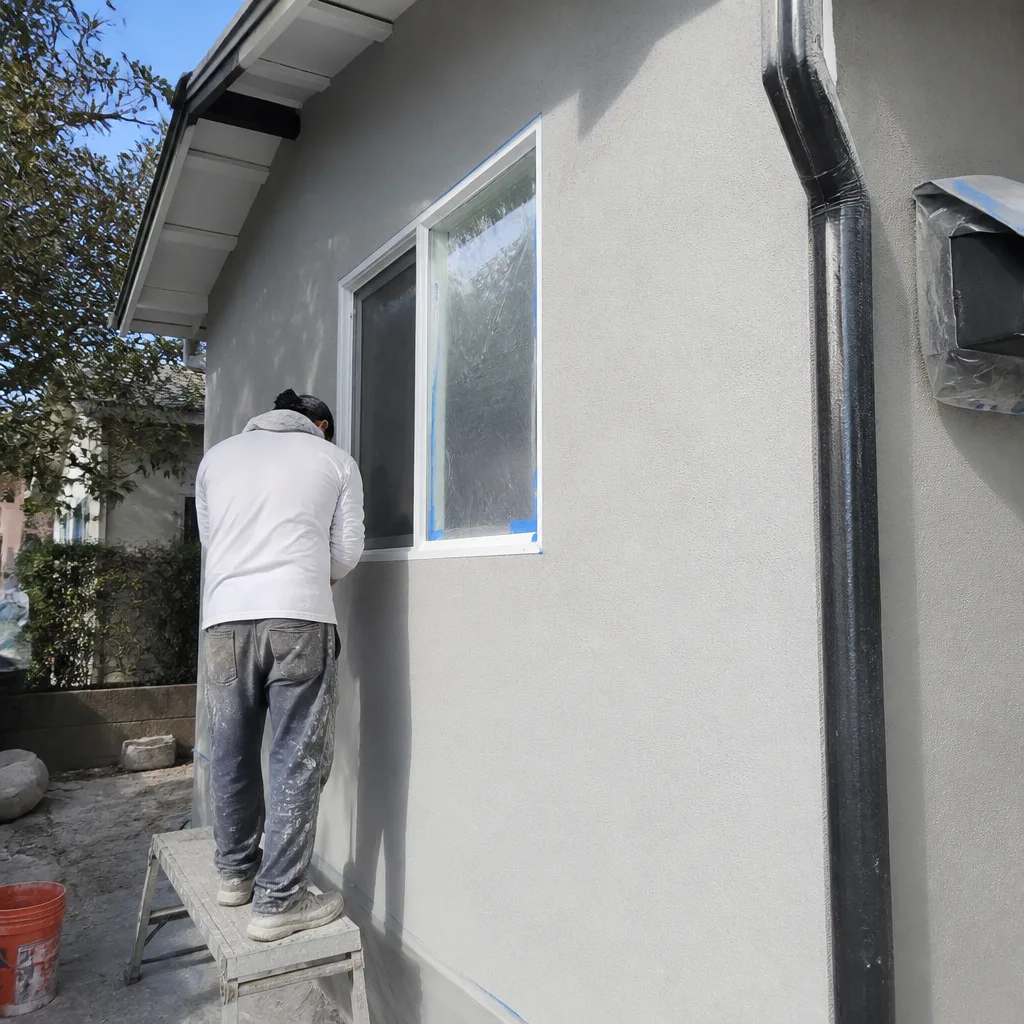 After
AfterWhat You Should Walk Away With After an Audit
This section matters more than most homeowners expect, because an audit is only as useful as its documentation. A contractor who tells you verbally that your attic needs more insulation is not giving you an audit – they are giving you a sales call.
A real home energy audit in Whittier should produce, at minimum:
- A written findings report that identifies specific locations of air leakage, not just categories (“attic” is not specific enough; “around the HVAC supply boots at the ceiling plane and along the rim joist at the top plate” is).
- Your home’s pre-work blower-door reading in CFM50, so you have a baseline to compare against after any air-sealing work is done.
- Duct leakage figures if a duct blaster test was performed.
- A prioritized list of recommended improvements with estimated savings impact – not just a checklist of everything that could be done.
- Photographic documentation of findings, so you can see what the auditor saw without being in the attic yourself.
At Envelope Insulation Co., every visit closes with a Documented Photo Record – not available on request, included on every job. When a blower-door test is part of the scope, we publish the before and after numbers so the homeowner can verify the air-sealing result. That is not a marketing claim; it is the standard operating procedure under the Haven Standard that Wes Okafor built the company on since 2016.
Whittier-Specific Context: Why Audits Here Are Particularly Useful
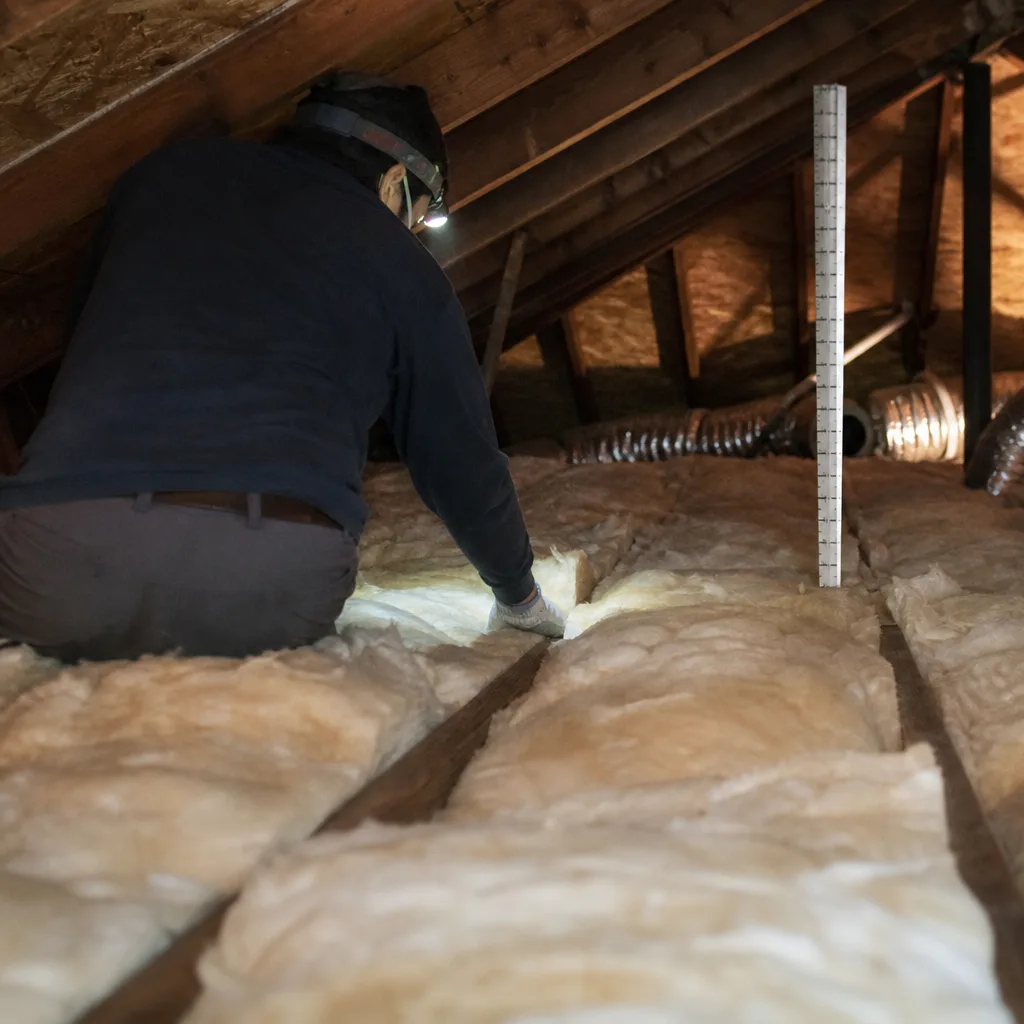
Whittier sits in California’s climate zone 9, which means moderate winters, hot summers, and a dry Santa Ana season that drives outdoor air infiltration in ways that coastal communities do not experience the same way. When Santa Ana conditions push low-humidity air through every gap in your building envelope in October and November, an unsealed attic is not just an efficiency problem – it is also a fire-ember pathway risk.
The city’s housing stock skews older. According to city planning data, a significant portion of Whittier’s single-family homes were constructed before 1980, many of them in the South Whittier unincorporated area and in the older residential streets east of Norwalk Boulevard. These homes were built before California’s Title 24 energy code existed, meaning they have no baseline requirement built in. In practice, we regularly encounter homes in Whittier that are losing more than 40 percent of their conditioned air through unsealed top plates and bypasses around recessed lighting – a figure that becomes concrete when a blower-door test puts a CFM50 number on it.
Homes near Turnbull Canyon Road and in the hillside sections of Friendly Hills also tend to have cathedral ceilings or complex roof geometries that make attic insulation jobs more involved. An audit that maps the thermal boundary before work starts saves money by preventing insulation from being installed in the wrong location or at the wrong depth.
For anyone considering a Home Energy Audit in Whittier, the audit-first approach applies regardless of which contractor ultimately does the work. You need a documented baseline before any insulation or air-sealing scope is written.
How to Save on a Home Energy Audit in Whittier
Check Utility Programs Before You Pay Full Price
Southern California Edison’s Energy Savings Assistance Program and SoCalGas’s Energy Upgrade California program both cover audit costs for qualifying households. Income limits change annually, so call your utility directly rather than relying on information from a contractor. Whittier zip codes 90601 through 90606 are all within the SCE and SoCalGas service territories. If you qualify, the utility schedules and pays for the audit directly.
Bundle the Audit with the Work
Some contractors, including Envelope Insulation Co., apply the audit cost toward the project total when they do the insulation or air-sealing work that follows. Ask specifically whether this applies – and get the answer in writing – before booking. Under Haven Standard Clause 1, a written price before any work starts is non-negotiable, so the math should be spelled out clearly on paper rather than conveyed as a verbal understanding.
Bring a Competing Estimate to a Second Opinion
If you have already received a written estimate for insulation or air-sealing work in Whittier and want to know whether the scope reflects what your audit actually found, we offer a Free Second Opinion on any written estimate. Bring the estimate; we read it with you. This is not a sales appointment – it is a document review. If the competing scope is sound, we will say so.
Do Not Skip the Blower-Door Test to Save Money
A visual-only audit costs less but produces findings you cannot verify. If a contractor recommends $3,000 in attic air sealing based on a visual inspection, you have no way to confirm whether the work was effective after the fact. A blower-door test costs $150 to $250 more than a visual inspection and gives you a before-and-after number you can actually check. In a market where full attic insulation and air-sealing jobs run $1,800 to $4,500 for a typical Whittier home, paying for instrumented diagnostics is the lower-risk choice.
Time the Audit Strategically
Late spring and early fall are the easiest times to book audits in Whittier – the extreme heat of July and August fills contractor schedules with emergency calls, and December through February tends to be the slowest period for energy-efficiency work. Booking in April or October does not guarantee a lower price, but it does guarantee better technician availability and shorter turnaround on your written report.
If you want a free estimate before committing to any scope of work, call (424) 349-7262 and we will walk through what your home’s age, size, and foundation type suggest about where the audit focus should be.
How the Audit Connects to the Work That Follows
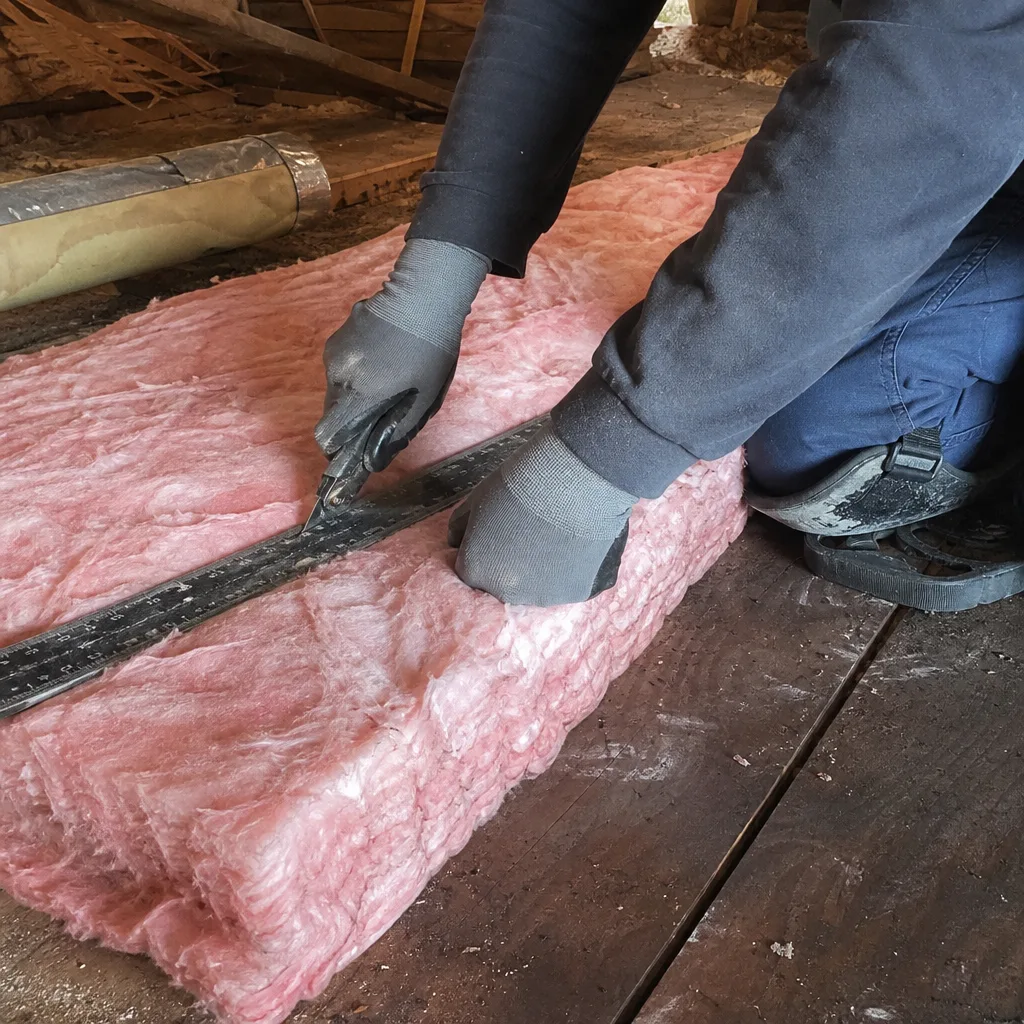
An audit is a diagnostic tool, not a finished product. The value comes from what you do with the findings. In Whittier’s housing stock, the most common audit findings fall into a predictable pattern:
- Attic top plates that were never sealed between framing cavities and the conditioned space below – a gap you cannot see from either side without a blower-door running.
- Recessed can lights – particularly the older IC-rated fixtures common in 1970s and 1980s Whittier homes – that act as open holes in the ceiling plane when the attic is depressurized.
- Duct systems with 15 to 25 percent leakage rates, meaning roughly one in five to one in four dollars of your HVAC operating cost is being spent conditioning air that escapes before reaching a room.
- Insufficient attic insulation depth – current California code for climate zone 9 calls for R-38 in attics, and many pre-2000 Whittier homes have R-11 or R-19, sometimes compressed and settled further by age.
The sequencing matters. Envelope Insulation Co. follows a strict order: air sealing of top plates, can lights, and penetrations is completed first, before any insulation is added. Blowing insulation over unsealed bypass paths does not eliminate those paths – it just buries them. The blower-door numbers tell us whether the sealing work succeeded before we ever open a bag of insulation.
That principle is not unique to this company – it is basic building science. But it is not universally followed, and an audit report in hand gives you the language to hold any contractor to it.
You can learn more about our full approach on the home page, including the complete service line under The Haven Standard.
Audit vs. HERS Rating: Which One Do You Actually Need in Whittier?
This question comes up constantly, especially among homeowners who have just pulled a permit for an HVAC replacement or an addition. They are not the same thing, and using the wrong term when talking to contractors or the city’s building department creates confusion.
A diagnostic home energy audit is performed by a contractor or energy auditor to identify where your home is losing energy and what to do about it. It is a voluntary diagnostic tool. No permit requires it, no code mandates it, and the findings belong to you.
A HERS rating (Home Energy Rating System) is a compliance verification performed by a state-certified HERS rater to confirm that a permitted project meets Title 24 requirements. It is required on specific permit types – new construction, HVAC replacements in some configurations, additions over a certain size. The rater must be independent of the contractor doing the work. Whittier’s building department follows California’s Title 24 compliance process, so if a permit triggered a HERS requirement, you need an actual HERS rater, not a diagnostic audit.
If you are not sure which applies to your situation, the Whittier building department at City Hall can confirm what your permit requires. Cost-wise, a HERS rating runs $350 to $600 in this market, which is similar to a full diagnostic audit – but the deliverable and the legal purpose are different.
FAQs – Home Energy Audit Cost in Whittier
How much does a home energy audit cost in Whittier, CA in 2026?
A standard diagnostic home energy audit in Whittier costs between $250 and $650, depending on home size, foundation type, and whether duct testing or infrared scanning is included. The most common scope for a Whittier home under 2,000 square feet – blower-door test, visual inspection, and written report – runs $250 to $400. Utility programs through SCE and SoCalGas can reduce or eliminate the out-of-pocket cost for qualifying households. Call (424) 349-7262 for a straight answer on what your home’s specific configuration would cost to audit.
Is a home energy audit worth paying for in Whittier?
For most Whittier homes built before 1990, yes. The audit’s value is not the document itself – it is the prioritized scope of work and the baseline blower-door number. Without that baseline, there is no way to verify whether subsequent air-sealing work actually reduced your home’s infiltration rate. On a typical South Whittier home where air-sealing and attic insulation work runs $2,000 to $4,000, spending $300 to $400 on instrumented diagnostics first is a sound use of money. On newer construction where the building envelope is reasonably tight, the payback case is weaker.
Can I get a free home energy audit in Whittier through my utility?
Possibly. Southern California Edison’s Energy Savings Assistance Program offers no-cost audits and improvements for income-qualified customers in Whittier. SoCalGas runs a parallel program. Eligibility is based on household income and participation in qualifying assistance programs – the cutoffs are updated annually. The fastest way to confirm eligibility is to call your utility directly rather than asking a contractor, since contractor information on program availability is often outdated. If you do not qualify for a utility-subsidized audit, a full diagnostic audit from a private contractor runs $250 to $650 in this market.
How long does a home energy audit take in Whittier?
Plan for two to four hours for a full diagnostic audit on a single-family home in Whittier. Smaller homes with straightforward construction – a 1,200-square-foot slab-on-grade in East Whittier, for example – can be completed in about two hours. Larger two-story homes, homes with crawl spaces, or homes with complex duct systems (common in hillside properties near Turnbull Canyon) run closer to four hours. A visual-only inspection without instruments takes 45 to 90 minutes but produces far less actionable data. You receive the written findings report and photo documentation at the end of the visit or within one business day.
What is the difference between an energy audit and an insulation estimate in Whittier?
An insulation estimate tells you what a specific scope of work will cost. An energy audit tells you what work is actually needed and in what order. They are not the same, and in many cases they should not come from the same appointment. An audit performed by a contractor who also sells insulation has an obvious conflict of interest – which is why the written findings and blower-door numbers matter so much. When those numbers are documented before and after the work, you can verify the result regardless of who performed the audit. At Envelope Insulation Co., Wes Okafor’s position since 2016 has been that the blower-door baseline comes first, the written scope comes second, and the insulation goes in last – in that order, documented at every step. Call (424) 349-7262 if you want a free estimate that starts with what your home actually needs rather than what a product line happens to offer.
Key Takeaways
- Home energy audits in Whittier cost $250 to $650 for a full diagnostic with blower-door test; visual-only inspections cost less but produce unverifiable findings.
- Older homes in South Whittier, Uptown Whittier, and along the Whittier Narrows tend to have the most significant air-sealing deficits – and benefit most from instrumented audits.
- SCE and SoCalGas utility programs can cover part or all of the audit cost for qualifying Whittier households; eligibility changes annually.
- A HERS rating (required for some permits) is not the same as a diagnostic energy audit – know which one your situation requires before booking.
- The audit’s primary value is the blower-door baseline: a CFM50 number that lets you verify whether air-sealing work actually performed after the fact.
- Air sealing should be completed before insulation is added – any contractor who sequences it otherwise is burying the problem, not solving it.
- Documented photo records and written findings are standard deliverables on every Envelope Insulation Co. audit visit – not optional add-ons.
Written by Wes Okafor, Owner at Envelope Insulation Co., serving Whittier since 2016.
Pricing reflects the Whittier market as of 2026. Topside Attic Insulation Whittier offers free estimates – call (424) 349-7262.
What Our Customers Say
"They photographed rodent damage in the old insulation that we had no idea about, and priced the exclusion work separately so we could decide."
- Harriet N."Crawl space encapsulation done properly. Photographs of the vapour barrier at every seam, and the damp smell in the hallway is gone."
- Ainsley P."Two other companies quoted to blow more insulation on top of what was there. These were the only ones who said the existing material had to come out first, and explained why."
- Clifford E.