
Rockwool Crawl Space Encapsulation: The Whittier Owner’s Guide
Rockwool crawl space encapsulation in Whittier typically runs $2,800-$4,600 for a complete install on a 1,200-1,800 sq ft crawl space, and we stock Rockwool Comfortboard 80 and Comfortboard 110 rigid boards on every Whittier truck for same-day replacement when moisture has compromised the existing layer. Most homeowners in Whittier discover the problem in February or March, when Santa Ana winds give way to marine layer and the crawl space humidity spikes - they notice musty air pulling up through floor registers, cold spots over the crawl, or a sudden jump in the gas bill that the attic insulation doesn’t explain.
Which Rockwool Models This Applies To
We work with Rockwool’s full crawl space line, but the part you need depends on what was originally installed and how the space was conditioned. Comfortboard 80 - the 2-inch and 3-inch rigid mineral wool boards - is the most common retrofit we see in Whittier’s 1940s-1970s stock, especially in the neighborhoods north of Whittier Boulevard where crawl spaces sit 18-24 inches off grade with limited ventilation. Comfortboard 110 shows up in newer builds and in homes where the original builder spec’d higher compressive strength for a conditioned crawl with a concrete rat slab.
Here’s how to identify what you’ve got without crawling back there yourself: the facing label, if it’s still legible after years of moisture, will read “ROCKWOOL COMFORTBOARD” followed by the density rating - 8 pcf for the 80 series, 11 pcf for the 110. If the label’s gone, measure the board thickness and check the edge: Comfortboard 80 has a slightly softer, more fibrous edge that dents under thumbnail pressure, while 110 feels closer to dense-pack wood fiberboard. The critical compatibility gotcha in Whittier’s climate is that Comfortboard 80 below grade without a proper vapor barrier will wick moisture from the soil, lose its R-value, and compress - we’ve pulled 3-inch boards that measured 1.5 inches and held 18% moisture by weight in homes near the Greenway Trail where the water table runs high in wet years.
We source Rockwool OEM and carry Johns Manville and Knauf equivalents where the homeowner prefers them - no proprietary lock-in, and we publish the substitution in writing before anyone orders.
Signs Your Rockwool Crawl Space Encapsulation Is Failing
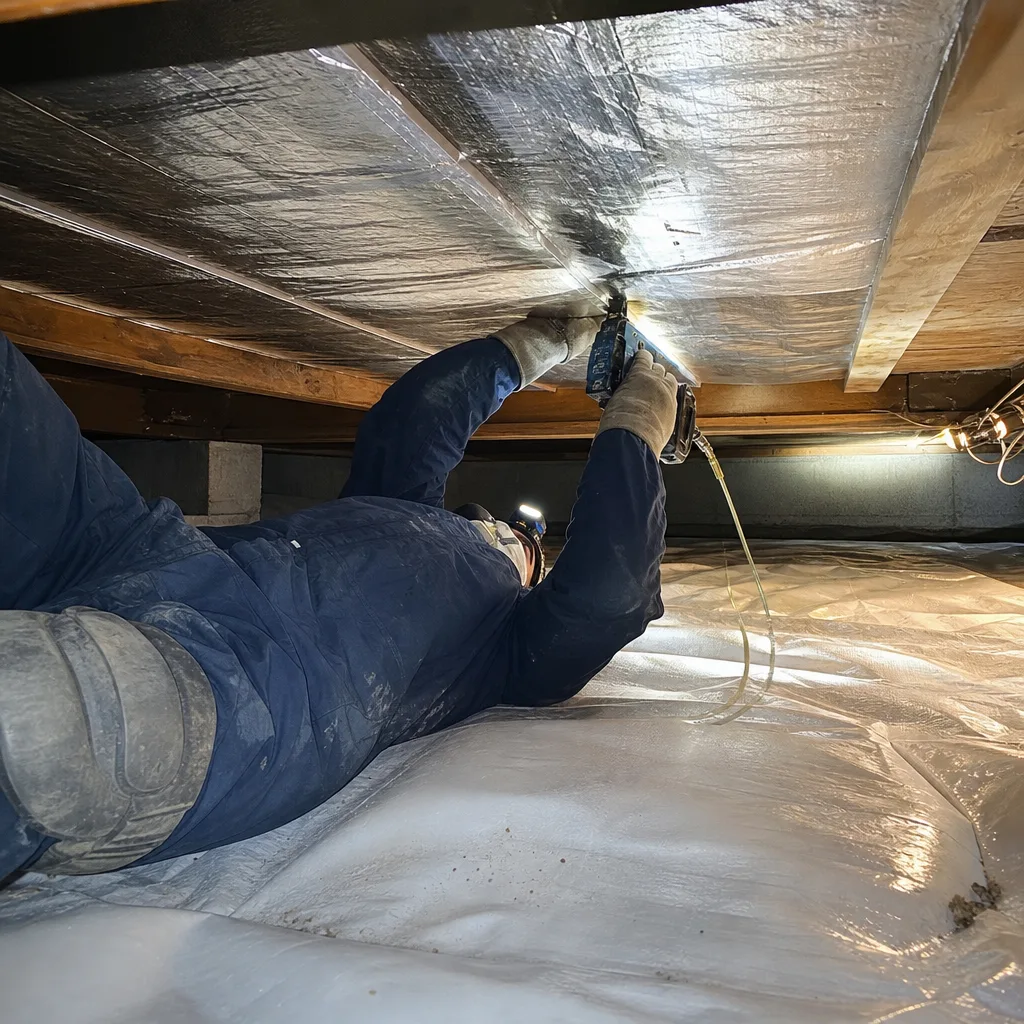
- Cold floors in winter, especially over the crawl. Rockwool holds R-value when dry, but once it hits 15-20% moisture content - common in Whittier crawls with failed poly - the thermal performance drops by half. The floor feels cold because the insulation is conducting heat to the damp earth instead of blocking it.
- Musty odor that intensifies when the HVAC runs. Your ductwork likely runs through the crawl space, and if the return air pathways have leakage, they’re pulling that damp, mold-friendly air into the living space. We see this most in Whittier’s Uptown district homes with original floor registers and no sealed duct boots.
- Insulation sagging or falling from joist bays. Rockwool batts are held by friction and wire hangers; when saturated, the weight triples and the hangers pull through. If you’re seeing gray-pink batts on the ground, the vapor barrier failed years ago and the insulation has been composting.
- Visible mold on the vapor barrier or sill plate. White or black spotting on the polyethylene means humidity has been cycling above 70% RH for extended periods. In Whittier, this happens when the marine layer sits for weeks in May and June, and the crawl ventilation was designed for a drier climate than we actually have.
- Energy bills climbing without rate changes. A blower-door test - a pressurization reading that shows, in one number, how much air your building envelope is losing - will often reveal that the crawl space has become the dominant leakage path after attic sealing was done without addressing the rim joist or sill plate below.
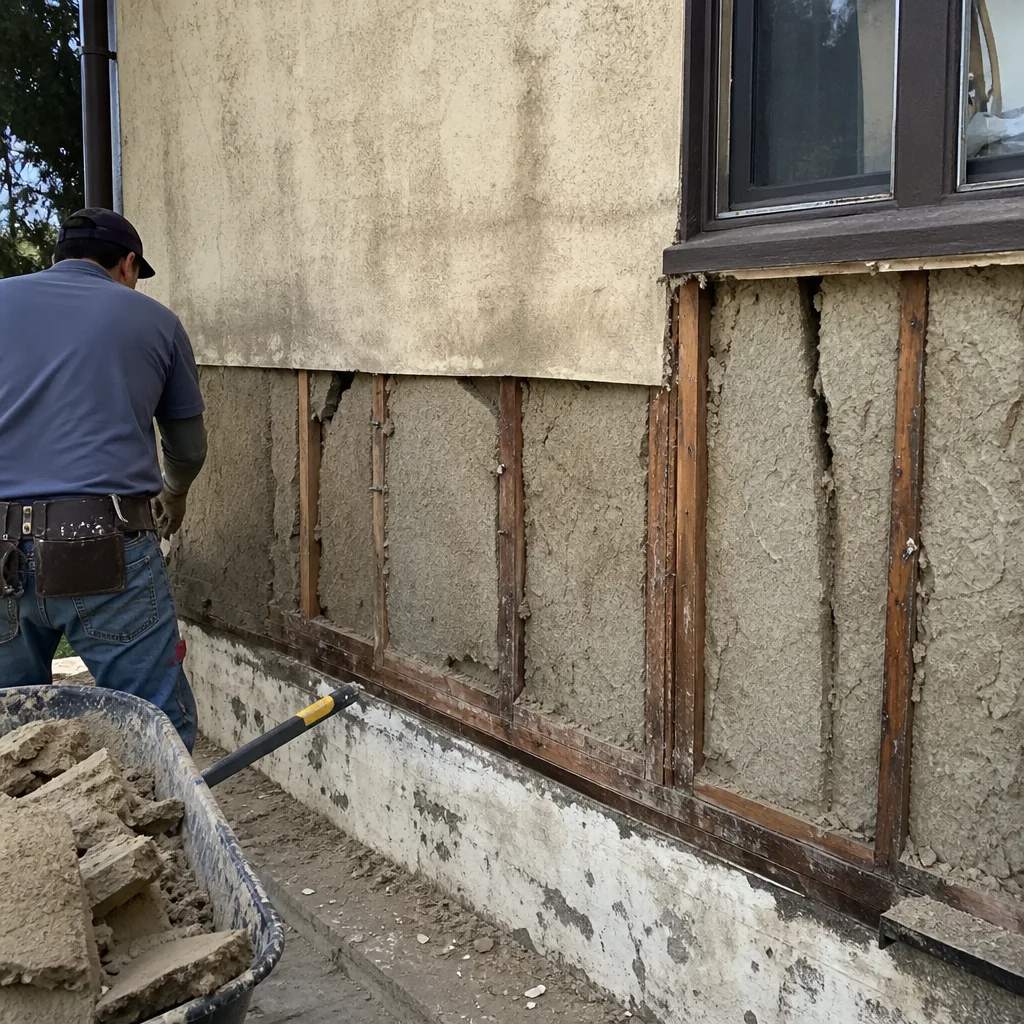 Before
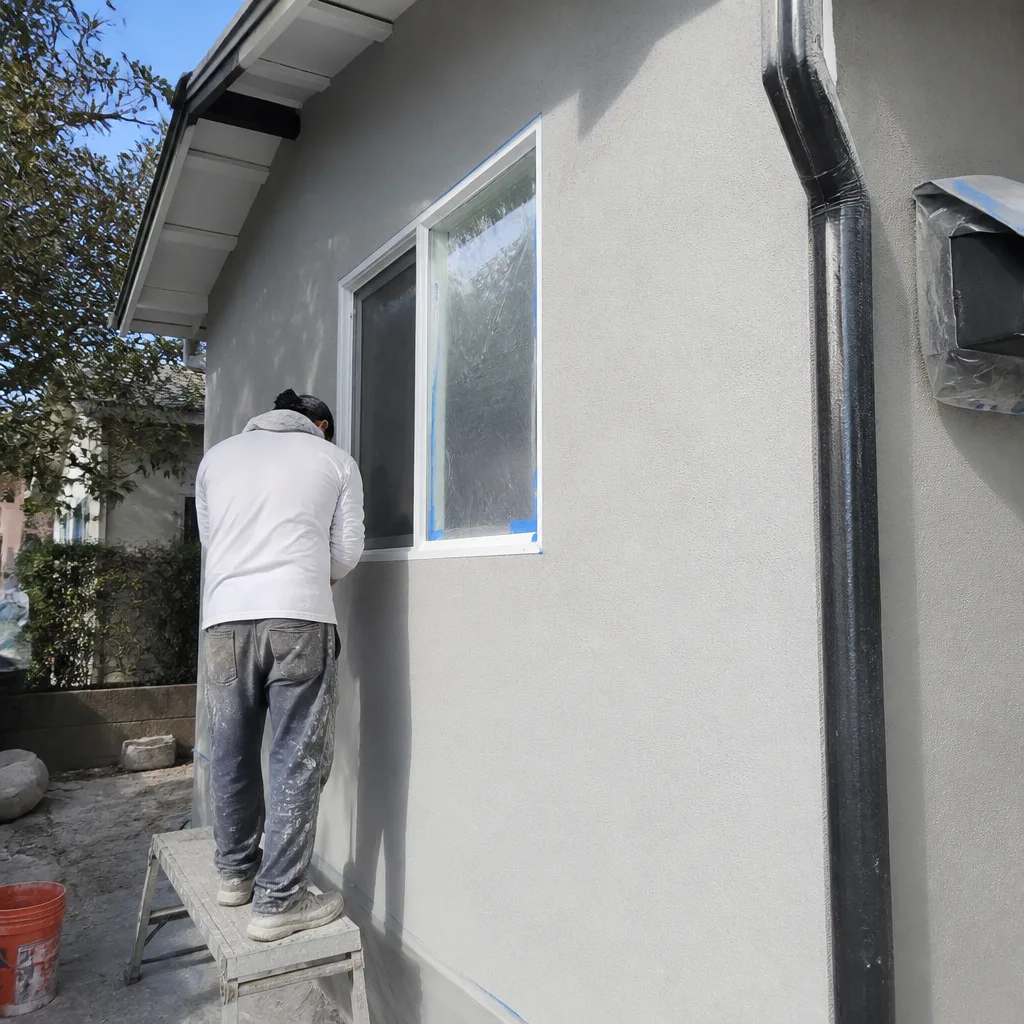 After
AfterReplacement Cost & What’s Included
| Scope | Typical Range in Whittier |
|---|---|
| Rockwool Comfortboard 80, 2″ (partial encapsulation, vapor barrier intact) | $2,800-$3,400 |
| Rockwool Comfortboard 80, 3″ (full encapsulation, new 6-mil poly) | $3,400-$4,200 |
| Rockwool Comfortboard 110, conditioned crawl with rat slab prep | $4,000-$4,600 |
| Rim joist air sealing + board install (add-on) | $600-$900 |
What drives the range: crawl space height (anything under 24 inches adds labor), whether the old insulation can be removed in sheets or has degraded to bagged debris, and the condition of the existing vapor barrier - if the poly is shredded, we replace it, and that adds material and seam-taping time. Every Whittier job gets a written price before any work starts, under Haven Standard Clause 1, with the scope, the warranty, and the final blower-door target documented in the same packet. The 365-Day Done Right Promise applies to all completed work, and we deliver a Documented Photo Record when the crew leaves so you can verify what was installed and how it was sealed.
DIY or Call Us?
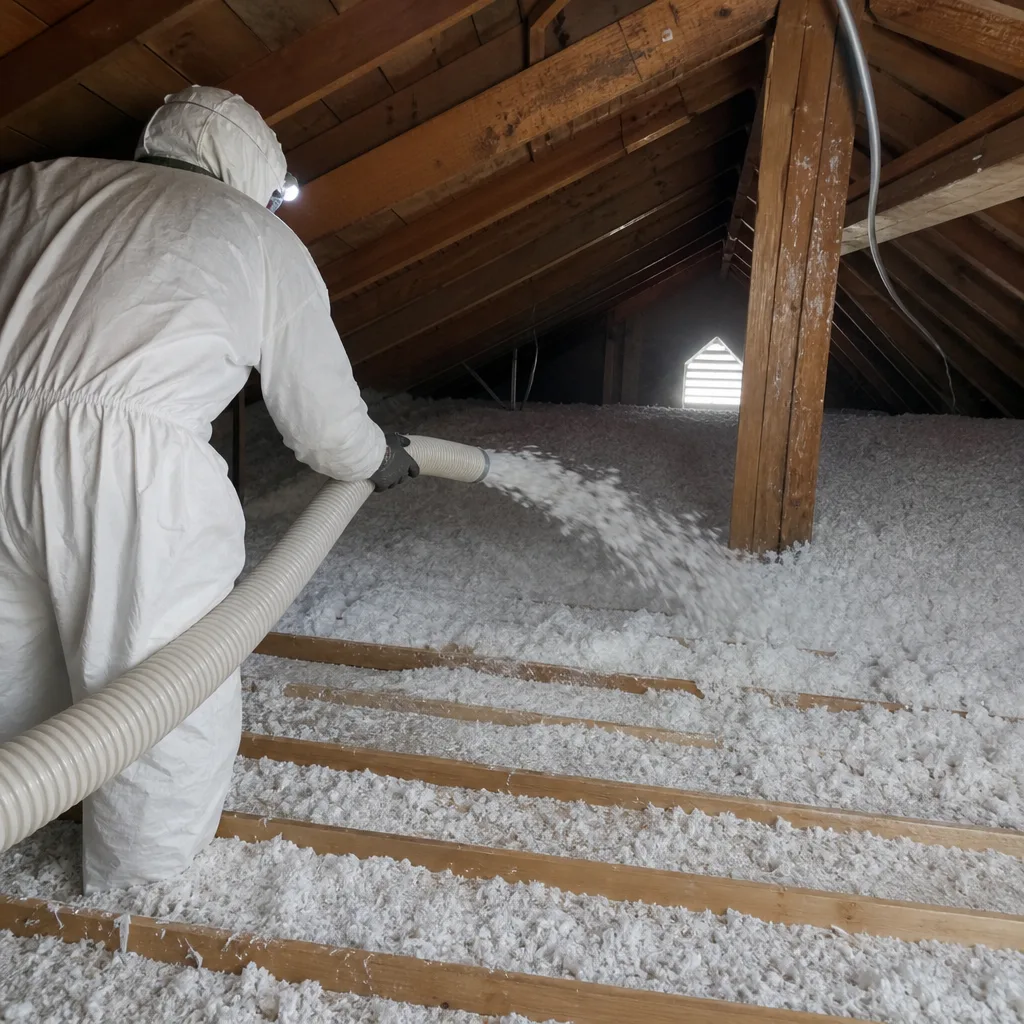
There’s a safe middle ground here, and then there’s where DIY goes wrong. What you can check: shine a flashlight through the crawl access and look for fallen batts, standing water, or torn poly. Note the board thickness if you can read a label. What you should not attempt: removing saturated Rockwool yourself without a P100 respirator and full coverage - the fibers are irritating, and disturbed mold spores are a genuine respiratory hazard. More critically, if your crawl has any gas appliances, electrical junctions, or an unsealed sump pit, the work space itself becomes dangerous without ventilation planning and combustion safety testing.
We seal it first, then cover it - the insulation is not the fix, it’s the finish. In Whittier’s older stock, we’ve found that skipping rim-joist sealing and going straight to board replacement leaves the homeowner with the same cold-floor problem six months later, plus a lighter wallet. Call (424) 349-7262 and we’ll read your situation with you - free second opinion on any written estimate you’ve already collected.
FAQs
Properly installed with an intact vapor barrier and sealed rim joists, Rockwool Comfortboard should perform for 25-30 years. In Whittier, the failure point is almost never the board itself - it’s the poly underneath, which UV-degrades if exposed and can be compromised by rodent activity in the crawl spaces near the San Gabriel River wash. We use 6-mil reinforced poly with taped seams, and we document the seam pattern in your photo record so future inspections have a baseline.
Patching works if the poly is mostly intact and the Rockwool is still dry and at full thickness. We can spot-repair with 6-mil tape and patch sections, then verify with a moisture meter reading below 15% - that’s a $400-$700 scope in most Whittier crawls. If the boards are compressed or the poly is shredded across more than 30% of the area, partial replacement costs more in labor than full replacement and leaves you with mismatched performance zones. Call (424) 349-7262 for an exact quote - estimates are free.
A typical 1,200 sq ft crawl in Whittier takes one day for removal, air-sealing prep, and new board install, plus a half-day for vapor barrier replacement if needed. We schedule the blower-door test for the following morning so the house has time to equalize overnight - the before-and-after numbers go in your written record by end of day.
Yes - Comfortboard 80 in 2″ and 3″, Comfortboard 110 in 2″. We also stock Reflectix bubble insulation for certain hybrid assemblies where the homeowner wants a radiant barrier component. If your crawl calls for a thickness we don’t carry, we order it with next-day delivery from the Ontario distribution center and hold the install date. Topside Attic Insulation Whittier is an independent service provider, not affiliated with Rockwool.
Written by Wes Okafor, Owner, Topside Attic Insulation Whittier at Topside Attic Insulation Whittier, serving Whittier and nearby areas.