
How Much Does Blown-In Insulation Cost in Whittier?
Blown-in insulation in Whittier, CA typically costs between $1,400 and $3,800 for a standard attic job in a single-story home, with most projects landing around $1,900 to $2,600 once attic prep and air sealing are factored in. The range moves depending on your attic square footage, current R-value, whether old insulation needs to come out first, and how many penetrations need to be sealed before the blower runs. Most Whittier homeowners who come to us after getting a competing quote are surprised to find that a price with air sealing included is often cheaper long-term than re-doing a job that skipped it.
Blown-In Insulation Cost Breakdown (2026)
The numbers below reflect what we actually see on jobs in Whittier, from smaller bungalows in Uptown near Greenleaf Avenue to larger ranch-style homes in the South Whittier flatlands. These are real-project ranges, not national averages pulled from a database.
| Line Item | Typical Cost Range | Notes |
|---|---|---|
| Blown-in fiberglass insulation (attic, 1,000 sq ft) | $900 - $1,500 | To R-38; Knauf or Owens Corning material |
| Blown-in fiberglass insulation (attic, 1,500 sq ft) | $1,300 - $2,100 | To R-38; most common attic size in Whittier |
| Blown-in fiberglass insulation (attic, 2,000 sq ft) | $1,700 - $2,700 | To R-49 for Title 24 compliance on some permits |
| Blown-in cellulose insulation (attic, 1,500 sq ft) | $1,200 - $2,000 | GreenFiber or Johns Manville; slightly denser coverage |
| Attic air sealing (top plates, can lights, penetrations) | $350 - $750 | Completed before insulation is added – this is not optional at Envelope |
| Old insulation removal (full attic) | $600 - $1,400 | Required when existing material is wet, contaminated, or rodent-damaged |
| Attic access hatch upgrade or baffle installation | $150 - $400 | Often needed in older Whittier homes with non-standard hatch sizes |
| Blower-door test (before and after) | Included on applicable jobs | Pressurization reading that shows, in one number, how much conditioned air the building envelope is losing |
| Full project: air sealing + blown-in, 1,500 sq ft attic | $1,700 - $2,800 | Most common final number for Whittier single-story homes |
A few things move these numbers up or down in practice. Homes built before 1980 – and there are a lot of them in Whittier’s Central District and the streets off Colima Road – tend to have more penetrations in the attic floor: old can lights, plumbing chases, and top plates that were never fire-blocked. Sealing those properly takes more time and more material, so the air-sealing line item runs toward the higher end. On the flip side, a newer home in a development like those near Turnstone Park may already have some sealing from the builder, which brings that number down. Attic height matters too: a taller attic with good access and clean trusses is faster to work in than a low-pitch space where a technician is on their belly for three hours. The latter costs more, because it takes longer and is harder on equipment.
Material choice also shifts the number. Fiberglass blown-in (Owens Corning or Knauf, both of which we stock) settles slightly over time and is the more common choice in Whittier’s climate. Cellulose (GreenFiber or Johns Manville) is denser and handles moisture slightly better, which matters in homes near the San Gabriel River bottom where ambient humidity can creep up. Neither is the wrong answer – the better question is which one fits your attic geometry and your existing structure.
Under Haven Standard Clause 1, every project at Envelope Insulation Co. starts with a written price and a written scope. You see the number before anyone lifts a tool. There are no post-job add-ons that weren’t in the scope, and no “we found something up there” charges that weren’t discussed in writing first.
What Affects Blown-In Insulation Pricing in Whittier
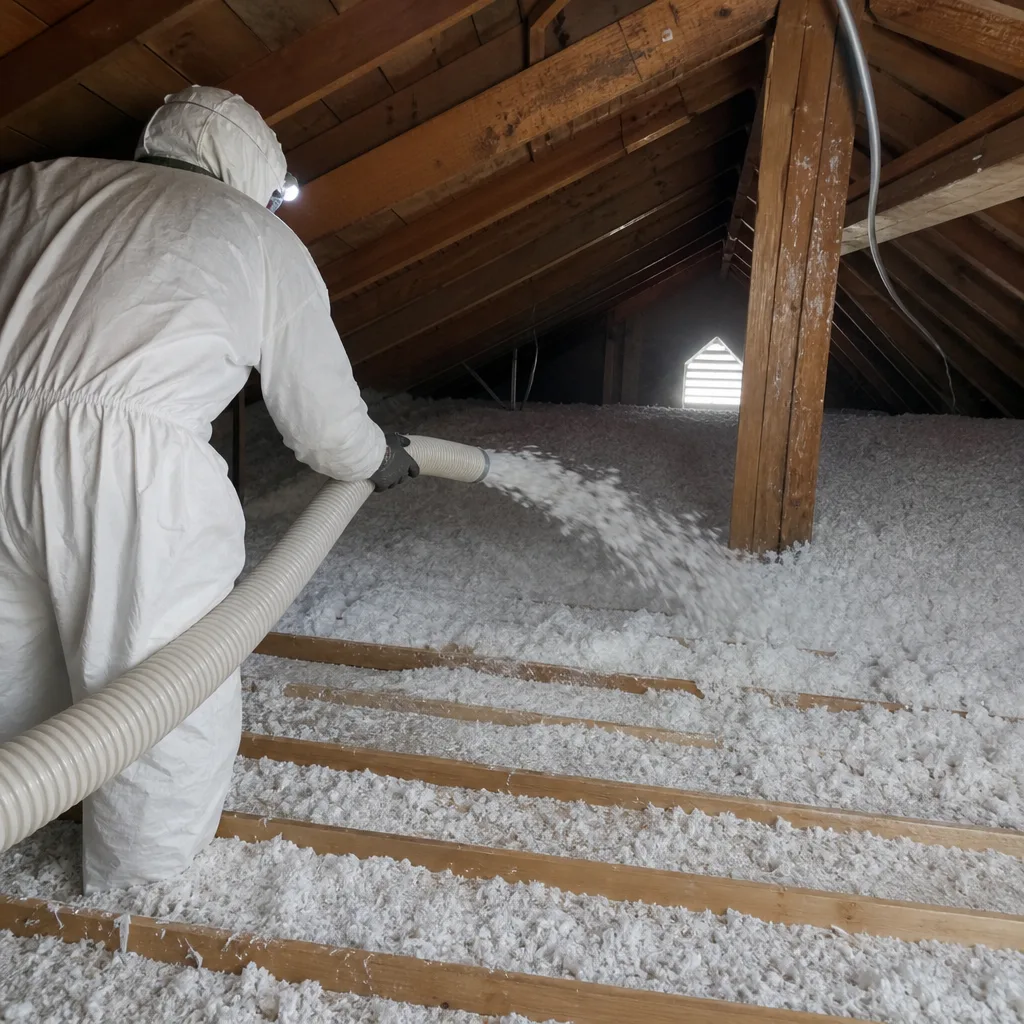
- Attic square footage and geometry. This is the single largest cost driver. A 900-square-foot attic on a smaller Uptown bungalow runs considerably less than a 2,200-square-foot attic on a ranch-style home in South Whittier. Low-pitch rooflines, common in mid-century Whittier construction, slow down installation and can require extra equipment time.
- Current insulation level and condition. Whittier’s housing stock skews toward 1950s-1970s construction, and a large share of those attics still have the original 3 to 4 inches of blown fiberglass – an R-value somewhere around R-11 to R-15, well below California’s current Title 24 recommendation of R-38. Adding material on top of serviceable existing insulation is straightforward. If the existing material is wet from a roof leak, contaminated with rodent droppings (a regular finding in the hills near Turnbridge Estates), or heavily compressed, it has to come out first, which adds $600 to $1,400 to the project.
- Air sealing scope. Envelope will not blow insulation over an unsealed attic floor. That’s not an upsell – it’s a prerequisite, because insulation slows heat transfer but it doesn’t stop air movement, and unsealed penetrations will keep your HVAC system running harder regardless of how deep the insulation goes. The number of can lights, top-plate gaps, and plumbing penetrations in your attic determines how much the sealing line item costs. Homes in Whittier with recessed lighting throughout – common in 1990s remodels – routinely have 20 to 40 unsealed can light penetrations in the attic floor.
- Target R-value. R-38 is the standard for Whittier’s climate zone (Zone 9 under Title 24). Some homeowners opt for R-49 for additional thermal performance, particularly in homes with west-facing attics that take direct afternoon sun from late spring through September. Going from R-38 to R-49 adds roughly $0.15 to $0.30 per square foot to the material cost.
- Access and attic conditions. A tight hatch, a steep pull-down ladder that won’t support equipment, or an attic full of stored boxes adds labor time. We document access conditions during the estimate and include any access-prep work in the written scope so nothing surprises you on the day of the job.
- Insulation removal and attic cleaning. If the attic has signs of rodent activity – and we see this frequently in homes along the Whittier Narrows adjacent neighborhoods – insulation removal, attic sanitizing, and entry-point sealing need to happen before any new material goes in. That scope can run $1,200 to $2,800 depending on the extent of damage and the size of the attic, and it should be treated as a separate line item with its own written scope.
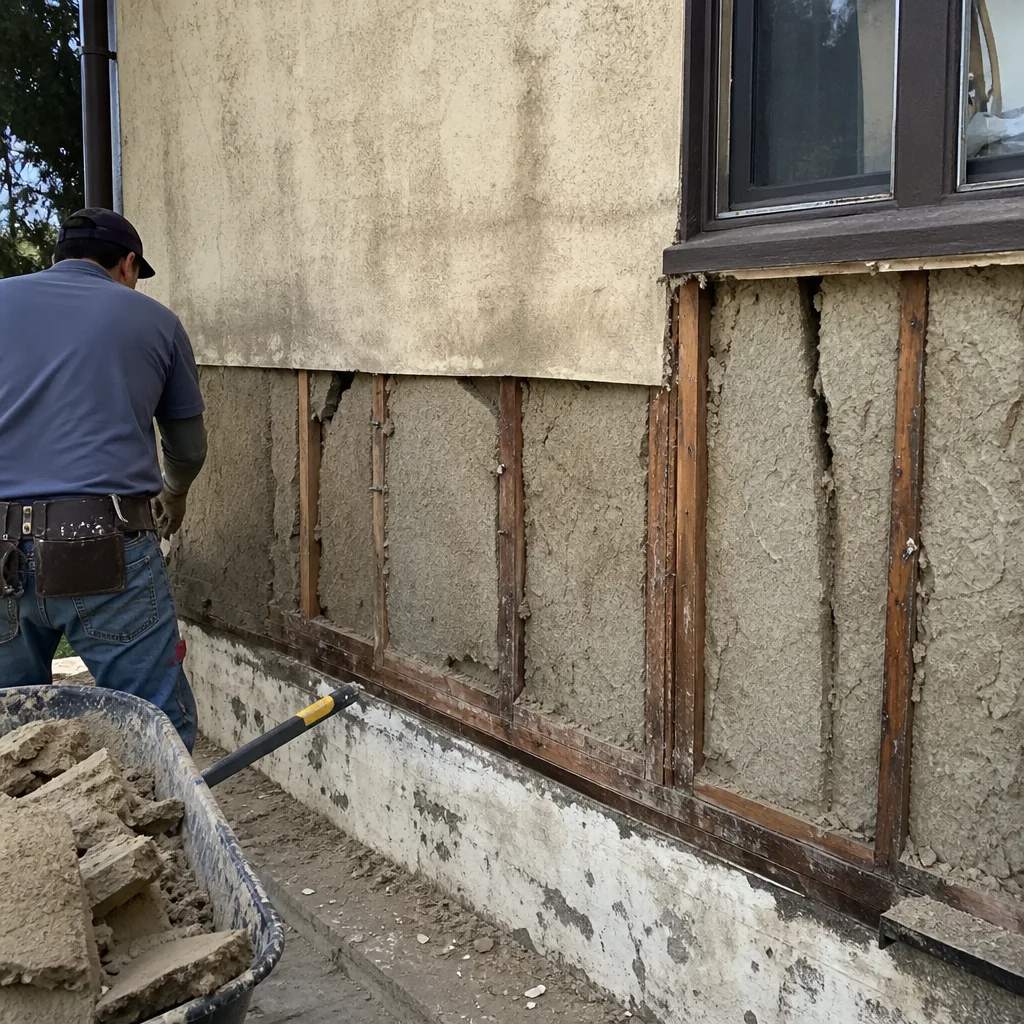 Before
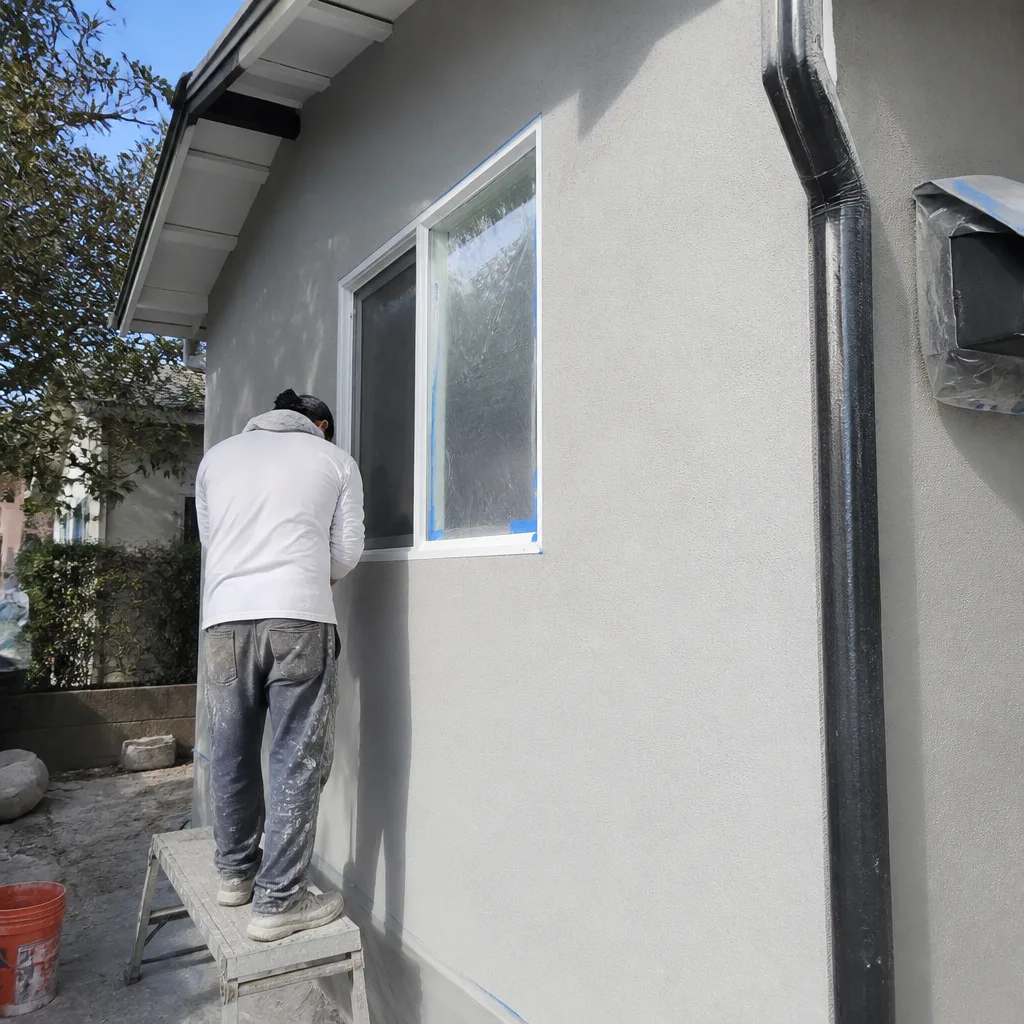 After
AfterHow to Save on Blown-In Insulation in Whittier
The most direct way to spend less on blown-in insulation in Whittier is to get a clear, itemized written quote before you agree to anything. A quote that lumps everything into one number makes it nearly impossible to know what you’re actually paying for, and it makes comparison shopping meaningless. Ask every contractor to break out the air sealing, the insulation material and depth, any removal, and any attic prep work as separate line items. Then compare line for line.
Check for utility rebates before signing anything. Southern California Edison’s residential energy efficiency program has offered rebates on qualifying insulation upgrades in recent years – rebate availability and amounts change seasonally, so it’s worth checking SCE’s current offer page or asking your contractor to run the numbers with you before the job starts. On a qualifying Whittier project, rebates have historically offset $150 to $400 of project cost. We pull the current rebate schedule during every estimate and include it in the written scope when applicable.
Bundle air sealing and insulation in one visit. Scheduling air sealing separately from insulation – whether with us or with two different contractors – almost always costs more than doing both in a single mobilization. The labor overlap is significant, and splitting the work creates a documentation gap: if air sealing and insulation are done at different times by different crews, there’s no continuous record of what was sealed and what was covered. On every applicable job, Envelope provides before-and-after blower-door readings – a pressurization test that shows, in one number, how much air the building envelope was losing before sealing and how much it’s losing after. That documentation is how you know the sealing actually worked before the insulation went over it.
Don’t pay to redo a job done wrong the first time. The most expensive blown-in insulation job we see is a re-do of work that was installed without air sealing. The insulation looks fine in photos, but the blower-door reading hasn’t moved, and the homeowner’s utility bills haven’t moved either. Getting it right once – with documented air sealing and a blower-door confirmation – is less expensive over any time horizon than repeating the process.
Get a second opinion on any written estimate you already have. Envelope offers a free second opinion on any written estimate – bring us a competing quote and we’ll go through it line by line with you, on the record. That’s not a sales tactic; it’s Haven Standard policy. If the competing quote is thorough and the number is fair, we’ll say so.
To get a written estimate with no obligation, call (424) 349-7262. A live person answers – no voicemail loops, no callback windows. The estimate is free, the price is written before any work starts, and there’s no pressure to decide on the call.
Whittier-Specific Factors That Affect Insulation Performance
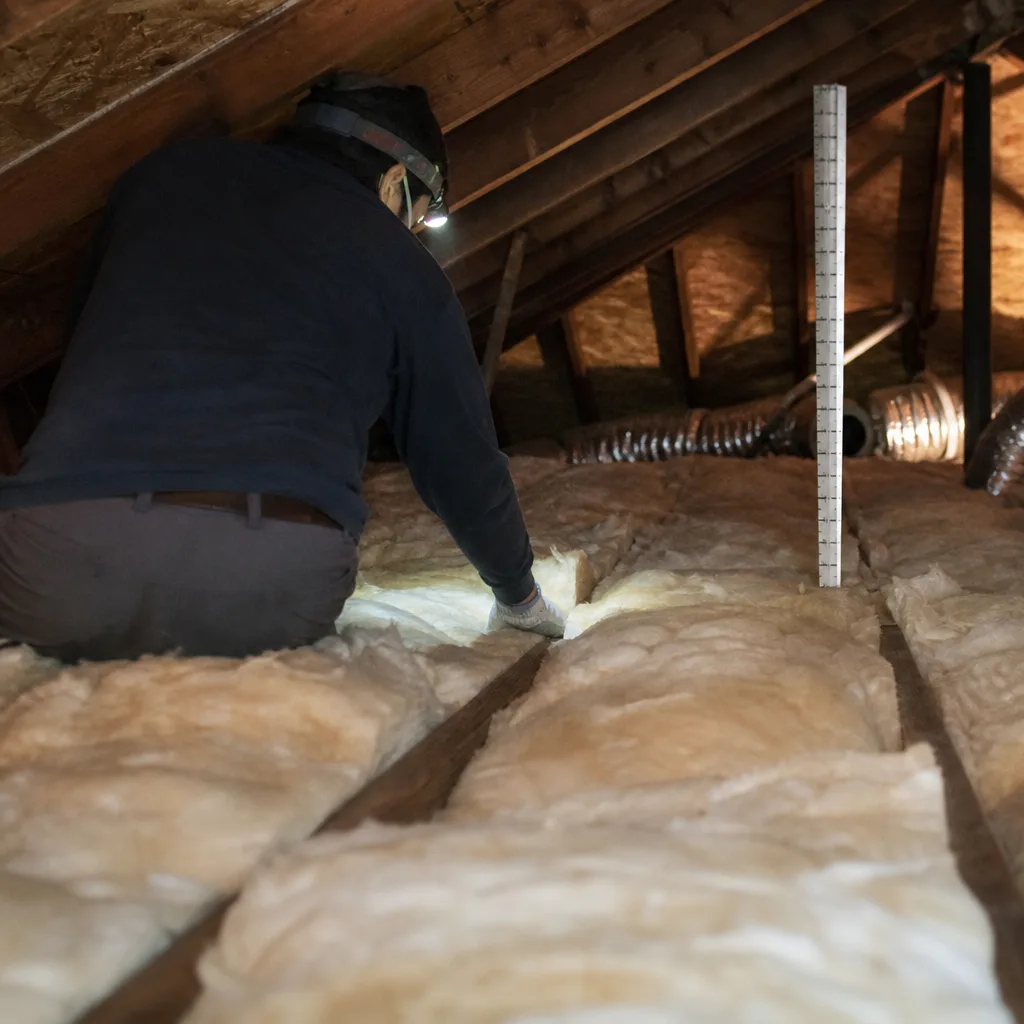
Whittier sits in the eastern portion of the Los Angeles Basin, and its climate behaves differently from coastal communities in ways that matter for insulation decisions. Summer afternoons in July and August routinely reach 95 to 100°F in the interior neighborhoods – Leffingwell, Santa Fe Springs border areas, and the hills above Whittier Drive see higher peak temps than the coast by 12 to 18 degrees on hot days. That delta makes attic temperature management a real operating cost, not a theoretical one. An under-insulated attic in these neighborhoods can sit at 140 to 160°F on a July afternoon, and that heat migrates directly into living space through an unsealed, under-insulated ceiling plane.
At the same time, Whittier’s winter nights are cooler than many LA-area residents expect. January lows in the hills regularly hit the mid-40s, and the Whittier Narrows area can see occasional frost. A well-insulated and air-sealed envelope keeps heating costs down through those months just as it keeps cooling costs down in summer – the physics work in both directions.
Older construction is the other Whittier-specific variable. The city’s housing stock is heavily weighted toward homes built between 1945 and 1975, particularly in the Central District, Friendly Hills adjacent streets, and the blocks around Whittier College. These homes were built to standards that predate modern energy codes by decades, and many have never had their attic air-sealed at all. In practical terms, that means a house with 8 inches of blown-in insulation installed ten years ago may still be performing like a house with almost nothing, if the penetrations underneath were never addressed.
We’ve documented blower-door readings in Whittier homes of 3,800 to 5,200 CFM50 before sealing – a range that represents substantial conditioned-air loss through the building envelope. After air sealing and insulation, the same homes routinely read 1,600 to 2,400 CFM50. That’s a measurable performance change, and it shows up on utility bills within the first summer or winter cycle after the work is done.
Blown-In Insulation vs. Other Insulation Types: Cost Comparison for Whittier Homeowners
Blown-in insulation is not the only option for Whittier attics, and it’s worth knowing where it sits in the cost and performance spectrum before you make a decision.
- Blown-in fiberglass or cellulose (typical attic application): $0.90 to $1.60 per square foot installed, to R-38. Best for existing attics where access is the hatch only. Fast to install, widely available in quality materials (Owens Corning, Knauf, GreenFiber, Johns Manville), and the standard approach for most Whittier retrofits.
- Batt insulation (fiberglass or mineral wool): $0.70 to $1.40 per square foot installed. Better for walls and open-stud bays than for attic floors in existing homes. Rockwool and CertainTeed batts are the materials we use where batts are the right call. Coverage is only as good as the installation – gaps, voids, and compression reduce performance significantly and are hard to spot once drywall is up.
- Open-cell spray foam: $1.20 to $1.80 per square foot in an attic application. More expensive per square foot than blown-in, but provides both air sealing and insulation in one pass – useful for complex geometries like knee walls or unvented attic assemblies. Icynene and Demilec are both materials we work with. Note: spray foam in an attic means the roof deck becomes the thermal boundary, which changes your HVAC zoning and requires a careful scope review before the job starts. This is not a DIY decision.
- Closed-cell spray foam: $2.50 to $4.00+ per square foot installed. High R-value per inch (around R-6.5), vapor barrier properties, and structural rigidity. Rarely necessary for standard Whittier attic retrofits, but sometimes the right answer for crawl spaces, rim joists, or specific wall assemblies.
For most Whittier homeowners doing a straightforward attic retrofit – existing attic, hatch access, 1,200 to 2,000 square feet – blown-in fiberglass or cellulose with a proper air-sealing pass underneath is the most cost-effective path to a meaningful performance improvement. The Blown-In Insulation in Whittier service page covers the full process in detail, including what a typical Whittier job looks like from estimate to documented close-out.
The Cost of Skipping Air Sealing
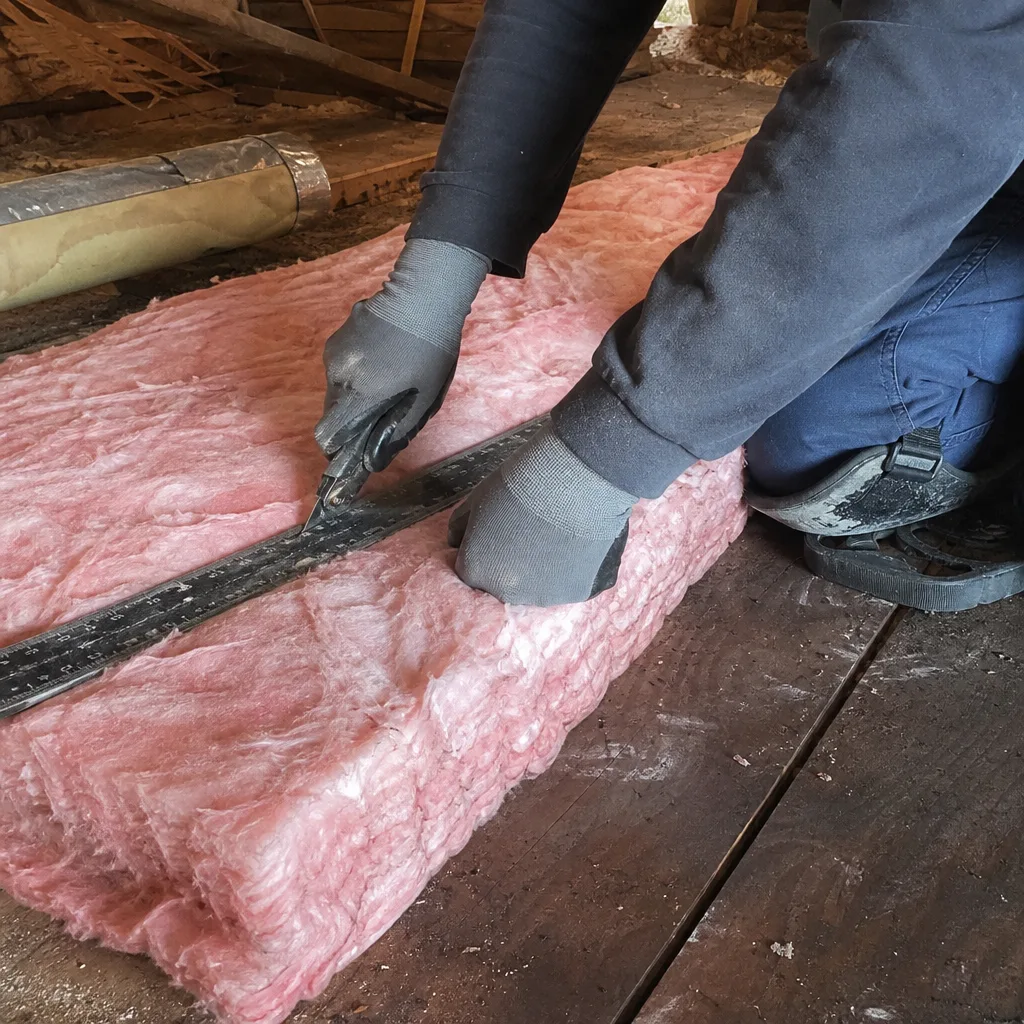
This gets its own section because it’s the most expensive mistake we see in Whittier attics, and it’s almost never visible to the homeowner until the utility bills don’t move after a “new insulation” job.
Blown-in insulation works by slowing heat transfer through the ceiling plane – it adds thermal resistance (R-value) between conditioned living space and the hot or cold attic above. What it doesn’t do is stop air from moving through gaps, cracks, and penetrations in the ceiling. Those gaps – around recessed lights, at top plates where interior walls meet the attic floor, around plumbing and electrical penetrations – can account for 30 to 50% of a home’s total air leakage. Add insulation without sealing them first and you’ve made the attic harder to see into, but you haven’t changed how much conditioned air is escaping.
We’ve opened attics in Whittier neighborhoods like the Groves area and around Whittier Boulevard that had 12 or 14 inches of existing blown-in insulation – installed over unsealed penetrations – and blower-door readings that hadn’t budged from what you’d expect in a bare attic. The insulation looked good in photos. The homeowner had paid for a real job. But the air was still moving freely through the ceiling plane underneath it.
That’s why Envelope will not blow insulation over an unsealed attic floor. Air sealing is a hard prerequisite, completed and documented before the blower runs. The before-and-after blower-door readings published on every applicable job are how we demonstrate that the sealing actually worked – not as a marketing exercise, but as a verification step. If the post-sealing reading doesn’t show a meaningful drop, we find out why before the insulation goes in, not after.
What the Job Documentation Looks Like
This is worth explaining because a lot of homeowners have hired contractors before and been left with nothing but an invoice. Here’s what Envelope provides on every Blown-In Insulation services job in Whittier:
- Written scope and written price before work starts. Not an estimate that shifts when the crew arrives. A flat written price with a line-item scope. Haven Standard Clause 1, no exceptions.
- Pre-work blower-door reading. On applicable jobs, we run a pressurization test before any work begins. That number – in CFM50, which measures cubic feet per minute of air loss at 50 pascals of pressure – is the baseline your results are measured against.
- Documented photo record of air sealing. Every sealed penetration, every top-plate gap, every can light cap – photographed before insulation covers them. Those photos are yours at job close. They’re not available on request, they’re included.
- Post-sealing blower-door reading. After sealing is complete and before insulation goes in, we run a second pressurization test. The delta between the two readings is the documented air-sealing result – a real number, not a feeling.
- Written warranty. The 365-Day Done Right Promise applies to every completed job. If it’s not done right, we make it right. That promise is in writing before the job starts.
Wes Okafor built the documentation process around a simple premise: if you can’t show the homeowner a before-and-after number, you can’t prove the work did anything. Every Whittier job Envelope closes leaves the homeowner with a record they can actually read.
Key Takeaways
- Most blown-in insulation jobs in Whittier, CA run between $1,400 and $3,800, with the typical single-story home landing between $1,900 and $2,600 when air sealing is included.
- Whittier’s older housing stock (1945-1975 construction) almost always requires more air sealing work than newer homes, which pushes project costs toward the middle or upper end of the range.
- Insulation without air sealing first is a common reason Whittier homeowners don’t see utility-bill improvement after “new insulation” jobs. The two are not interchangeable – both are required, in order.
- SCE rebates may offset $150 to $400 of project cost on qualifying jobs – check current availability before signing any contract.
- Every Envelope job in Whittier includes a written price before work starts, a documented photo record, and before-and-after blower-door readings on applicable jobs. The 365-Day Done Right Promise applies to every completed project.
- A free second opinion is available on any written estimate – bring us a competing quote and we’ll go through it line by line.
FAQs – Blown-In Insulation Cost in Whittier, CA
How much does blown-in insulation cost for a typical Whittier home?
Most blown-in insulation projects in Whittier cost between $1,700 and $2,800 for a standard 1,200 to 1,600 square foot attic when air sealing is included – which it should always be. Smaller attics on Uptown bungalows can come in around $1,400 to $1,700; larger ranch-style homes in South Whittier or Leffingwell run $2,400 to $3,800 depending on current insulation condition and how many penetrations need to be sealed. Call (424) 349-7262 for a written estimate with exact numbers for your home – estimates are free and the price is committed in writing before any work starts.
Is blown-in insulation worth it in Whittier’s climate?
Yes – Whittier’s summer attic temperatures regularly hit 140 to 160°F, and homes with inadequate insulation see that heat migrate directly into living space. An under-insulated attic with an R-value of R-11 to R-15 (common in pre-1980 Whittier construction) performs drastically worse than a properly insulated attic at R-38 or R-49. When air sealing is done first and verified with a blower-door test, homeowners typically see a measurable utility-bill reduction within the first summer or winter billing cycle after the job. On Whittier jobs where we run before-and-after blower-door tests, we’ve documented air-leakage reductions of 40 to 55% – a real number, not a projected estimate.
Does blown-in insulation cost more in Whittier than in other LA-area cities?
Whittier pricing runs roughly in line with the broader San Gabriel Valley market – generally 5 to 12% lower than jobs in higher-cost coastal ZIP codes like Santa Monica or Culver City, and comparable to neighboring cities like La Habra, La Mirada, and Norwalk. The primary variables are labor time (driven by attic size and access conditions) and the scope of air sealing required, not geography. Whittier’s older housing stock does tend to require more air sealing work than newer suburban developments, which can push the all-in number higher than a comparable square footage job in a newer home elsewhere.
How long does blown-in insulation last in Whittier?
Properly installed blown-in fiberglass or cellulose insulation – using materials like Owens Corning, Knauf, or GreenFiber – typically performs well for 20 to 30 years or more when the attic is dry and free of rodent activity. Whittier homes near the Whittier Narrows or in hillside areas with older roof systems can see insulation degraded sooner by moisture intrusion or rodent damage. That’s why we document pre-job attic conditions with photos and flag any moisture or pest evidence in the written scope before work begins. If the existing insulation is compromised, removal and replacement is the correct path – adding material over damaged insulation extends its life only marginally and wastes the cost of the new material.
Can I get blown-in insulation installed the same week I call?
In most cases, yes – scheduling from first call to job completion is typically 3 to 7 days for straightforward blown-in jobs in Whittier. Jobs that require insulation removal first, or that have more complex attic conditions, may take a few additional days to scope and schedule properly. We don’t rush scoping to fill a slot – the written price requires a real attic assessment. Call (424) 349-7262 and a live person will give you a realistic timeline based on current scheduling. Calls are answered 24/7, no voicemail.
What R-value do I need for my Whittier attic?
California’s Title 24 energy code places Whittier in Climate Zone 9 (some Whittier ZIP codes span zones – your written scope will confirm yours), which targets a minimum of R-38 for attic insulation. Many energy-conscious homeowners in Whittier opt for R-49, particularly in west-facing attic planes that absorb direct afternoon sun from May through October. Going from R-38 to R-49 adds approximately $0.15 to $0.30 per square foot to material cost – on a 1,500 square foot attic, that’s $225 to $450 additional, which is often justified by the incremental cooling savings over the first several summers.
For more on what Envelope Insulation Co. does for Whittier homeowners across the full building envelope, visit our home page or review the full Blown-In Insulation in Whittier service page for process details, documentation standards, and what a typical job close-out looks like.
To get a written estimate – free, no obligation, with a flat price committed before any work starts – call (424) 349-7262. A live person answers every call. Wes Okafor and the Envelope team have been documenting insulation results in Whittier since 2016, and every job we close leaves you with a before-and-after record you can actually read.
Written by Wes Okafor, Owner at Topside Attic Insulation Whittier (operating under The Haven Standard), serving Whittier, CA since 2016. Pricing reflects the Whittier market as of 2026. Topside Attic Insulation Whittier offers free estimates – call (424) 349-7262.
What Our Customers Say
"Two other companies quoted to blow more insulation on top of what was there. These were the only ones who said the existing material had to come out first, and explained why."
- Clifford E."They air-sealed the attic floor before insulating and showed me the blower-door number before and after. The upstairs is finally the same temperature as downstairs."
- Marisol D."The winter gas bill dropped by about a third. They had estimated a quarter, so they under-promised."
- Genevieve R.