
Demilec Attic Air Sealing: The Whittier Owner’s Guide
Demilec-compatible attic air sealing in Whittier typically runs $1,800-$3,400 installed for a complete top-plate and penetration seal on a 1,200-2,000 square foot home, and we stock the full Demilec foam and accessory line for same-day starts when the attic is accessible. Most Whittier homeowners discover their air sealing has failed when their summer electric bill spikes $80-$150 above the previous year despite no thermostat change, or when they feel a distinct temperature drop walking from the hallway into a bedroom beneath the attic.
Seal it first, then cover it - the insulation is not the fix, it’s the finish.
Which Demilec Models This Applies To
Demilec, now operating under the Huntsman Building Solutions umbrella, produces several foam systems used in Whittier attics over the past decade. The SEALECTION 500 open-cell and HEATLOK SOY closed-cell lines are the two we encounter most often in local homes built between 2005 and 2020. You can identify which system was used by checking the spray-foam surface for the Demilec lot sticker - usually affixed to a rafter or joist near the attic hatch - or by the color: SEALECTION cures to a light yellow-tan, while HEATLOK SOY is a darker amber.
The critical compatibility gotcha in Whittier’s climate zone is vapor-profile matching. HEATLOK SOY is a Class II vapor retarder at 1.5 inches; if your original installer used it as an air barrier over unconditioned attic floor decking, adding SEALECTION on top without calculating combined permeance can trap moisture against the sheathing. We verify the existing foam type with a core sample before specifying any repair or extension. For OEM-versus-aftermarket on Demilec specifically, we use factory-certified Demilec resin and iso when extending an existing system, because the blowing-agent chemistry and cure profiles are matched. For standalone air-sealing jobs where no Demilec foam is present, we may specify an equivalent Huntsman or Icynene system if the performance spec is identical - we carry both on our Whittier trucks.
Signs Your Demilec Attic Air Sealing Is Failing
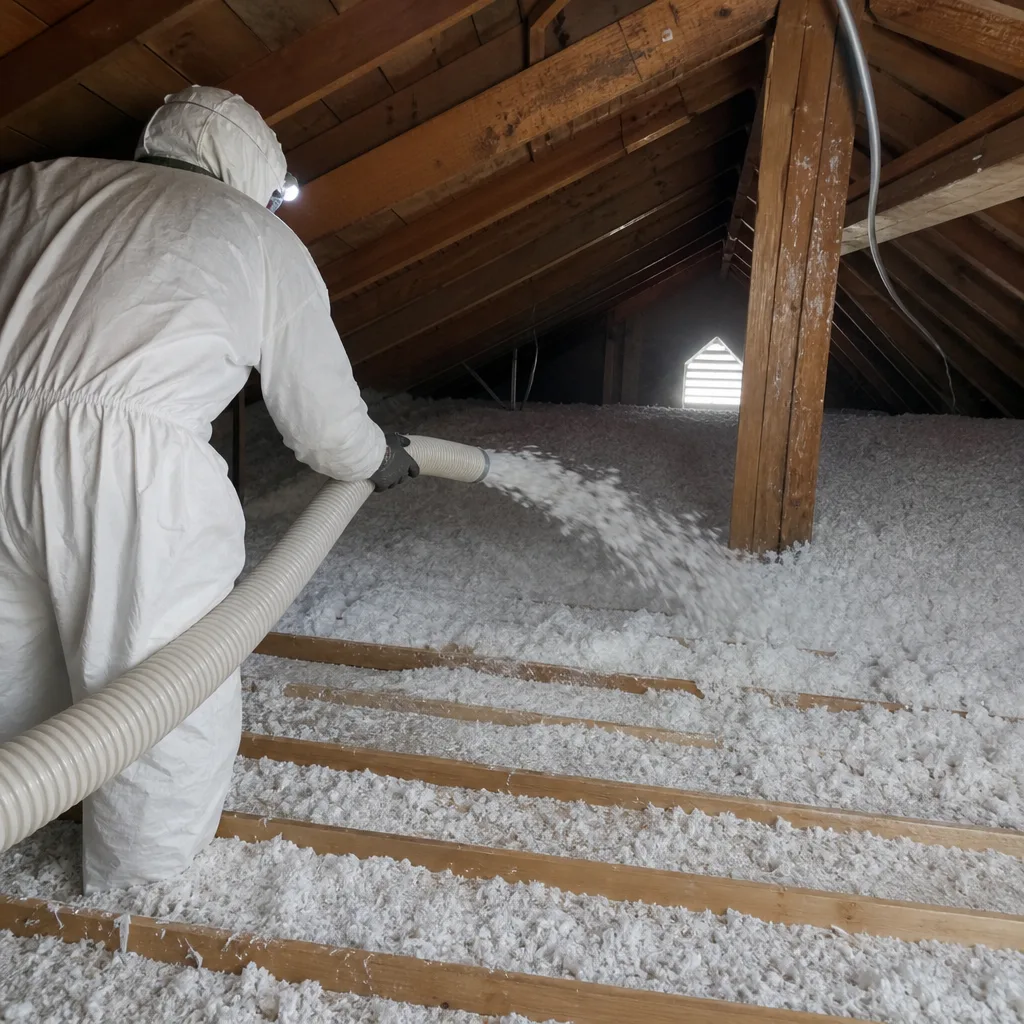
- Hot second-floor rooms in August despite new insulation. The Demilec foam may have pulled away from top plates or shrunk at penetration edges, creating thermal bypass channels that bypass the insulation entirely. We find this most often where the original installer skipped mechanical fastening of wiring penetrations before foaming.
- Dust streaks on ceiling drywall near exterior walls. These dark lines indicate air is moving through the wall-ceiling joint, carrying attic particulate into the conditioned space. In Whittier’s Santa Ana wind events, pressure differentials across the envelope make these leaks visible within one season of seal failure.
- Ice-cold bathroom vents in winter. A properly sealed Demilec system blocks convective loops around duct boots. When the seal fails, unconditioned attic air drops around the flex duct, and you feel it at the grille.
- Musty odor after rain, concentrated in upstairs closets. This usually means the Demilec foam was applied directly over damp sheathing or that the vapor profile is wrong for the assembly, allowing condensation at the foam-wood interface. Whittier’s marine layer mornings keep roof decks above dew point longer than inland valleys, but October Santa Anas can drive rapid moisture cycling.
- Blower-door test shows no improvement from last year. If you have a previous test on file - we keep them for every Whittier job we’ve done - a 15% or greater drift in CFM50 indicates seal degradation, not insulation settling. The foam itself doesn’t settle; the adhesion does.
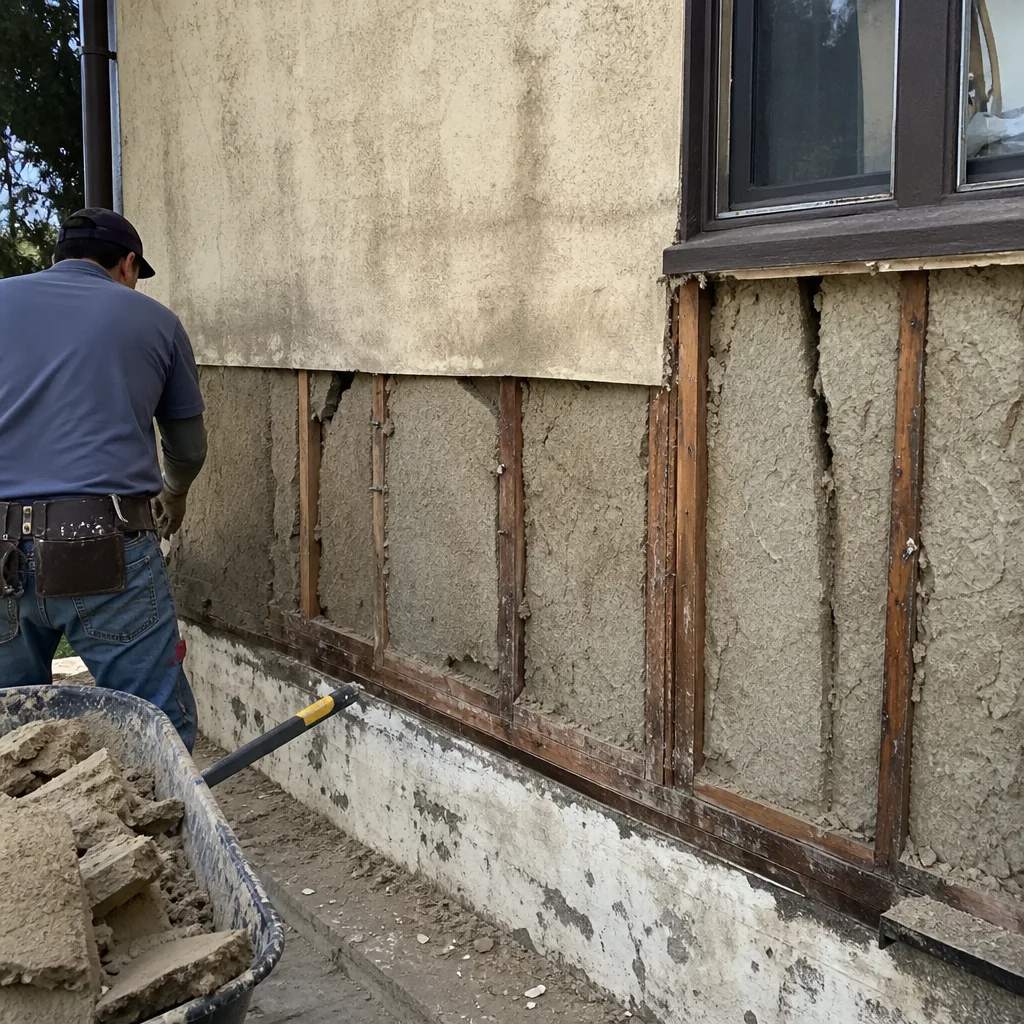 Before
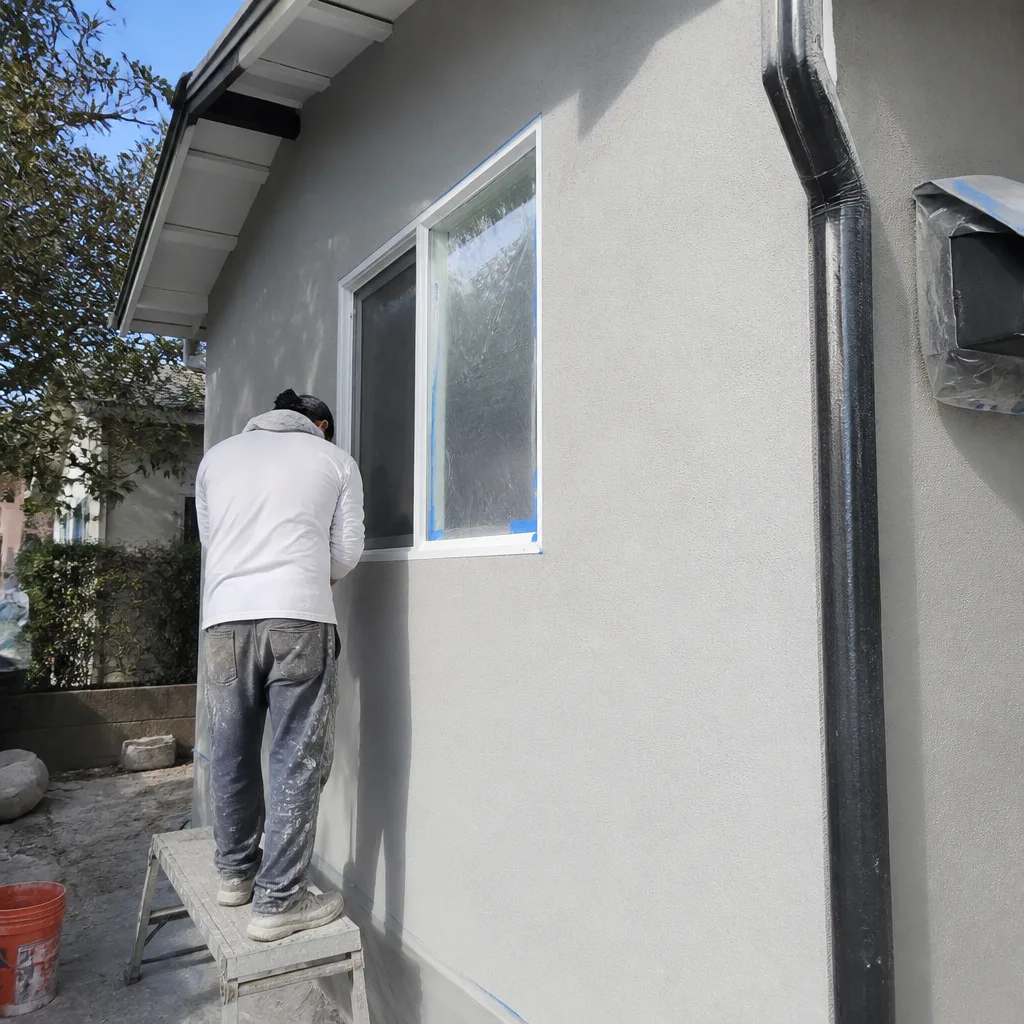 After
AfterReplacement Cost & What’s Included
Most complete Demilec attic air-sealing jobs in Whittier homes this size run between $1,800 and $3,400 installed. The lower end covers a straightforward top-plate seal with Demilec HEATLOK SOY on a single-story home with good attic access and minimal electrical or HVAC rerouting. The upper end applies to two-story homes with complex chase penetrations, recessed can lights requiring fire-rated enclosures before sealing, or existing foam that must be cut back and re-primed for adhesion.
Every job includes: core sampling and identification of existing foam type; removal of degraded or poorly adhered sections; primer application where substrate exposure requires it; Demilec foam application to manufacturer thickness; and a post-work blower-door test with written before-and-after CFM50 readings. Under Haven Standard Clause 1, you receive a written price, written scope, and written warranty before anyone lifts a tool. The 365-Day Done Right Promise covers adhesion and seal integrity. We also stock Reflectix radiant barrier accessories if your attic needs both air sealing and thermal reflection.
DIY or Call Us?
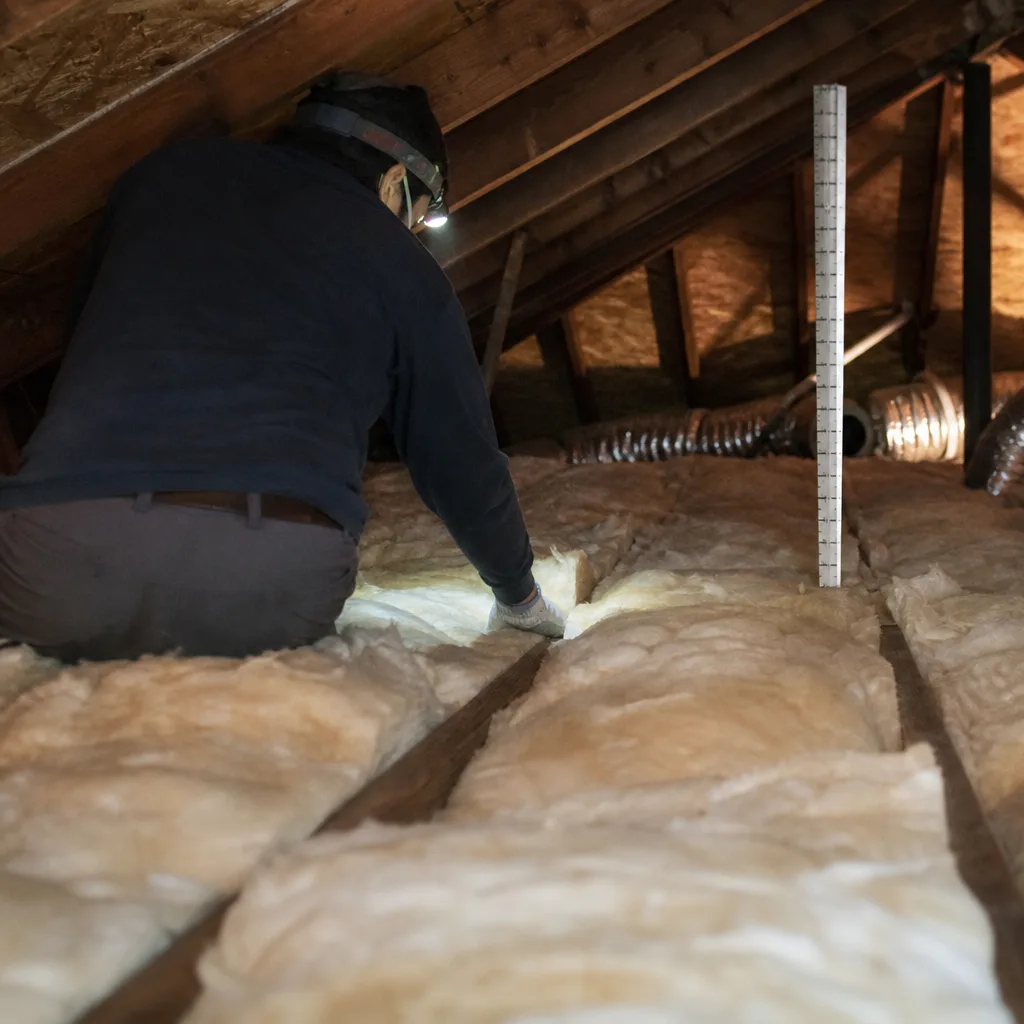
There’s a short list of things a Whittier homeowner can safely check: verify the attic hatch gasket is intact, confirm bath fan dampers close fully, and look for obvious daylight through knee-wall joints. What you cannot safely or effectively do yourself is apply two-component spray foam. The isocyanate component in Demilec’s system is a respiratory sensitizer; without supplied-air respiration, full skin coverage, and controlled ventilation, you’re risking chemical asthma. The foam also generates exothermic heat during cure - 300°F+ in thick passes - with real fire risk in an enclosed attic.
Beyond safety, the technical failure mode is incomplete seal geometry. Most attic bypasses run through multiple framing members; foam applied from a single access point leaves voids at the backside of top plates. We use borescope verification and multiple application angles. If you’re seeing symptoms, call (424) 349-7262. We’ll read your existing situation and give you a written price before any work starts.
FAQs
In Whittier’s climate, properly applied Demilec foam should maintain adhesion and dimensional stability for 25-30 years. The failure points we see at year 8-12 are almost always installation defects - inadequate substrate temperature during application, or foam applied over dusty sheathing - not material degradation. Call (424) 349-7262 and we’ll assess whether you’re looking at a warranty issue or a coverage extension.
Localized adhesion failure can be cut back and patched with matching Demilec product if the remaining foam passes a pull-test and the substrate is clean. We do not patch over more than 30% degradation; at that point, the labor to prep exceeds the cost of a clean restart, and the result is less reliable. We’ll tell you which side of that line you’re on after inspection.
A typical Whittier attic air-sealing job takes one full day for preparation and application, plus a return trip the following day for the post-cure blower-door test. Foam must reach full cure before we pressurize the house; testing too early gives a false low reading. You’ll have the documented result, with photos, within 48 hours of start.
We carry Demilec HEATLOK SOY and SEALECTION 500 resin sets, plus primer, cleaner, and replacement gun assemblies on every Whittier-based vehicle. For same-day starts, we need attic access confirmed and the existing foam type identified - usually by photo or prior job record. If your home has a less common Demilec formulation, we can source within 24 hours through our Huntington Beach supplier.
Written by Wes Okafor, Owner, Topside Attic Insulation Whittier at Topside Attic Insulation Whittier, serving Whittier and nearby areas.