
Demilec Attic Insulation: The Whittier Owner’s Guide
Demilec attic insulation in Whittier homes typically runs $2.80 to $4.20 per board foot for open-cell spray foam installed, with most attic jobs falling between $3,200 and $5,800 depending on square footage and whether we need to remove degraded material first. We stock Demilec-compatible formulations on our trucks and can usually start the job same-day once you’ve approved the written scope. Most Whittier homeowners discover their Demilec insulation is failing when they notice uneven temperatures between rooms, a sudden spike in their SCE bill, or moisture staining on the ceiling drywall where the foam has pulled away from the roof deck.
Which Demilec Models This Applies To
Demilec produces several spray foam lines that appear in Whittier attics, and identifying the right replacement starts with reading what’s already on your rafters or deck. Look for a stamped or spray-applied label reading SEALECTION 500, Agribalance, or Heatlok Soya - these are the three systems we encounter most often in 1950s California bungalows and the 1980s-2000s tract homes common east of Whittier Boulevard.
SEALECTION 500 is an open-cell, half-pound density foam - soft to the touch, R-3.6 per inch, and the one most likely to show shrinkage gaps after a decade in our dry heat. Agribalance and Heatlok Soya are closed-cell, two-pound density products - rigid, R-6 per inch, and far less prone to thermal drift but harder to retrofit around existing wiring without full removal. The critical compatibility gotcha: you cannot spray open-cell over closed-cell or vice versa without mechanical removal of the old material first. We’ve inspected attics in the Friendly Hills area where a handyman layered SEALECTION over original Agribalance, and the resulting vapor barrier mismatch trapped moisture against the roof sheathing.
We source our Demilec formulations through authorized distribution, but we are an independent service provider with no affiliation to Demilec - we also stock Reflectix radiant barrier and Owens Corning, Johns Manville, Knauf, Rockwool, CertainTeed, Icynene, and GreenFiber systems, so the recommendation matches your assembly, not our inventory.
Signs Your Demilec Attic Insulation Is Failing
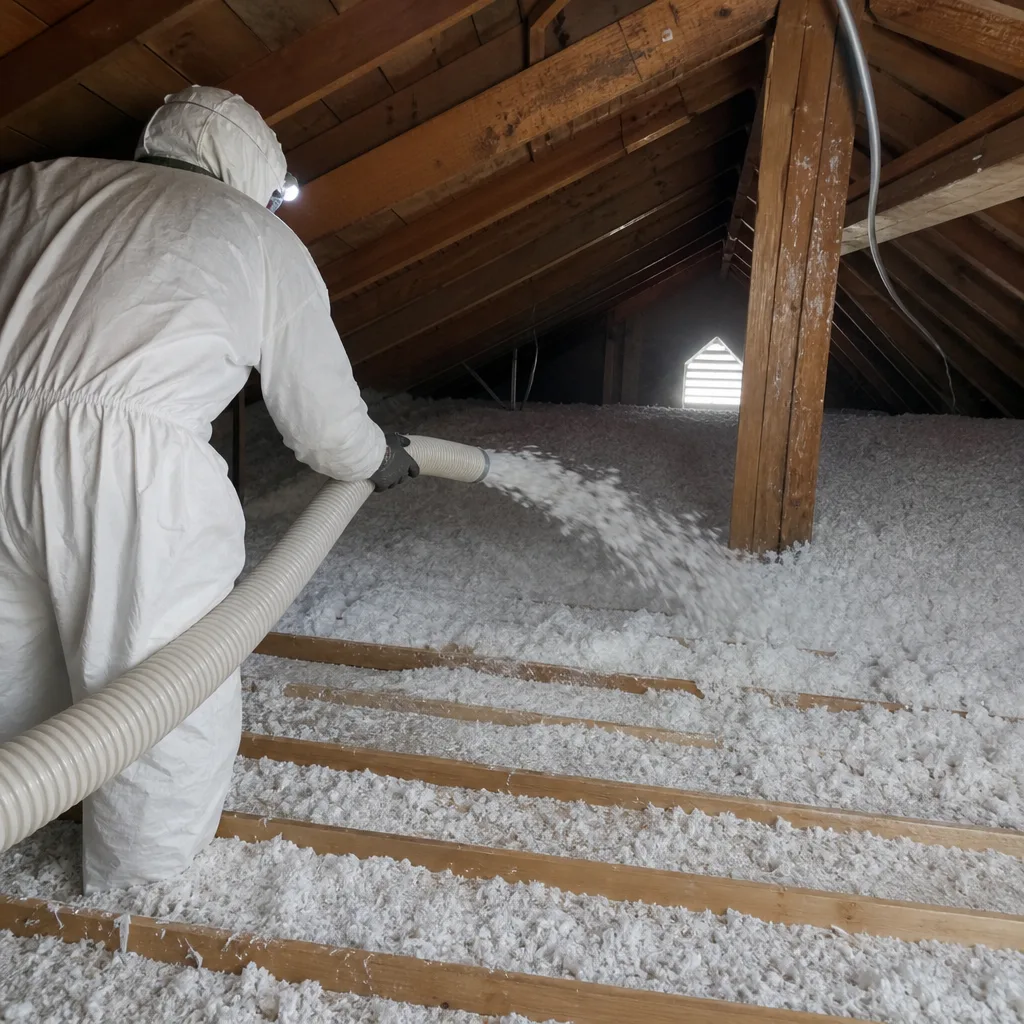
- Uneven room temperatures despite the HVAC running constantly. This usually means the Demilec has shrunk or delaminated from the substrate, creating thermal bypasses - air paths that short-circuit your conditioned envelope. We find this most often on north-facing roof planes in Whittier, where winter temperature swings stress the foam-to-wood bond.
- Musty or chemical odor returning after years of absence. Open-cell Demilec can act as a reservoir for attic moisture if the assembly wasn’t designed for vapor permeability. When relative humidity in the attic spikes above 70 percent, the foam matrix holds that moisture against framing.
- Visible gaps or “pull-back” at rafter edges. The foam should terminate flush against framing members. If you can slide a putty knife between the Demilec and the rafter, the material has undergone dimensional change - common in attics that exceed 140°F regularly, which happens in unvented Whittier attics during September heat events.
- Ice damming or water staining at the eaves in winter. Even in mild Whittier winters, a compromised thermal boundary allows conditioned air to reach the roof deck, melting any overnight frost and refreezing at the overhang. The stain pattern tells us where the foam has failed before we even set up the blower door.
- Blower-door readings that haven’t improved despite prior “insulation upgrades.” We recently tested a home near Michigan Park where a previous contractor had sprayed two inches of SEALECTION 500 over an entirely unsealed attic floor. The CFM50 dropped by less than 8 percent - the insulation was performing as an air filter, not an air barrier.
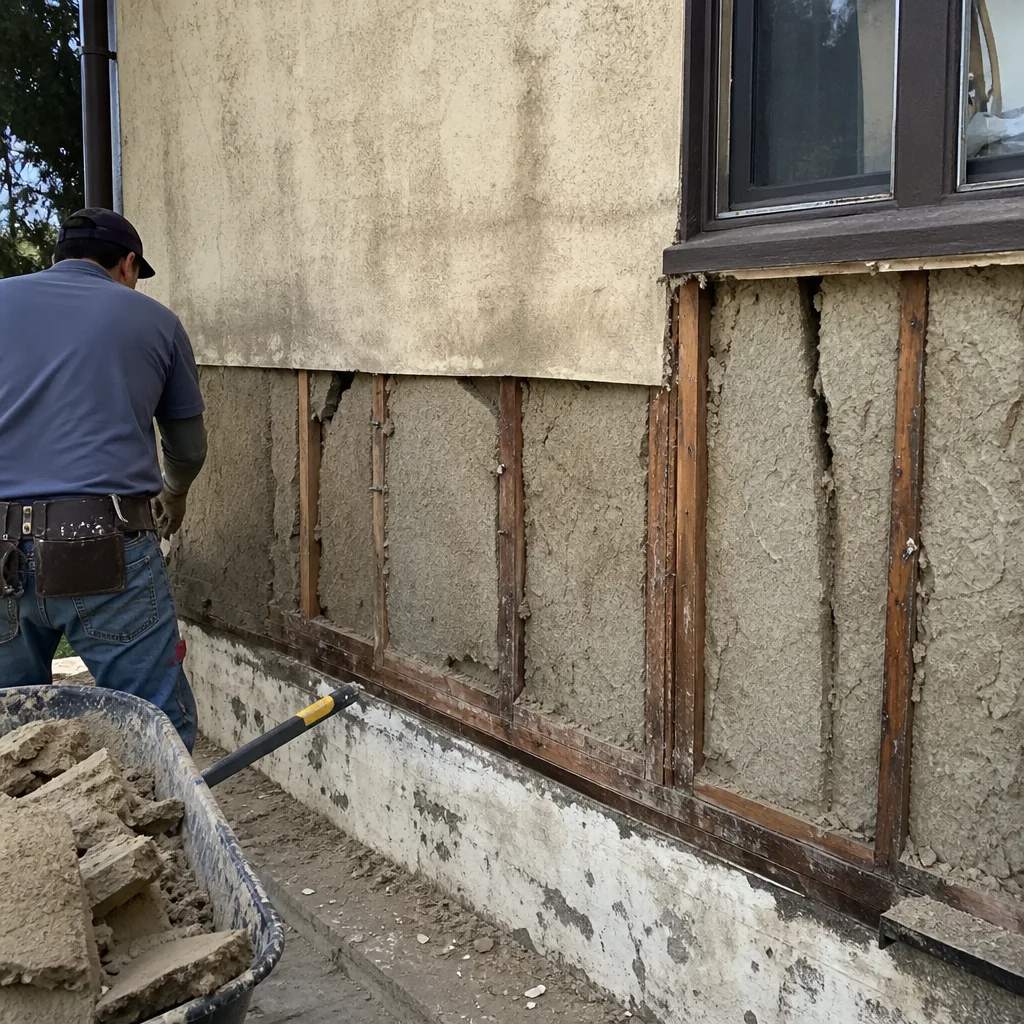 Before
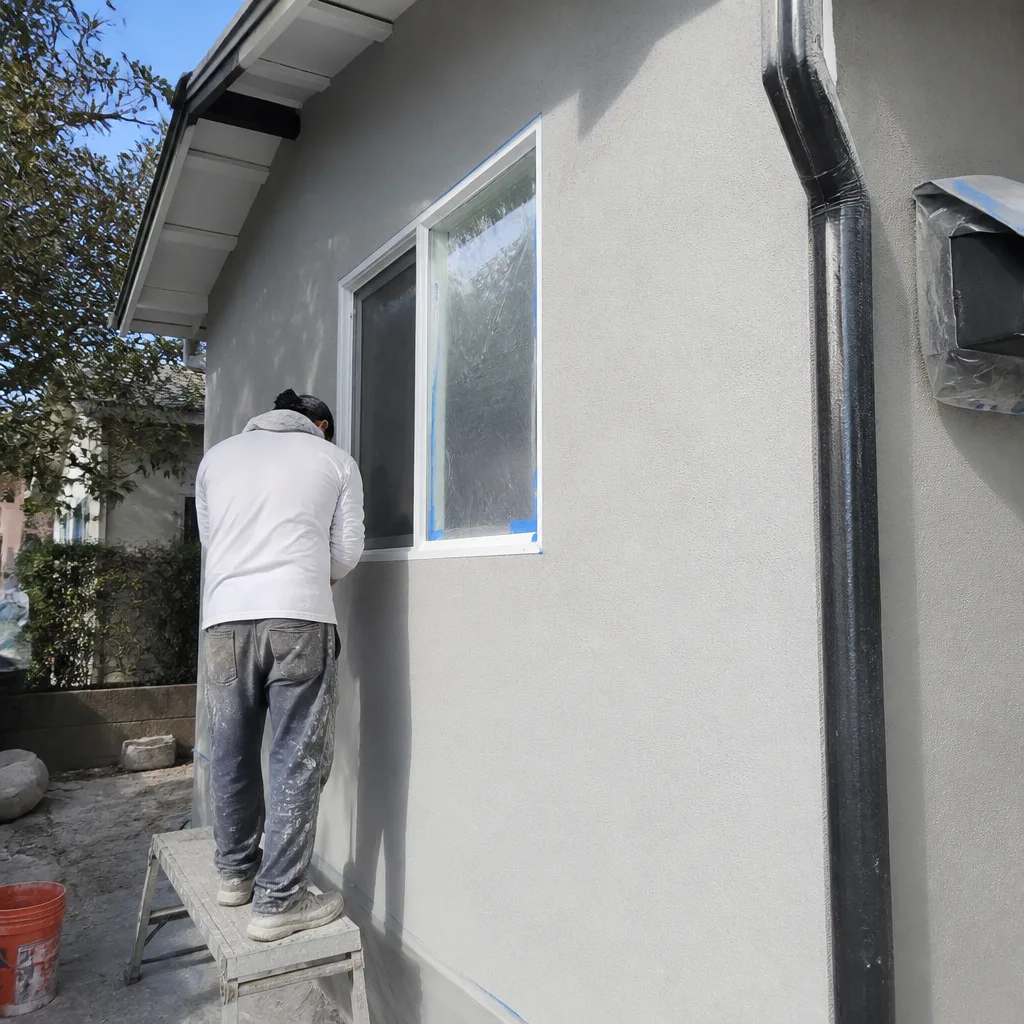 After
AfterReplacement Cost & What’s Included
Most Demilec attic insulation replacements in Whittier fall between $3,200 and $5,800 for a typical 1,200-1,800 square foot home, with the spread driven by three factors: whether we remove existing degraded foam, how much air sealing the top plates and penetrations need before new material goes in, and whether the roof deck shows moisture damage that must dry before encapsulation.
That price includes removal and responsible disposal of old Demilec, mechanical cleaning of the substrate, air sealing of all top-plate penetrations and recessed can lights with fire-rated caulk and rigid baffles, spray application of new foam to the specified depth, and a post-job blower-door test - the pressurization reading that shows, in one number, how much air your building envelope is losing. You receive the written scope beforehand, the documented photo record afterward, and before-and-after CFM50 figures on every job where the blower door applies. Under Haven Standard Clause 1, the price is flat and written before anyone lifts a tool.
Our 365-Day Done Right Promise covers the installation. If the foam shrinks, delaminates, or fails to meet the stated R-value within that window, we make it right.
DIY or Call Us?
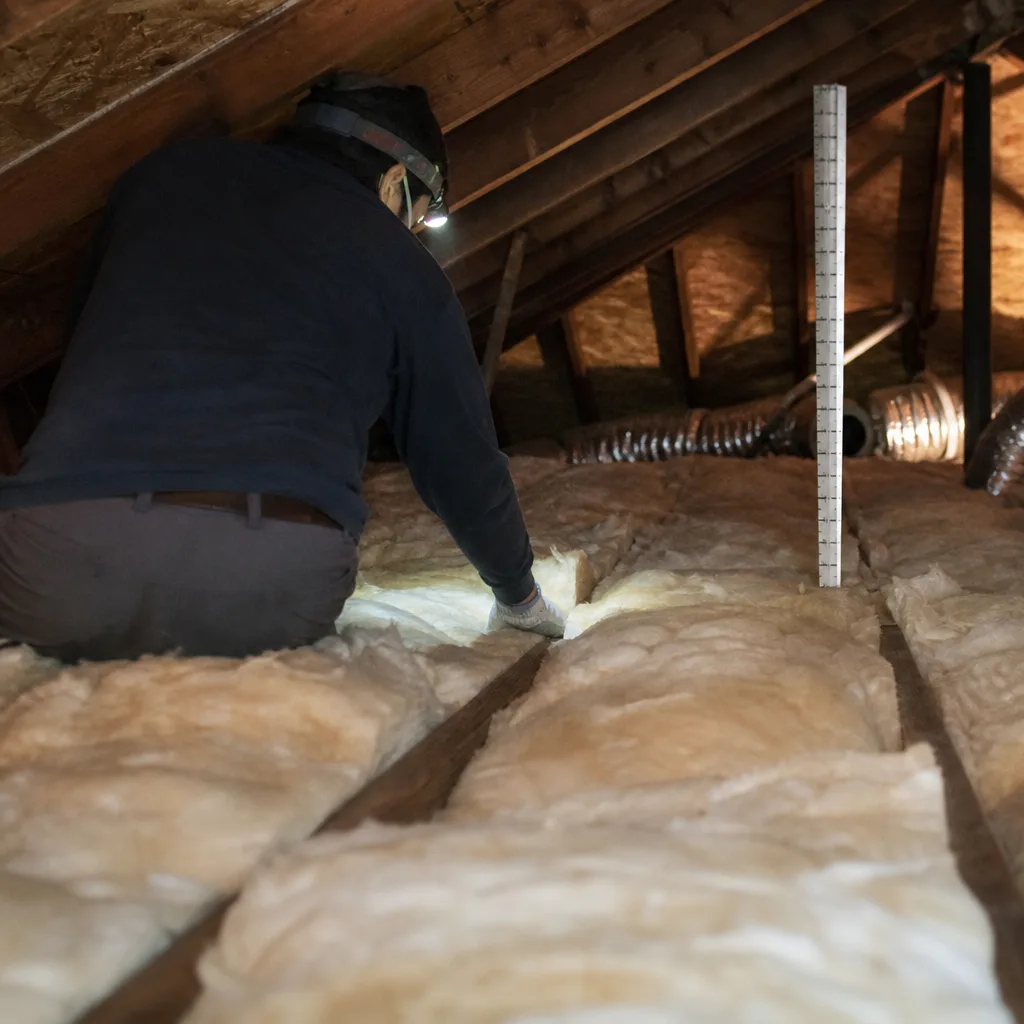
There’s a short list of things a Whittier homeowner can safely check: read the existing foam label if it’s visible, photograph any gaps or stains for reference, and verify that bathroom and kitchen exhausts actually terminate outside rather than dumping into the attic - a common precondition for foam failure that has nothing to do with the foam itself.
Everything else belongs to a crew with the right equipment. Spray foam application requires respiratory protection beyond standard particulate masks - the isocyanate component is a sensitizer, meaning exposure can trigger permanent asthma-like response. The plural-component proportioning rig must maintain exact temperature and pressure ratios; off-ratio foam fails to cure properly and emits odor for months. And without a blower-door test before and after, you’re insulating blind - you won’t know whether you’ve actually tightened the envelope or just buried the leaks.
Seal it first, then cover it - the insulation is not the fix, it’s the finish. Wes Okafor has pulled apart enough shortcuts in Whittier attics to know what skipping that step costs a homeowner in August. Call (424) 349-7262 and we’ll walk through what you’re seeing. Estimates are free, and we bring a written price to every visit.
FAQs
Properly installed open-cell Demilec lasts 15-20 years in our dry Southern California climate, while closed-cell formulations often reach 25-30 years before measurable thermal drift. The difference comes down to attic ventilation strategy and whether the original contractor sealed bypasses first - we’ve found 8-year-old SEALECTION 500 in unvented Whittier attics that was already pulling back because the assembly temperature exceeded the foam’s long-term stability threshold. Call (424) 349-7262 for an exact assessment of your specific installation.
Localized delamination can sometimes be spot-repaired with compatible foam if the surrounding material is sound and the substrate is clean, but we only recommend this when the failure covers less than roughly 10 percent of the attic surface. Shrinkage, off-ratio curing, or moisture-compromised foam always requires full removal - patching over damaged substrate traps the problem and voids any meaningful warranty. We provide a free second opinion on any written estimate you’ve already received.
Most residential jobs in Whittier finish in one to two days: half a day for removal and air sealing, half a day for spray application and cure monitoring, plus the blower-door test. Full cure before you can occupy the space without respiratory concern is 24 hours for open-cell and 24-48 hours for closed-cell, depending on ambient temperature and humidity. We schedule around this so you’re not displaced overnight.
We carry Demilec-compatible formulations in both open-cell and closed-cell densities, along with the full complement of prep materials - fire-rated sealants, rigid baffles, and vapor-variable membranes. For Whittier jobs, we typically pull material the morning of or day before to ensure the drums are at proper temperature for application. Same-day starts are standard once you’ve approved the written scope.
Written by Wes Okafor, Owner, Topside Attic Insulation Whittier at Topside Attic Insulation Whittier, serving Whittier and nearby areas.