
Knauf Vapor Barrier Installation: The Whittier Owner’s Guide
Knauf vapor barrier installation in Whittier typically runs $1,800-$3,400 for a full crawl space or attic application, and we stock Knauf Insulation’s Faced Batt and EcoSeal-compatible membranes on our trucks for same-day starts. Most Whittier homeowners discover the problem after a rainy winter - musty odors in the Uptown district’s older bungalows, or flooring cupping in Friendly Hills ranch homes where the original 6-mil polyethylene has degraded. We’re an independent service provider, not affiliated with Knauf, though we source their materials through authorized distribution.
Wes Okafor, our owner, has pulled enough failed vapor barriers in Whittier to spot the pattern: 1950s-1970s homes with dirt crawl spaces and no ground seal, where the original black poly was never taped at seams or sealed to the foundation wall. The fix isn’t laying down new plastic over the old - it’s sealing the envelope first, then installing the barrier as a system.
Which Knauf Models This Applies To
Knauf doesn’t sell “vapor barrier” as a standalone branded part the way they sell batts or loose-fill. What Whittier homeowners need matched is the vapor retarder facing on Knauf Insulation products, or the separate membrane used in crawl space encapsulation and attic floor applications. Here’s how to identify what you’ve got:
- Faced batts: Kraft paper or foil-scrim-kraft (FSK) facing bonded to fiberglass - look for the Knauf logo and R-value printed on the facing every 24 inches. Common in Whittier attic retrofits: R-30 and R-38 kraft-faced batts.
- Unfaced batts with separate poly: 6-mil polyethylene sheeting, often clear or black, installed as a continuous layer. Knauf’s distribution chain carries this; we verify the mil rating and ASTM E1745 Class A, B, or C compliance.
- EcoSeal-compatible systems: Knauf’s water-based elastomeric sealant paired with a membrane - the vapor barrier is the membrane, not the sealant.
The OEM-versus-aftermarket decision for Knauf specifically: their kraft facing uses a particular asphalt-impregnated paper that bonds predictably to their fiberglass. Generic kraft-faced batts often delaminate in Whittier’s summer attic heat, where sheathing temperatures hit 140°F. We source Knauf-facing-compatible products through the same distribution channel; if we’re retrofitting over existing Knauf, we match the facing type to maintain the vapor retarder’s permeance rating, measured in perms. Too low and you trap moisture; too high and you don’t retard vapor at all.
Compatibility gotcha: Knauf’s R-30C and R-38C “cathedral ceiling” batts have a heavier FSK facing rated for exposed applications. Standard kraft facing will fail in an exposed crawl space - it darkens, embrittles, and tears within 3-5 years in Whittier’s clay-heavy soil conditions where ground moisture wicks upward.
Signs Your Knauf Vapor Barrier Installation Is Failing
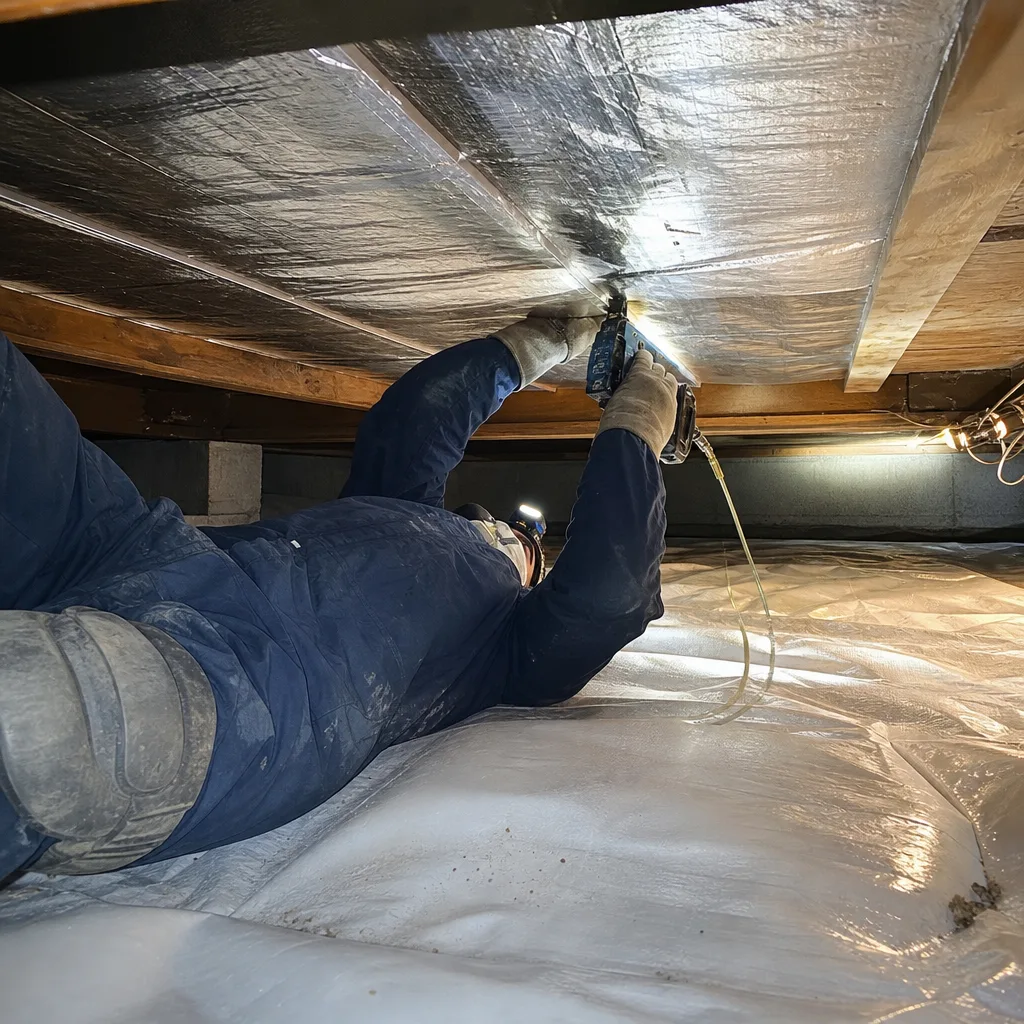
- Musty odors that worsen after rain. The vapor barrier has lost continuity - seams gapped, tears at penetrations, or the poly has pulled away from the foundation wall. Whittier’s winter rains saturate the clay soil; without a sealed barrier, that moisture evaporates into the crawl space and migrates upward through the floor assembly.
- Cupped or crowned hardwood floors, especially in older Uptown homes. Moisture vapor moving through the subfloor causes differential expansion. The vapor barrier isn’t retarding - it’s absent or breached at the perimeter, often where the original installer didn’t extend poly 6 inches up the wall or seal it with mastic.
- Insulation drooping or falling in crawl spaces. Knauf faced batts rely on the facing for mechanical support when stapled. High humidity degrades the paper; the staples pull through, and the batt lands on the dirt. We see this in Friendly Hills homes where the original 1970s install used 1/2-inch staples into damp framing.
- Visible mold on joist bottoms or subfloor. Surface mold at 20%+ wood moisture content means the vapor barrier is passing, not blocking, vapor. In Whittier’s climate, that’s almost always a failed or missing ground cover combined with poor perimeter sealing.
- White or chalky deposits on concrete or block walls. Efflorescence - mineral salts carried by evaporating moisture. The vapor barrier isn’t sealed to the wall, or the wall itself lacks a capillary break. In Whittier’s older construction, we find this where the original builder skipped the sill seal gasket.
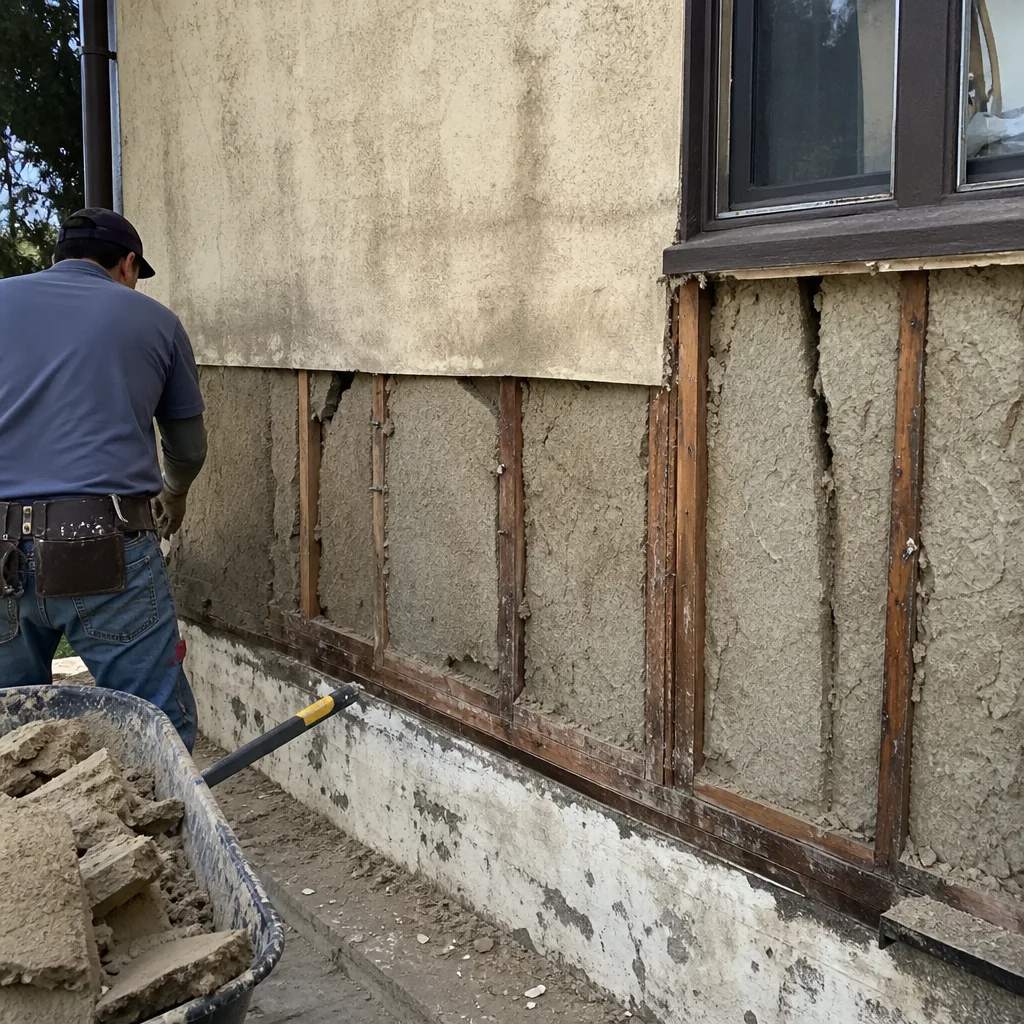 Before
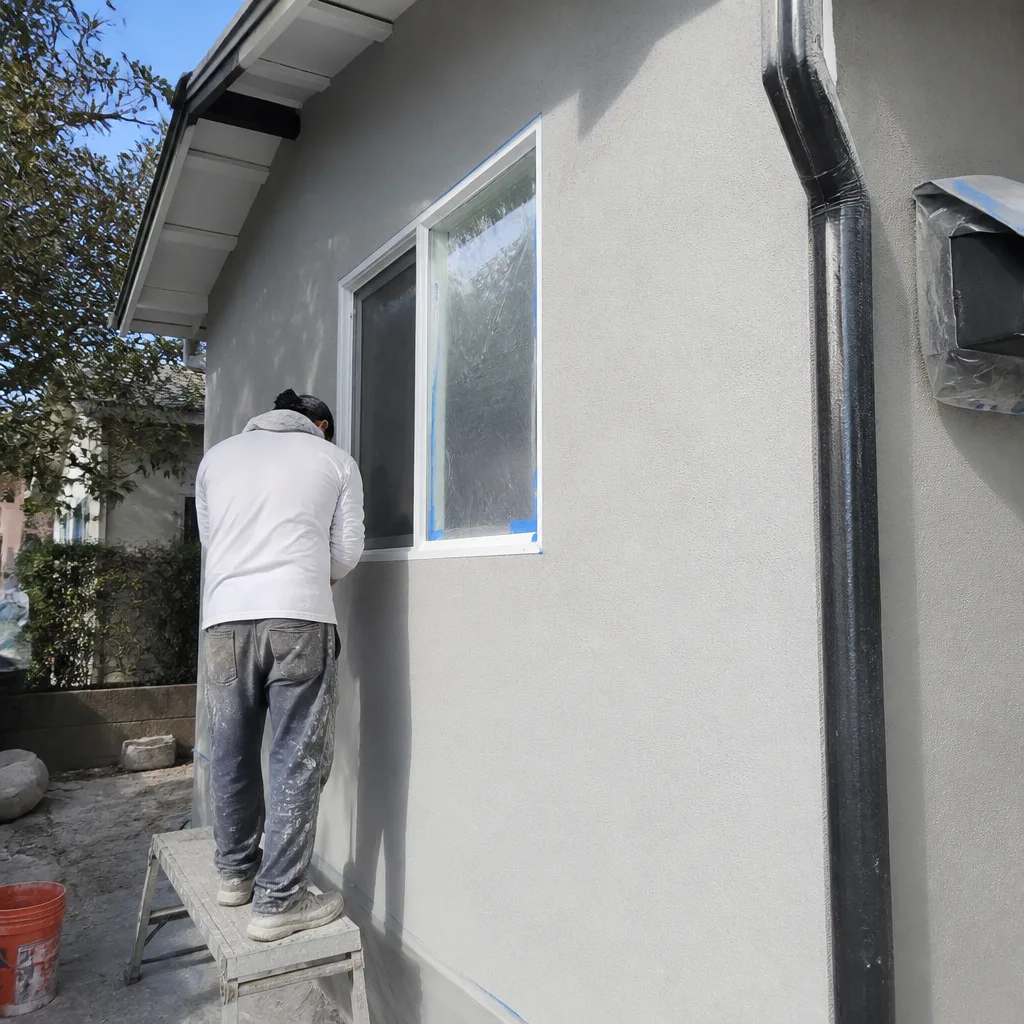 After
AfterReplacement Cost & What’s Included
| Scope | Typical Range in Whittier | What Drives It |
|---|---|---|
| Crawl space vapor barrier only (6-mil poly, taped seams, sealed to walls) | $1,800-$2,600 | Square footage, accessibility, debris removal |
| Crawl space encapsulation (10-20 mil reinforced membrane, full seal, dehumidifier prep) | $2,800-$4,200 | Membrane grade, pier wrapping, conditioning needs |
| Attic floor vapor retarder with air sealing | $1,400-$2,400 | Existing insulation removal, top plate sealing, blower-door verification |
Our pricing includes: removal and disposal of failed material, installation of Knauf-compatible membrane with taped seams and sealed perimeters, and a Documented Photo Record of the completed work. On applicable jobs, we run a blower-door test - a pressurization reading that shows, in one number, how much air your building envelope was losing before and after. Under Haven Standard Clause 1: flat price, written scope, written warranty before anyone lifts a tool. The 365-Day Done Right Promise applies.
Most Whittier jobs in the 1,200-1,800 square foot crawl space range land near $2,200. Add $400-$800 if we need to remove water-damaged or rodent-contaminated insulation first - common in the older stock south of Whittier Boulevard.
DIY or Call Us?
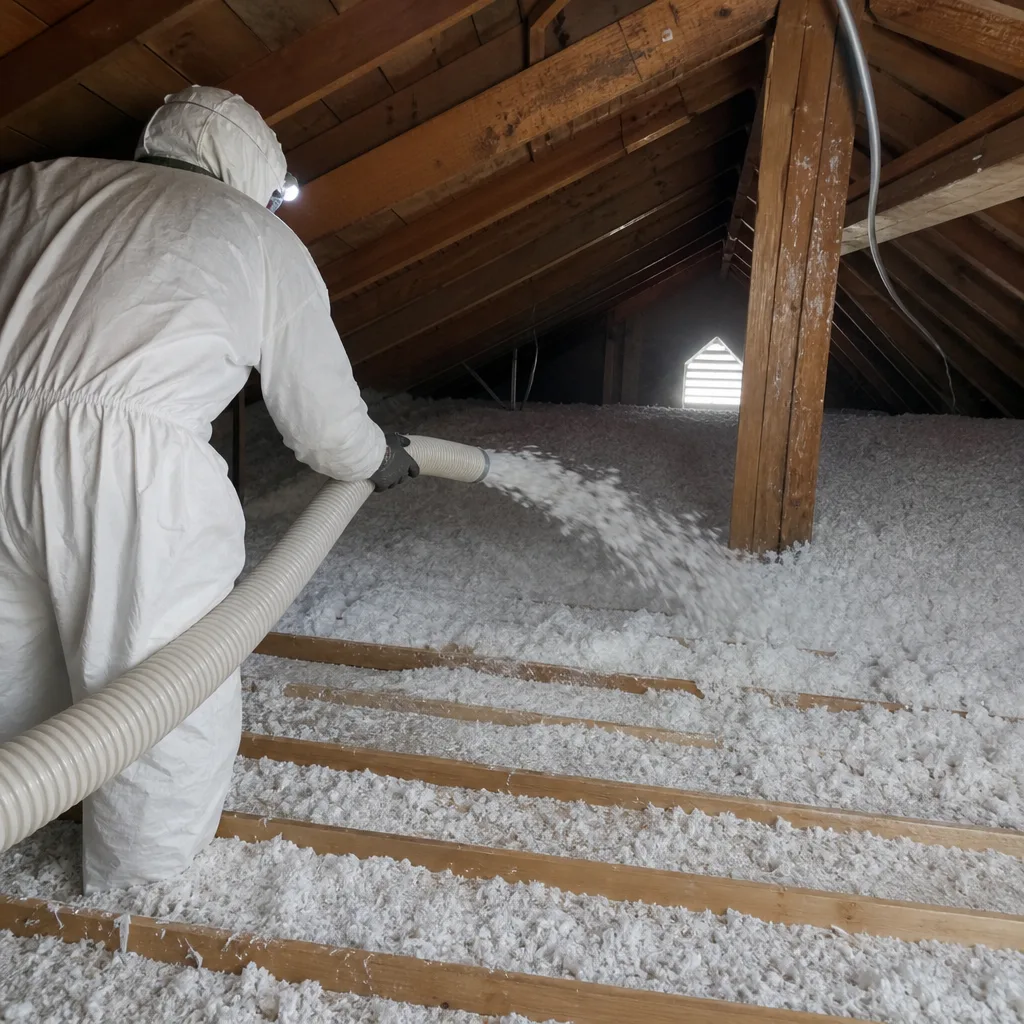
What you can safely check: Verify whether your crawl space has any ground cover at all. Measure the mil thickness of existing poly with a simple gauge. Look for unsealed seams, tears around piers, and poly that doesn’t extend to the walls. Photograph what you find - it helps us scope the job before we arrive.
Where DIY goes wrong: Vapor barrier installation looks like laying down plastic, but the failure points are nearly always at the details - seam taping that holds under soil contact, sealing to irregular foundation walls, maintaining continuity around plumbing and electrical penetrations. In Whittier’s clay soils, ground preparation (grading, possibly adding a drainage mat) precedes the membrane. Without a blower-door test, you won’t know if the real moisture driver is crawl space leakage from the house above or ground vapor below. We’ve re-done enough homeowner installs to know the cost of the second call usually exceeds the first.
Call (424) 349-7262 for a written price before any work starts. Estimates are free, and we offer a Free Second Opinion on any written estimate you’ve already received.
FAQs
A properly installed 10-mil reinforced membrane lasts 15-20 years in Whittier’s climate; standard 6-mil poly in a vented crawl space typically fails at seams within 7-10 years due to soil contact and rodent activity. Call (424) 349-7262 for an exact quote on upgraded membrane - estimates are free.
Small punctures can be patched with compatible tape and an overlay patch, but seam failures, widespread embrittlement, or poly that has pulled from walls indicates systemic installation failure and warrants full replacement. We document the condition with photos and give you a written scope either way.
Most crawl space vapor barrier replacements in Whittier take one day for crews of two; encapsulation jobs or those requiring insulation removal and air sealing typically run two days. We provide a written schedule with your price.
We stock 6-mil, 10-mil, and 20-mil reinforced polyethylene, Knauf-facing-compatible kraft and FSK products, and seam tape on our trucks - no waiting on distribution for standard Whittier jobs. Call (424) 349-7262 to confirm availability for your specific scope.
Written by Wes Okafor, Owner, Topside Attic Insulation Whittier at Topside Attic Insulation Whittier, serving Whittier and nearby areas.