
Owens Corning Attic Insulation: The Whittier Owner’s Guide
Most Owens Corning attic insulation replacements in Whittier run between $1.80 and $3.40 per square foot installed, depending on R-value and whether the existing material needs removal first. We stock Owens Corning ProPink L77 loose-fill and R-30 through R-60 batts on our Whittier trucks, and we can typically inspect and quote same-day. Homeowners usually notice the problem first as a summer spike in AC runtime, or they find compressed, discolored batts while storing holiday decorations in a Uptown bungalow’s attic hatch.
Which Owens Corning Models This Applies To
Owens Corning labels its residential attic insulation by application type and thermal performance, not by model year like an appliance. The three product families we handle in Whittier are:
- ProPink L77 loose-fill - blown-in fiberglass, typically installed to R-38 or R-49 in our climate zone; bag weight is 28.5 lbs and coverage runs roughly 65 sq ft per bag at R-38 depth. This is what most 1950s-1980s Whittier homes receive when upgrading from original low-R batts.
- QuietZone PINK batts - acoustic and thermal, R-30 through R-38, faced with kraft paper or unfaced. The facing orientation matters: kraft faces the heated side in winter, which in Whittier means toward the living space below.
- AttiCat Expanding Blown-In - the system with the green machine you’ll see in big-box rental fleets. We run the commercial-grade version, which achieves more consistent density than the rental units; inconsistent density is the main reason DIY AttiCat jobs underperform.
Identification is straightforward: Owens Corning prints the product name, R-value, and lot number on the bag or a stapled tag on batt ends. If you’re staring at loose-fill with no label, we can sample it - fiberglass diameter and density tell us whether it’s original 1970s material or a later OC install. We are an independent service provider with no affiliation to Owens Corning; we source their materials because the specs are consistent and the thermal performance is documented.
The OEM-versus-aftermarket question barely applies here. Insulation is a commodity specified by R-value and density, not a proprietary part. What matters is whether the product matches the original spec and whether it was installed at the correct depth. We’ve torn out “equivalent” loose-fill that settled 20% in five years because the installer chased price per bag instead of settled density.
Signs Your Owens Corning Attic Insulation Is Failing
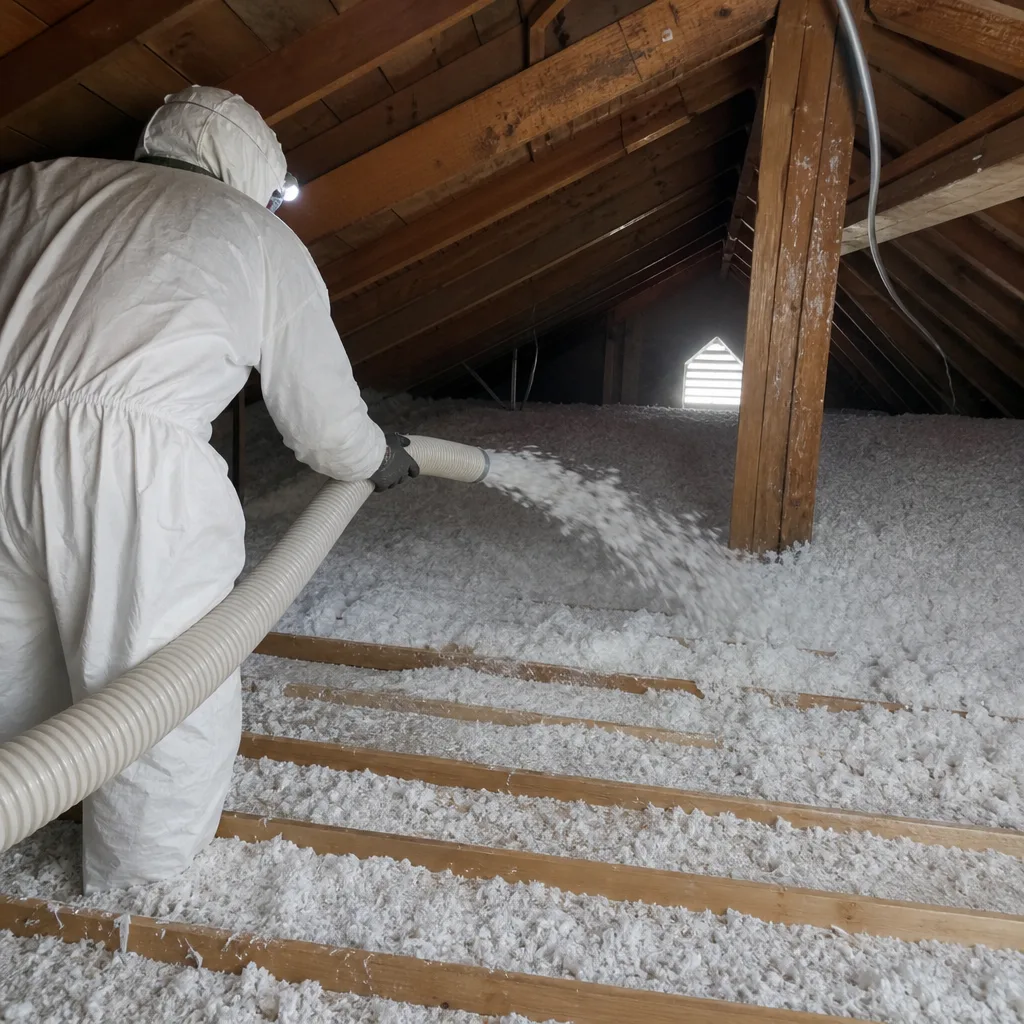
- Uneven temperature rooms below - the master bedroom over the garage runs five degrees hotter than the hallway. In Whittier’s Uptown and Friendly Hills neighborhoods, we trace this to batts pulled aside during prior ductwork or wiring work, never replaced properly.
- Compressed or water-stained batts - fiberglass loses R-value when squashed below its labeled thickness. A 6-inch R-19 batt compressed to 3.5 inches performs closer to R-13. Staining means roof leak or condensation; the insulation is now a mold reservoir, not a thermal barrier.
- Visible floor joists through loose-fill - code in Los Angeles County calls for R-38 minimum in attics, which for ProPink L77 means roughly 12 inches of settled depth. If you can see the tops of joists, you’re under depth and under code.
- Ice dam evidence in winter - rare but real in Whittier’s microclimate during cold snaps. Heat escaping through thin insulation melts roof snow; water refreezes at the eave and backs under shingles. The fix is air sealing plus depth, not just more insulation over the leak path.
- AC runs continuously on 85-degree days - your unit is fighting thermal gain through the ceiling. We measure this with a blower-door test, a pressurization reading that shows, in one number, how much conditioned air your building envelope is losing. Typical pre-work reading in a 1960s Whittier ranch: 3,500 CFM50. After sealing and proper insulation depth: under 2,000.
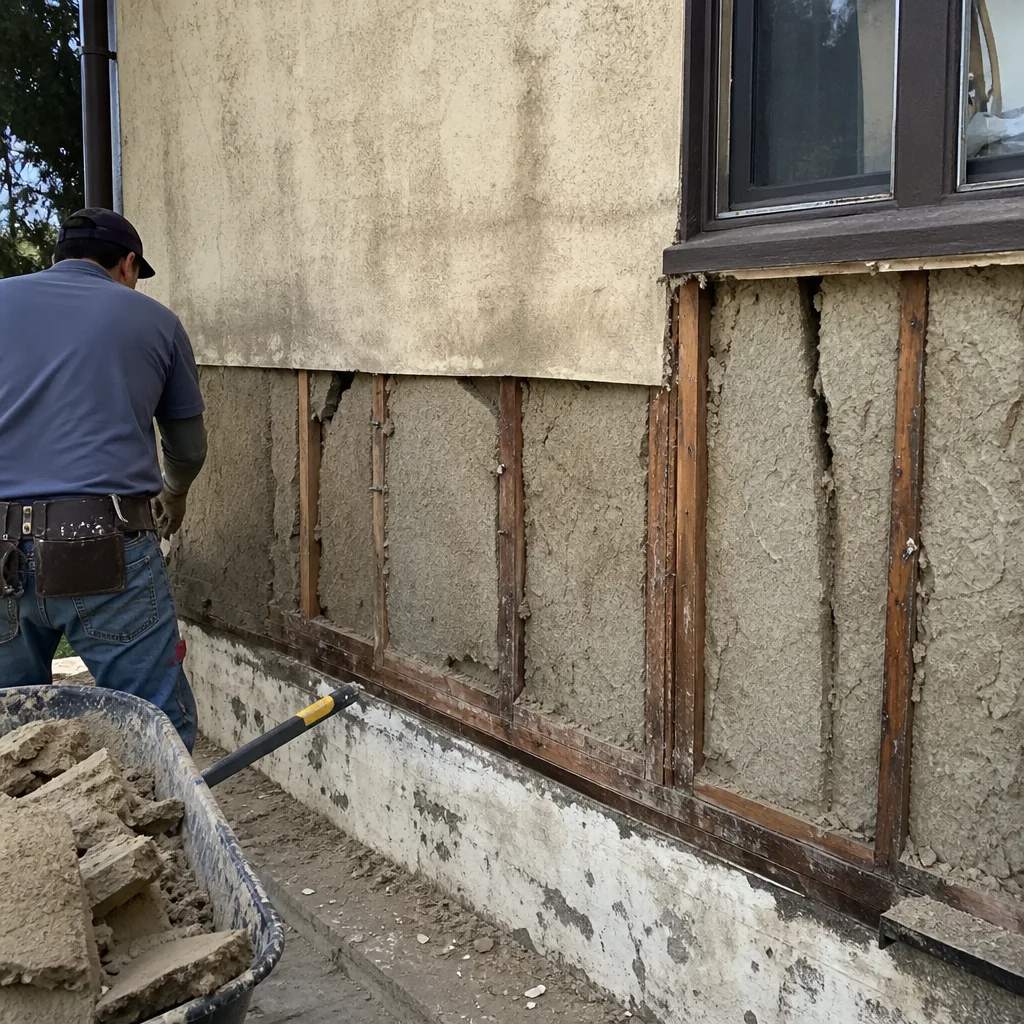 Before
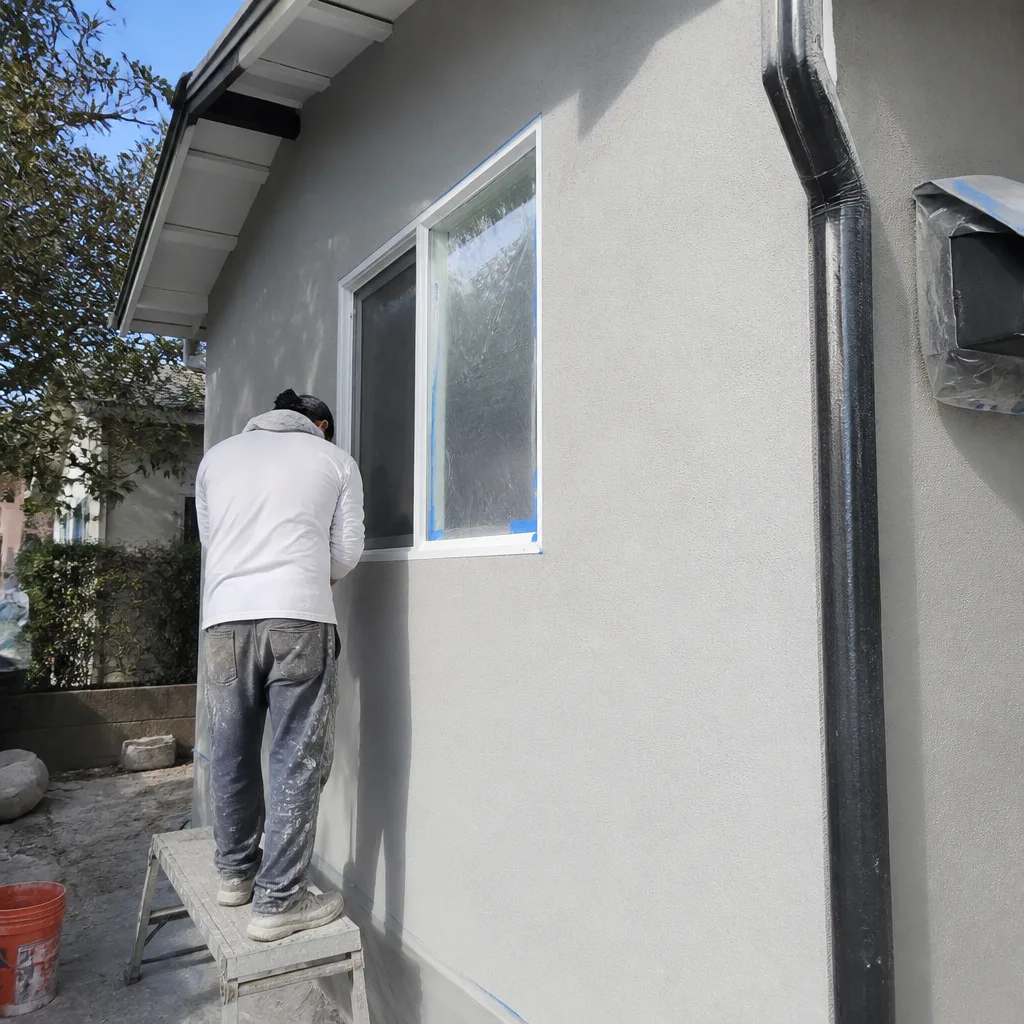 After
AfterReplacement Cost & What’s Included
| Scope | Price Range (Whittier) | Notes |
|---|---|---|
| Add loose-fill over existing (good condition) | $1.80-$2.40/sq ft | ProPink L77 to R-38 or R-49; includes damming around hatch and fixtures |
| Remove + replace with new batts | $2.80-$3.40/sq ft | Includes bagging old material, disposal, new R-30 to R-38 batts |
| Full removal, air seal, then insulate | $3.50-$4.80/sq ft | Top plates, can lights, penetrations sealed; blower-door verified |
| AttiCat system (blown-in only) | $2.20-$2.90/sq ft | Machine-settled density; 10% denser than typical rental install |
What drives the range: attic square footage, accessibility (cathedral ceilings run higher), whether we need to build storage platforms or light fixtures, and - most significantly - whether the existing material is salvageable. We don’t quote until we see it. Under Haven Standard Clause 1, you get a flat price, written scope, and written warranty before anyone lifts a tool. No exceptions since 2016.
Our 365-Day Done Right Promise covers all completed work. If the blower-door number doesn’t move, we find out why and fix it.
DIY or Call Us?
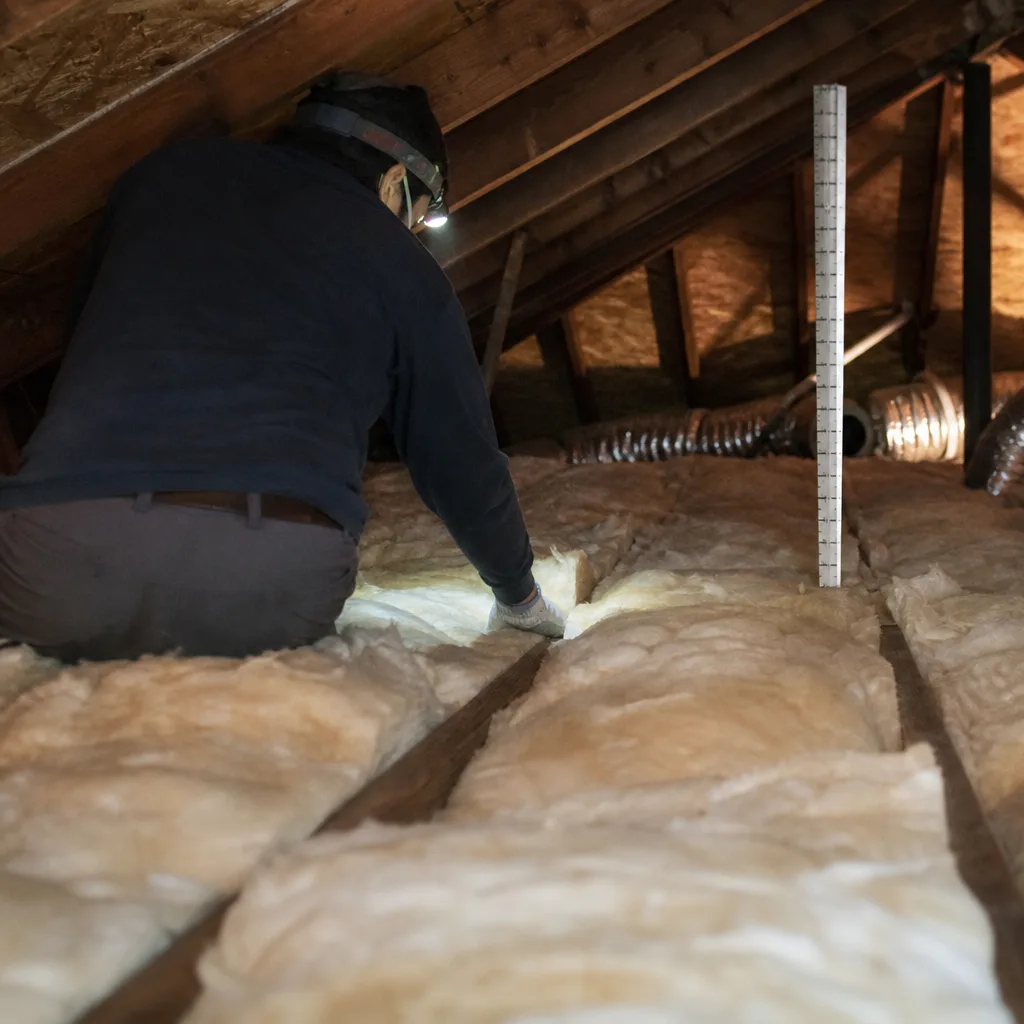
What you can safely check yourself: measure existing insulation depth with a ruler, photograph any stains or compression, and verify your attic hatch has weatherstripping. These three observations tell us most of what we need to know before we arrive.
Where DIY goes wrong: rental blowers don’t achieve commercial density, which means you’ll pay for R-49 and get R-38 performance within two seasons as the material settles. More critically, blowing new insulation over an unsealed attic floor is the most common shortcut we correct in Whittier. The conditioned air escapes through top-plate gaps and recessed can lights; the insulation just hides the problem. We’ve pulled apart enough of those jobs to know what skipping that step costs a homeowner in August.
Seal it first, then cover it - the insulation is not the fix, it’s the finish.
If your Owens Corning insulation is failing, call (424) 349-7262. We’ll read your situation over the phone, schedule a same-day inspection if you need it, and leave you with a written price before any work starts.
FAQs
Fiberglass itself doesn’t degrade chemically, but its thermal performance depends on maintaining labeled thickness and staying dry. In Whittier’s dry climate, properly installed ProPink L77 or batts perform at spec for 20-30 years. The failure mode we see is almost always installation error - compression, moisture intrusion, or gaps from later trades - not material breakdown. Call (424) 349-7262 and we’ll assess whether your existing material is salvageable or needs replacement.
Localized damage from a single roof leak can sometimes be cut out and patched with matching material. Widespread compression, rodent contamination, or moisture staining means full removal; patching over compromised insulation traps odor and mold risk. We document the condition with photos before recommending either path. Free second opinion on any written estimate - bring us a competing quote and we’ll read it with you.
Most Whittier homes in the 1,200-2,000 square foot range take one day for removal and replacement, or a half-day for a simple top-off if the existing material is sound. Jobs requiring full air sealing of top plates and penetrations run into a second day. We publish before-and-after blower-door numbers on every applicable job so you can verify the air-sealing result in a single figure.
We stock ProPink L77 loose-fill and R-30 through R-60 batts on our Whittier trucks. AttiCat and specialty acoustic products require a one-day pull from our distributor in City of Industry. Same-day installation is standard for batt work and most loose-fill top-offs in the 90601-90606 zip codes.
Written by Wes Okafor, Owner, Topside Attic Insulation Whittier at Topside Attic Insulation Whittier, serving Whittier and nearby areas.