
Crawl Space Vapor Barrier in Whittier, CA
Crawl Space Encapsulation & Vapor Barrier services use a polyethylene sheeting system installed directly on the soil floor and sometimes the walls of your crawl space to block ground moisture before it migrates into your framing, insulation, and living areas. In Whittier, where coastal marine air pushes inland through the San Gabriel Valley and soil moisture stays elevated through our mild, damp winters, an unprotected crawl space floor is one of the fastest ways to rot sill plates and feed mold behind baseboards you can’t see. Most crawl space vapor barrier installations in Whittier run between $900 and $2,800 depending on square footage, existing conditions, and barrier thickness – and the work is almost always done in a single day.
If you’re already exploring the full scope of moisture control below your home, our Crawl Space Encapsulation & Vapor Barrier in Whittier page covers the broader system, including wall lining, drainage matting, and mechanical dehumidification. This page focuses specifically on the vapor barrier membrane itself: what it does, when you need it, how we install it, and what it costs. Wes Okafor and the crew at Topside Attic Insulation Whittier have been doing this work under The Haven Standard since 2016, and every job begins with a written price before anyone touches your crawl space.
Call us at (424) 349-7262 – a live person answers, not a voicemail.
When You Need a Crawl Space Vapor Barrier
There’s no single dramatic symptom that announces a moisture problem underneath your home. Most of the time it’s quieter than that – a smell you can’t locate, floors that feel soft in one spot, an HVAC bill that doesn’t match what your neighbors pay. Below are the clearest signs that your crawl space soil is moving moisture upward into the structure.
- Musty odor that’s stronger near baseboards or floor vents: Ground-sourced moisture carries organic compounds upward through the subfloor. In older Whittier neighborhoods like Friendly Hills and the streets south of Greenleaf, we regularly find crawl spaces with bare soil and no barrier where this is the first complaint a homeowner names.
- Visible mold or dark staining on floor joists: If you’ve shone a flashlight into your crawl space and seen black or grey patches on the wood framing, that moisture came from somewhere – and in most Whittier homes, the soil floor is the primary source.
- Wood floors that buckle, cup, or feel springy: Subfloor plywood absorbs ambient moisture from below. When the crawl space relative humidity stays above 60% for months at a time – common here from November through March – the plywood swells and the tongue-and-groove flooring above it shifts.
- Pest activity in the crawl space: Termites and wood-boring beetles prefer moist wood. A dry crawl space is a less hospitable environment. We often see homes where a pest inspector flagged moisture damage and the crawl space still had no barrier or a torn, inadequate one.
- Existing insulation that’s sagging, discolored, or falling: Fiberglass batt insulation between floor joists doesn’t hold up when the crawl space below it is humid. Once the kraft facing absorbs moisture and the batts sag, they lose most of their R-value and hold moisture against the wood rather than managing it.
- No existing vapor barrier – or one that’s decades old: Many homes in Whittier built before the 1980s were permitted with a thin 4-mil poly sheet or nothing at all. A 4-mil barrier degrades, tears around penetrations, and offers minimal resistance to serious soil moisture. Current best practice uses 12-mil or heavier cross-laminated poly.
Our Crawl Space Vapor Barrier Process
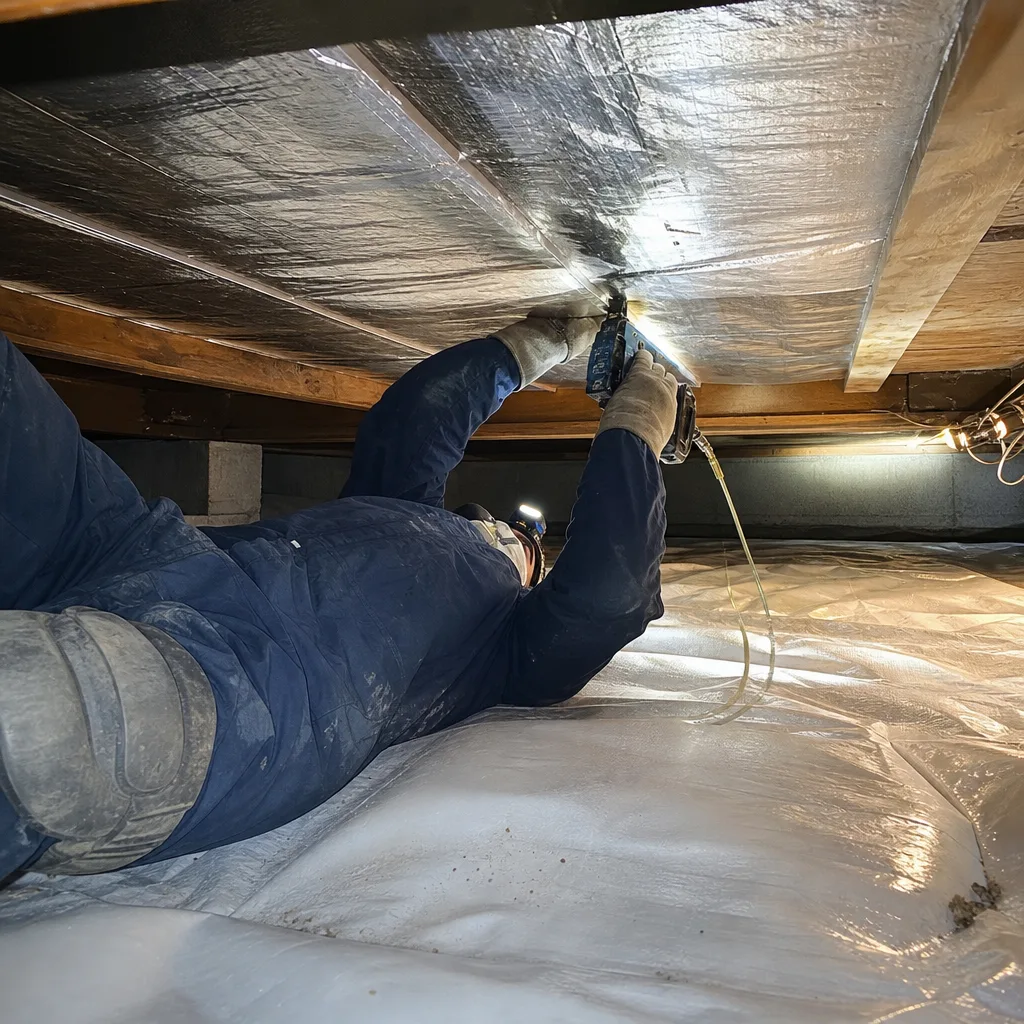
We don’t show up and start unrolling plastic. The condition of your crawl space determines how the barrier needs to go in, and skipping the assessment step is how installers create new problems while solving old ones. Here’s the sequence we follow on every Whittier vapor barrier job.
- Pre-installation inspection and documentation: Before any material enters the crawl space, we photograph the existing conditions – soil, existing vapor retarder if present, pier condition, framing, any visible moisture damage or mold, and the location of all penetrations (plumbing drains, gas lines, HVAC ducts). You receive this photo record. Under the Haven Standard, a Documented Photo Record is included on every visit, not available on request after the fact.
- Debris clearing and minor remediation prep: Loose debris, deteriorated old poly, and standing moisture are addressed before the new barrier goes in. We don’t install over conditions that will compromise the installation. If we find significant mold or active water intrusion that falls outside the original scope, we stop, document it, and walk you through the options before continuing – no surprise charges on job day.
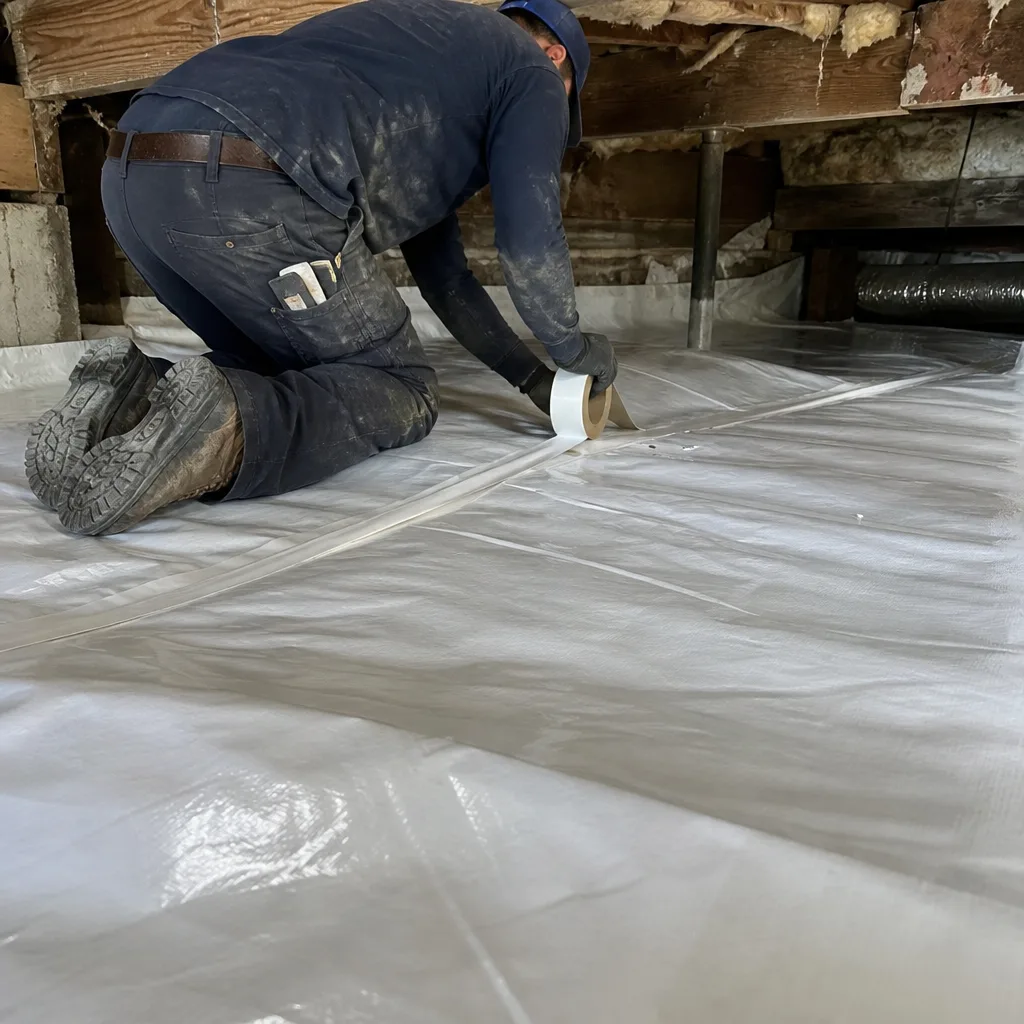
- Barrier selection and layout: For most Whittier crawl spaces, we use a reinforced 12-mil cross-laminated polyethylene vapor barrier. The sheets are laid across the soil floor with a minimum 12-inch overlap at seams and run up the interior foundation walls at least 6 inches, terminating at the sill plate. Penetrations – piers, plumbing columns, posts – are wrapped individually and sealed. This isn’t plastic draped loosely in a room; it’s a continuous sealed plane.
- Seam and penetration sealing: Overlapping sheets are taped with a compatible butyl or foil tape rated for the application. Every pipe, post, and pier that punches through the barrier gets its own collar and tape seal. This is where cheaper installations fail – unsealed seams and open penetrations let moisture bypass the barrier entirely and accumulate underneath it.
- Perimeter attachment: The barrier is mechanically fastened to the foundation wall using masonry fasteners and cap plates, not just leaned against it. In homes where we’re doing a full encapsulation rather than a floor-only barrier, the sheeting continues up the wall to the rim joist – but for a standard vapor barrier installation, the floor plane and lower wall coverage are the priority.
- Final walkthrough and written close-out: We walk the finished barrier with you, confirm the photo record is complete, and hand you the written scope and warranty before we leave. Under Haven Standard Clause 1, you had the written price before we started; the written warranty is the close-out document that corresponds to it. The 365-Day Done Right Promise applies: if anything isn’t right, we come back and make it right.
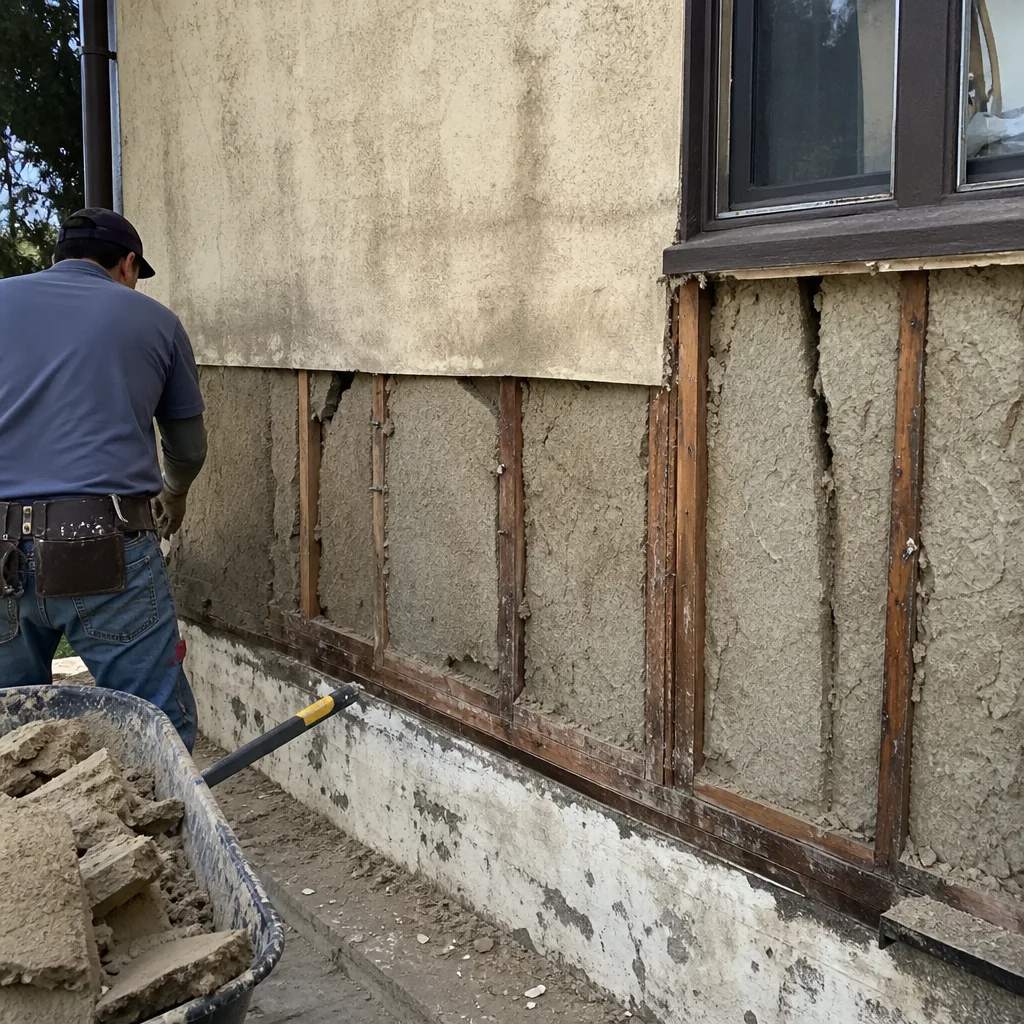 Before
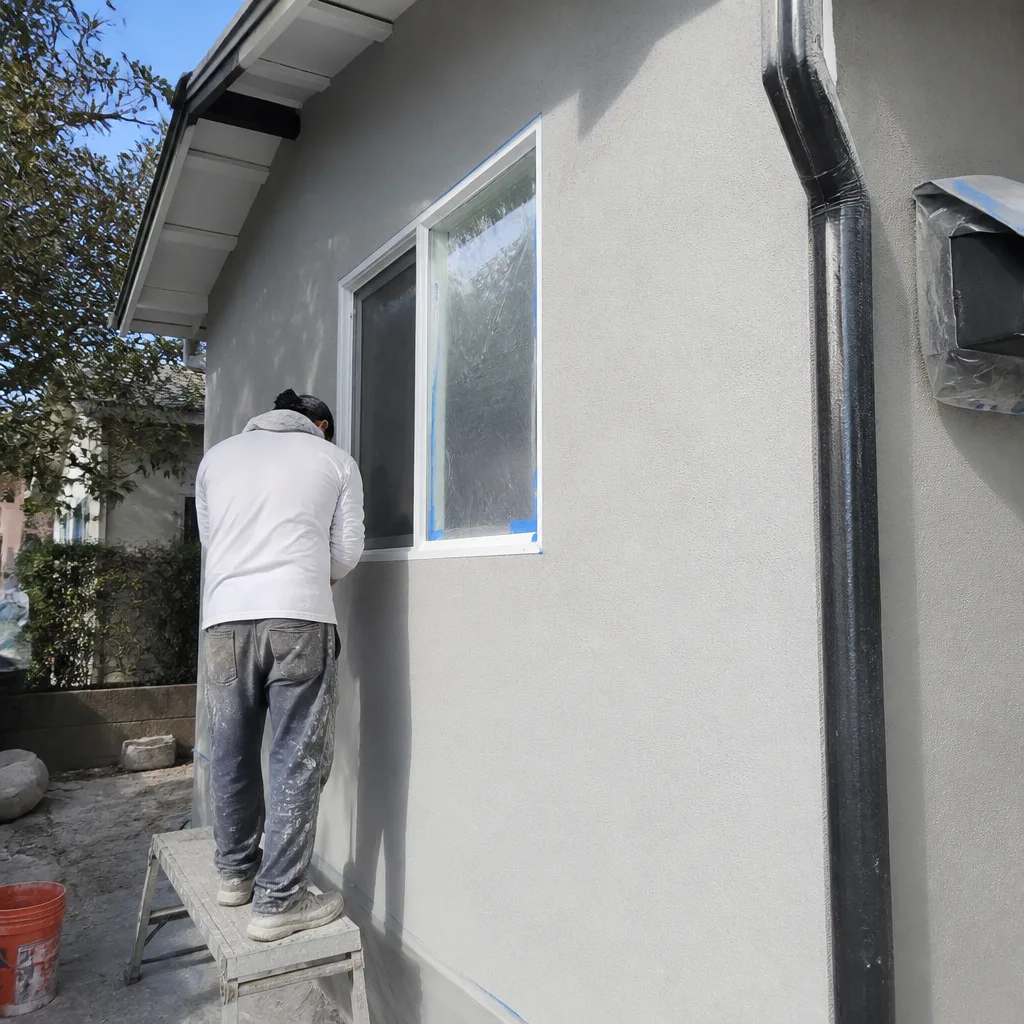 After
AfterCrawl Space Vapor Barrier Pricing in Whittier
Crawl space vapor barrier work in Whittier typically falls between $900 and $2,800 for a residential crawl space. Here’s how the range breaks down by the factors that actually drive the number.
| Factor | Typical Range |
|---|---|
| Small crawl space (under 600 sq ft), good access, clean conditions | $900 – $1,300 |
| Mid-size crawl space (600-1,200 sq ft), standard pier count, minor debris | $1,300 – $2,000 |
| Large crawl space (1,200+ sq ft) or complex layouts with many penetrations | $2,000 – $2,800+ |
| Old barrier removal before installation | Add $150 – $400 |
| Upgrade to 20-mil reinforced barrier (commercial-grade) | Add $200 – $500 |
Access height matters more than most homeowners expect. A Whittier crawl space with 24 inches of clearance takes nearly twice as long to work in as one with 36 inches, and that labor difference shows up in the price. Pier-heavy older homes – common in the College Hills area and the streets around Penn Park – typically have more penetrations to seal, which adds time to the seaming and collar work.
Barrier thickness also varies by application. A 6-mil poly sheet meets the minimum California Building Code requirement (CCR Title 24 specifies a vapor retarder under Part 6 energy standards), but it won’t hold up to foot traffic during future crawl space maintenance and will degrade faster against rough soil. We use 12-mil as our standard specification because it’s the threshold where the barrier stays intact under normal re-entry conditions. If you’ve received a quote for 6-mil material at a lower price, that’s worth asking about specifically.
Every estimate from Topside Attic Insulation Whittier comes written, flat, and scoped before any work starts – that’s Haven Standard Clause 1. There’s no “and then we saw this” pricing after the job opens. If you have a written estimate from another contractor, bring it: Wes Okafor offers a Free Second Opinion on any written estimate, and we’ll read it with you line by line.
Call (424) 349-7262 to schedule your free estimate.
FAQs – Crawl Space Vapor Barrier
What thickness vapor barrier do I need for my Whittier crawl space?
For most Whittier residential crawl spaces, a 12-mil reinforced polyethylene barrier is the right specification. California’s Title 24 energy standards require a vapor retarder but don’t mandate a specific mil thickness for existing homes, so 6-mil material is often used to win on price – but it punctures easily during installation and degrades against soil contact within a few years. If your crawl space gets any maintenance foot traffic, 12-mil holds up to re-entry without tearing around piers and plumbing. For homes that are also adding Crawl Space Insulation or doing a full encapsulation, 20-mil cross-laminated material is worth the additional cost. Call (424) 349-7262 and we’ll walk you through which spec fits your specific crawl space.
Can I install a crawl space vapor barrier myself?
You can – the material itself is not a safety hazard the way, say, a gas line or a high-voltage panel is. But the places where DIY installations fail are consistent: unsealed seams, open penetrations around plumbing and piers, and barrier edges that aren’t mechanically fastened to the foundation wall. An unsealed seam allows moisture to migrate under the barrier and accumulate there, which can actually concentrate the problem rather than solve it. If you’re comfortable working in a confined space and willing to tape every seam and wrap every penetration properly, a DIY install with quality material is feasible. If the goal is documented performance and a written warranty, a professional installation with a photo record is the more reliable path.
How long does a crawl space vapor barrier installation take in Whittier?
Most Whittier vapor barrier installations finish in a single day. A straightforward crawl space under 800 square feet with good access height typically runs 4 to 6 hours from start to close-out documentation. Larger or lower-clearance crawl spaces, or those requiring old barrier removal first, can run into a second half-day. We give you a specific time estimate as part of the written scope before we start – not a window measured in days.
Does a vapor barrier eliminate the need for crawl space ventilation?
A vapor barrier on the soil floor reduces ground moisture significantly but doesn’t remove the need for airflow management. Whittier homes built to older ventilation codes often have passive foundation vents designed around an unsealed crawl space – once you add a barrier, the moisture dynamics change and those vents may need to be reassessed. In a full encapsulation system, foundation vents are typically sealed and a mechanical dehumidifier maintains the interior climate. In a floor-only vapor barrier installation, existing vents are usually left in place. Your specific situation determines which approach applies, and we document the recommendation in writing as part of the scope. Our full Crawl Space Encapsulation & Vapor Barrier in Whittier page covers the ventilation question in more detail for homes that need a complete system.
Why Topside Attic Insulation Whittier for Vapor Barrier Work
Wes Okafor built Topside around a straightforward idea: the documentation should match the work. Since 2016, across more than 9,000 homes sealed and insulated, every job has started with a written price and closed with a photo record. That’s not a marketing position – it’s the operational standard we run on, and it applies to a $900 vapor barrier installation the same way it applies to a full attic and crawl space retrofit.
For crawl space work specifically, that means you know what barrier spec is going in, what the seaming approach is, and what the warranty covers before the crew arrives. The 365-Day Done Right Promise is in writing when we leave. If a seam fails or a penetration opens up, we come back and seal it – that’s what the promise means in practice, not in marketing copy.
We source materials from manufacturers including CertainTeed and Knauf depending on the application – no proprietary product lock-in that pushes you toward one solution regardless of fit. If a competitor’s written estimate names a different spec, the Free Second Opinion offer means we’ll read it with you and tell you specifically what the differences mean for your crawl space. We’re independently owned and operated, and we answer our own phone.
Key Takeaways
- Crawl space vapor barrier installations in Whittier run $900 to $2,800 depending on square footage, access, and barrier thickness – most jobs finish in one day.
- 12-mil reinforced polyethylene is the right standard specification for most Whittier homes; 6-mil meets code minimums but degrades faster and tears during re-entry.
- The most common failure points are unsealed seams and open penetrations around plumbing and piers – not the barrier material itself.
- Every Topside installation starts with a written price and closes with a Documented Photo Record and written warranty – Haven Standard Clause 1 applies without exception.
- The 365-Day Done Right Promise is a written commitment, not a slogan.
- Wes Okafor offers a Free Second Opinion on any written estimate – bring a competing quote and we’ll walk through it with you line by line.
Schedule Your Crawl Space Vapor Barrier Estimate in Whittier
If you’re seeing the signs – musty odor, soft floors, visible moisture staining in the crawl space – the assessment is the right first step. Topside Attic Insulation Whittier will inspect your crawl space, photograph what we find, and give you a flat written price before any work starts. No estimate by phone, no ballpark that grows on job day.
Call (424) 349-7262 – a live person answers every call, around the clock. Or reach out through our home page to request an estimate online. We serve Whittier and the surrounding communities, and we’re ready when you are.
Written by Wes Okafor, Owner at Topside Attic Insulation Whittier, serving Whittier since 2016.