
Last updated September 24, 2026
DIY vs Professional Insulation: The Whittier Homeowner’s Decision Guide
A homeowner in Whittier can rent a blow-in machine from Home Depot for roughly $0 with a material purchase and install R-38 cellulose in a single Saturday. What the rental counter does not offer is a blower door, a theatrical fog machine for bypass detection, or two-part foam for sealing the top plates. That means the new material goes in over the same air leaks that were costing money before, and in many Whittier attics built between 1950 and 1985, those leaks are the entire problem. In this guide, we’ll show you exactly where the DIY boundary sits, what the permit and inspection landscape looks like in Los Angeles County, and how to decide whether your attic is a candidate for a weekend project or a candidate for professional air sealing and blower-door verification.
Quick Answer
DIY insulation in Whittier makes sense only when your attic already has a documented blower-door test below 5.0 ACH50, existing insulation at R-19 or above, and no HVAC equipment or complex penetrations to work around. In every other scenario, the air sealing that must precede insulation requires equipment and expertise no rental counter provides, and skipping it turns your new insulation into a moisture-trapping liability that hides the real problem.
Table of Contents
- What DIY Can Reasonably Handle
- The Hard Boundary Where DIY Ends
- Why Air Sealing Must Come First
- Whittier Permits, Inspections, and Resale Liability
- Quantifying the Performance Gap
- Real Cost Comparison: DIY vs. Professional
- The One Scenario Where DIY Is Sound
- Common Mistakes to Avoid
- When to Call a Professional
- Frequently Asked Questions
- The Bottom Line
 Before
 After
AfterWhat DIY Can Reasonably Handle
Some insulation tasks are genuinely within reach of a motivated homeowner with basic tools and a free weekend. The key is recognizing which tasks don’t require diagnostic equipment, don’t alter the building envelope’s pressure boundary, and don’t involve materials that demand specialized application.
Here are the three categories we’ve seen work for Whittier homeowners:
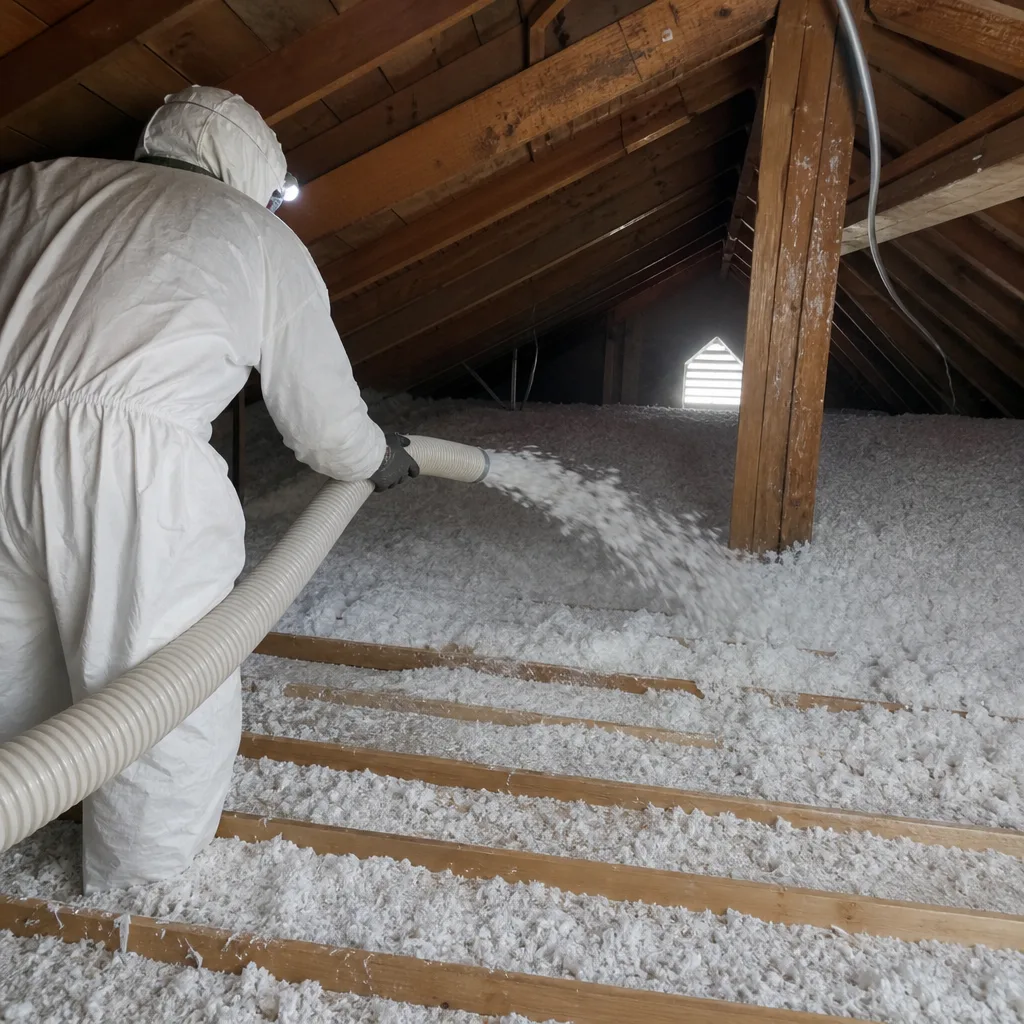
- Adding blown-in depth to an already-sealed attic. If a professional has already air-sealed the space and the blower-door test is on file, topping off settled cellulose or fiberglass is straightforward. The machine rental is typically free with a minimum material purchase (usually 20 bags), and the application is gravity-fed through a hose. Wear a respirator, protect the attic floor from over-blowing into eaves, and stop at the specified depth markers.
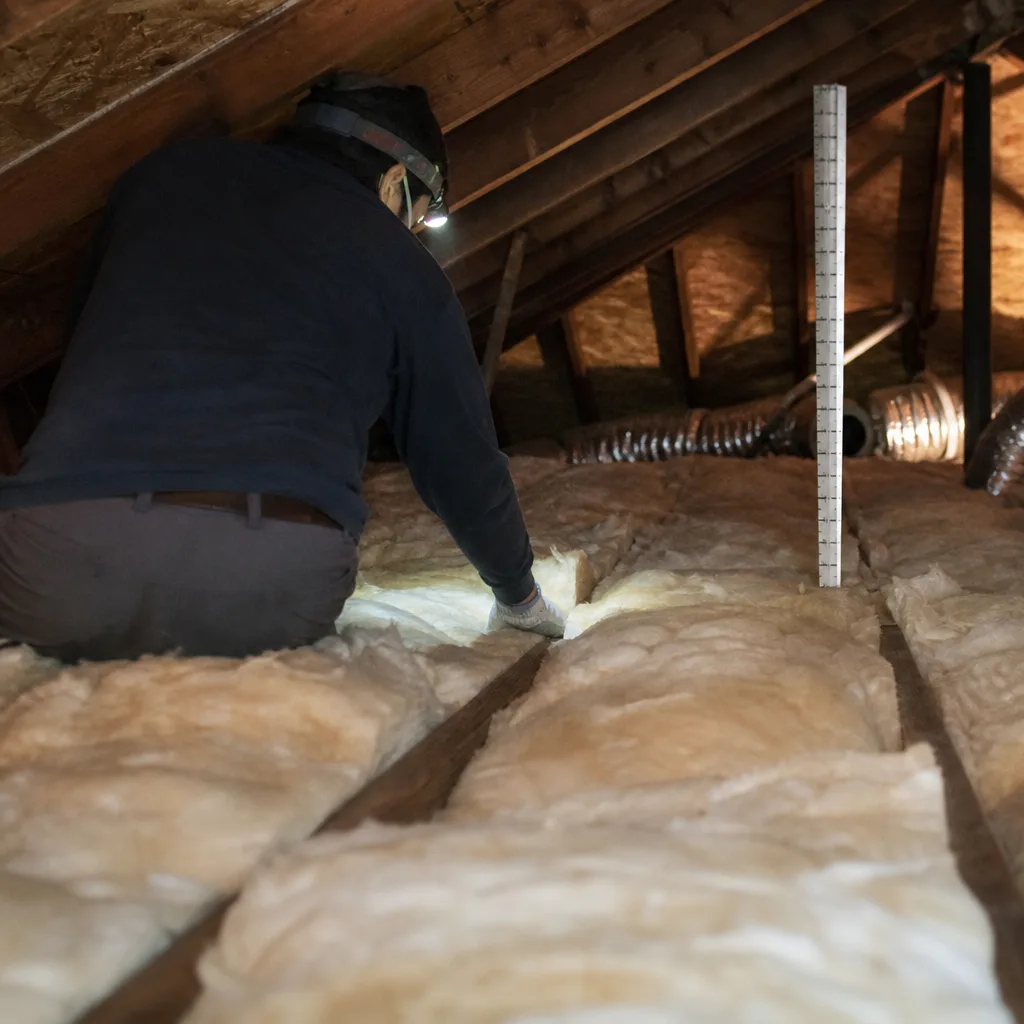
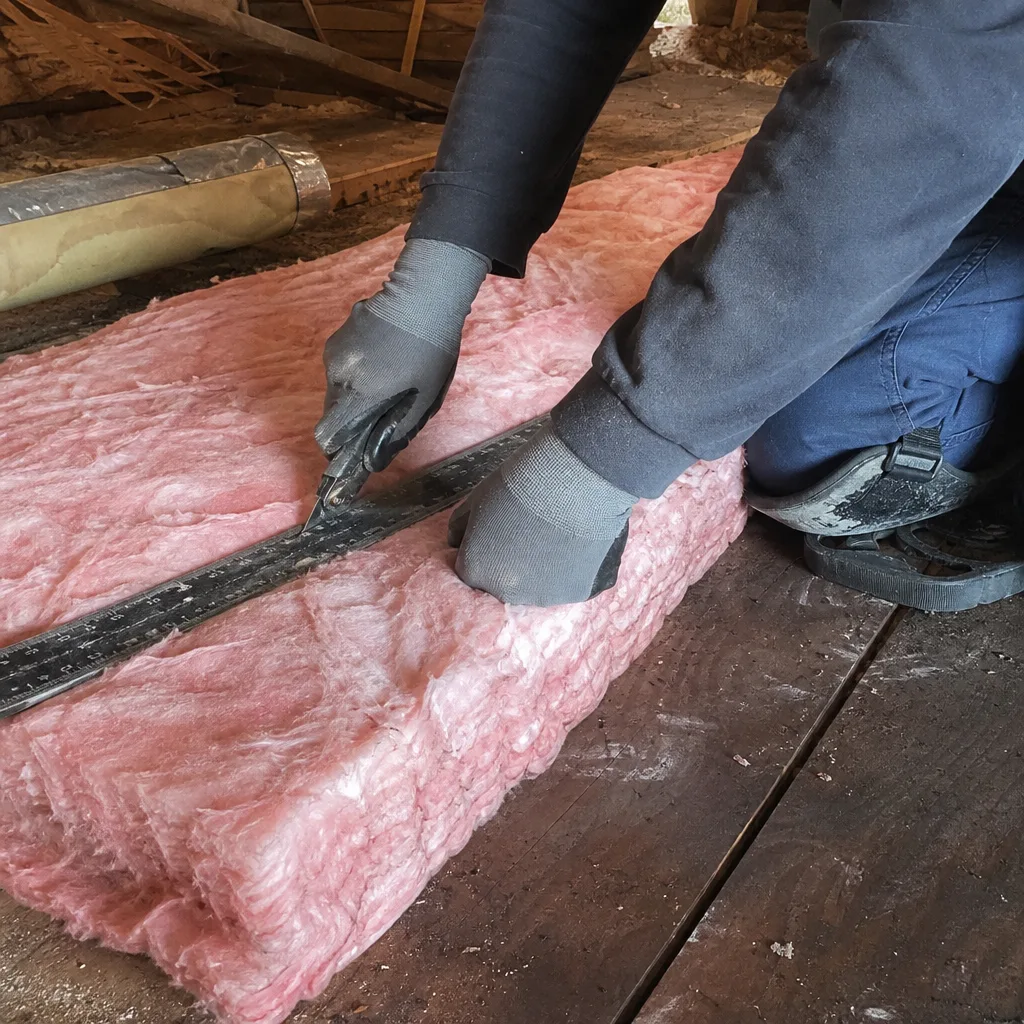
- Replacing accessible batt sections. Wet or compressed batts in a localized area, a rodent-damaged section near the attic hatch, or batts pulled aside for electrical work can be swapped with new unfaced fiberglass or mineral wool. The work is manual: measure, cut with a serrated knife, fit between joists, and avoid compressing the material. Owens Corning and Johns Manville both make batt products available at retail in standard widths.
- Installing an attic hatch cover or tent. The attic hatch is the largest single air leak in many Whittier homes, and a pre-fabricated insulated cover with weatherstripping is a $50-$120 fix that requires only a tape measure and basic hand tools. This is air sealing, technically, but it’s accessible air sealing that doesn’t require a fog machine or pressure diagnostics to verify.
What unites these three tasks is that none of them changes the pressure boundary of the building envelope. You’re either working within an already-verified envelope or addressing a single, obvious leak that doesn’t require diagnostic confirmation. The moment you need to find leaks you can’t see, or seal materials you can’t access, or apply products that cure through a chemical reaction, you’ve crossed into professional territory.
We’ve worked in neighborhoods from Friendly Hills to East Whittier where homeowners started with one of these three tasks, saw the improvement, and then called us for the full air-sealing and insulation package. That’s a perfectly reasonable path. The mistake is assuming that because batt replacement went well, a full attic treatment is just more of the same.
The Hard Boundary Where DIY Ends
There is a clear line between DIY-feasible and DIY-impossible insulation work. It runs through equipment access, material handling, and code compliance, not through ambition or online tutorial confidence.
Here is the boundary as we define it based on 9,000+ homes sealed and insulated since 2016:
- Blower-door diagnostics. A blower door is a calibrated fan that mounts in an exterior door frame and depressurizes the house to -50 Pascals. The resulting CFM50 reading, translated to ACH50 (air changes per hour at -50 Pascals), tells you in one number how much conditioned air your building envelope is losing. The machine costs roughly $3,000-$5,000, requires annual calibration, and the interpretation of results demands training. No rental counter stocks them, and without one, you’re guessing at leak location and severity.
- Theatrical fog or smoke-pencil leak detection. Once the blower door is running, a theatrical fog machine or smoke pencil reveals exactly where air is moving through the attic floor: top plates, electrical penetrations, can-light housings, chimney chases, and partition walls. This is how you find the leaks that insulation will cover but not stop. The equipment is affordable, but using it effectively requires understanding pressure dynamics and attic geometry under depressurization.
- Two-component spray foam application. Open-cell and closed-cell spray foams, such as Icynene and Demilec products, are mixed on-site from A-side and B-side chemicals at precise temperatures and pressures. The applicator wears a supplied-air respirator, and the substrate must be conditioned for proper adhesion. Off-ratio foam crumbles, shrinks, or fails to cure. This is not a rental-counter product.
- Conditioned attic conversion. Converting a vented attic to a conditioned attic, where insulation moves to the roof deck rather than the attic floor, involves structural load assessment, combustion safety for any gas appliances in the space, and mechanical ventilation design. In Los Angeles County, this triggers permit requirements and must pass inspection.
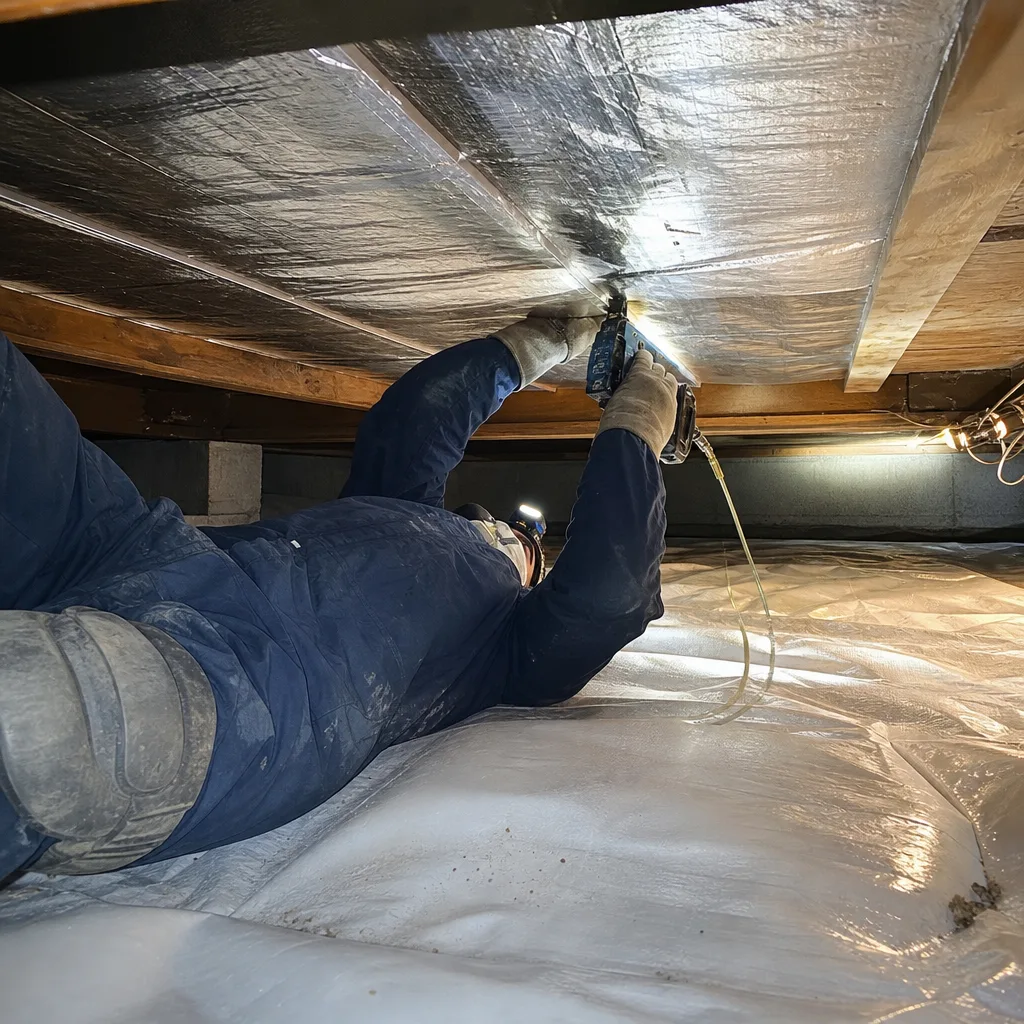
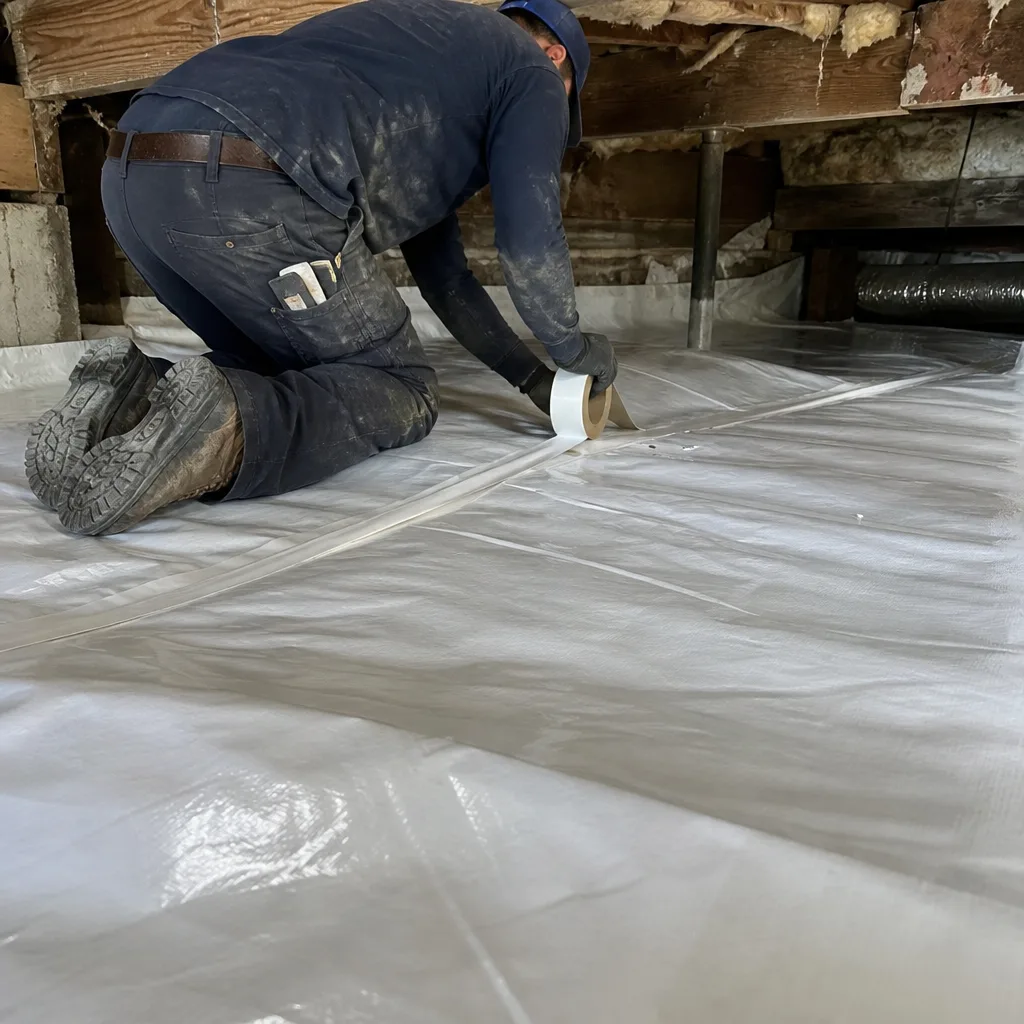
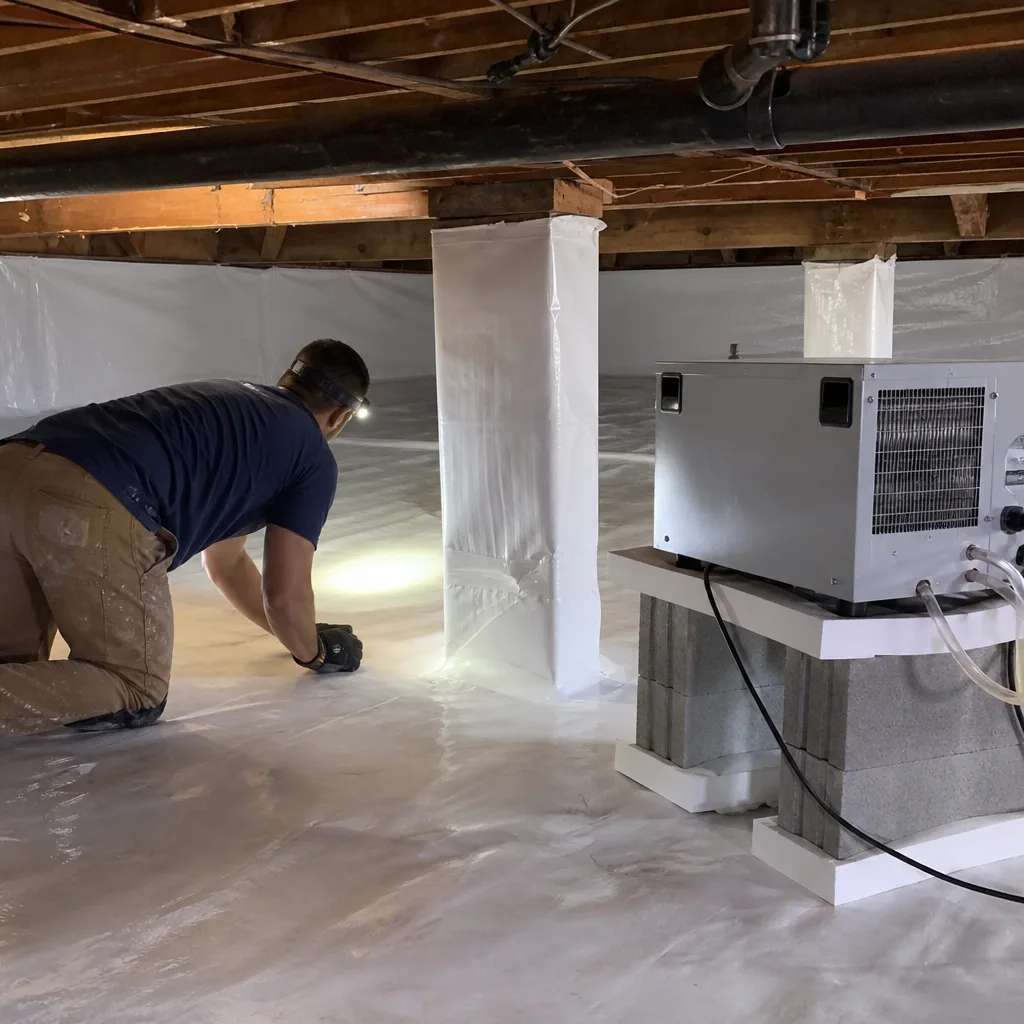
- Crawl space encapsulation with vapor barrier. Installing a sealed vapor barrier over dirt, sealing foundation vents, and conditioning the space with dehumidification requires material knowledge, seam welding, and understanding of ground moisture dynamics. Crawl Space Encapsulation & Vapor Barrier in Whittier is a specialized service for good reason.
The pattern here is not complexity of concept but specificity of execution. Rolling out batts is simple. Knowing whether your attic floor is the pressure boundary, or whether air is bypassing it through a partition wall from the garage, is not simple. And the consequences of getting it wrong, moisture accumulation, ice damming in rare cold snaps, and energy bills that don’t budge, are expensive.
In Whittier’s climate, where summer attic temperatures regularly exceed 140°F and winter nights can drop into the high 30s, an attic with unsealed top plates and new insulation is effectively a moisture trap. The insulation does its job, slowing heat transfer, but the air moving through it carries humidity that condenses on cooler surfaces in winter and feeds mold growth in summer. We’ve removed moldy insulation from attics in the South Whittier area where the homeowner’s DIY project, well-intentioned and mechanically correct in its installation, created exactly this problem.
Why Air Sealing Must Come First
Envelope Insulation Co. has operated under The Haven Standard since 2016, and the first clause of that standard is straightforward: sealed first, then insulated, in that order. We will never blow insulation over an unsealed attic floor. The reason is physical, not philosophical.
Insulation slows conductive heat transfer. Air leakage is convective heat transfer. These are different physical processes, and insulation does almost nothing to stop the second one. A batt or blown layer with air moving through it performs at a fraction of its rated R-value. The industry term is “wind washing,” and in a vented attic with significant bypasses, it can reduce effective R-value by 30-50%.
Here is what air sealing addresses that insulation does not:
- Top plates. The horizontal framing member where interior partition walls meet the attic floor is rarely sealed in production framing. Every stud bay becomes a chimney for air movement between conditioned space and attic. Two-part foam or detailed caulk work is required.
- Can lights and electrical penetrations. Recessed can lights, especially older non-IC-rated fixtures, are open holes in the thermal envelope. Electrical wires, plumbing vents, and chimney chases create additional penetrations that must be foamed, boxed, or sealed with fire-rated materials where required.
- Attic access hatches and pull-down stairs. These are often the largest single leaks in the attic floor. A proper seal requires weatherstripping, insulation, and often a pre-fabricated cover with latches.
- HVAC platform and duct penetrations. In many Whittier homes, the air handler sits in the attic on a platform that is not sealed to the ceiling below. Duct boots and flex connections add more leakage points. These require targeted sealing, not just more insulation blown around them.
The documentation matters. On every applicable job, we provide before-and-after blower-door numbers so the homeowner can verify the air-sealing result in a single figure. A typical Whittier home might test at 4,200 CFM50 before sealing and 2,100 after. That 50% reduction in envelope leakage is what makes the insulation perform as rated. Without it, you’re paying for R-value you’re not getting.
We’ve seen competitors in the Whittier market skip this step and blow insulation directly over unsealed top plates. The homeowner gets a thick, even layer that looks correct but functions as a filter, catching dust and fiberglass particles while air continues to move freely. The energy bills don’t change. The comfort doesn’t improve. And in some cases, the hidden moisture problem gets worse.
Whittier Permits, Inspections, and Resale Liability
Insulation work in Whittier falls under the jurisdiction of the City of Whittier Building & Safety Division for permits and inspections, with Los Angeles County handling certain unincorporated pockets. The permit landscape is not uniform, and the distinction matters for resale.
Here is what triggers a permit requirement:
- Conditioned attic conversions. Moving insulation from the attic floor to the roof deck, altering ventilation, or adding mechanical systems to the attic space requires a building permit. This is not optional, and unpermitted work is a documented resale problem in Los Angeles County. Title companies and buyers’ agents increasingly flag unpermitted structural and envelope modifications.
- Wall insulation in existing construction. Dense-pack cellulose or spray foam in existing walls may require permit verification, especially if wall covering is removed or if the work affects fire-rated assemblies.
- Crawl space encapsulation. Sealing foundation vents and adding conditioned air may trigger mechanical and building permits depending on scope.
- Simple add-depth attic insulation. Typically does not require a permit if no structural, mechanical, or electrical work is performed. However, if the work involves removing and replacing insulation as part of a larger renovation, permit verification is prudent.
The resale liability dimension is real. In Whittier’s competitive housing market, where homes in the Friendly Hills and Murphy Ranch areas regularly sell above ask, unpermitted conditioned-attic conversions have killed deals or forced price reductions. A home inspector who finds spray foam on a roof deck with no permit documentation will flag it every time. The buyer’s lender may require permit clearance before funding.
Professional contractors carry this burden. We pull permits when required, schedule inspections, and provide the documentation that transfers cleanly to the next owner. DIY work leaves that chain of custody broken. If you converted your attic to conditioned space over a weekend with Demilec foam and no permit, you’re not just out of compliance. You’ve created a disclosure obligation you may not be able to satisfy.
Under Haven Standard Clause 1, every job begins with a written price and a written scope. If permits are required, they’re listed in that scope before work starts. No surprises at inspection, no surprises at closing.
Quantifying the Performance Gap
The difference between a DIY add-depth job over an unsealed attic and a professionally air-sealed and insulated attic is not theoretical. It is measurable in blower-door terms, and those numbers translate directly to energy cost and comfort.
Here is the typical performance profile for a Whittier 1970s ranch, the most common housing stock in neighborhoods like East Whittier and South Whittier:
| Condition | ACH50 (Air Changes per Hour at -50 Pascals) | CFM50 (Cubic Feet per Minute at -50 Pascals) |
|---|---|---|
| Original, unsealed, under-insulated | 8-12 ACH50 | 3,500-5,500 CFM50 |
| DIY add-depth only (R-38 blown over unsealed floor) | 7-11 ACH50 | 3,200-5,000 CFM50 |
| Professional air sealing only | 4-6 ACH50 | 1,800-2,800 CFM50 |
| Professional air sealing + insulation to R-38 | 4-6 ACH50 | 1,800-2,800 CFM50 |
The critical observation: adding insulation without air sealing moves the needle barely, if at all. The air leaks dominate the performance. A house at 10 ACH50 is losing conditioned air at a rate that no amount of R-value can compensate for. The Department of Energy and California Energy Commission both cite 3-5 ACH50 as the target for our climate zone, and that target is unreachable without dedicated air sealing.
The blower-door test is the verification. Without it, you’re installing performance you cannot prove. We publish before-and-after blower-door numbers on every applicable job because the homeowner deserves to see the change they paid for, not just feel it.
In Whittier’s specific climate, with cooling-dominated loads and occasional winter heating needs, the air-sealing priority is even sharper. Summer attic temperatures drive heat gain through conduction, but the larger load is often duct leakage and air handler location in the vented attic. Sealing the platform and duct boots, which requires access and two-part foam, addresses that directly. Insulation alone does not.
Real Cost Comparison: DIY vs. Professional
Cost comparisons between DIY and professional insulation often fail because they compare material cost against contractor price without accounting for what each approach actually delivers. For a detailed look at pricing, see our Insulation Cost Breakdown: The Whittier Homeowner’s Reference for 2026. Here is an honest framework for a standard Whittier attic, approximately 1,200 square feet with moderate accessibility.
DIY Route:
- Cellulose or fiberglass blown-in material: $350-$550 (20-30 bags at retail)
- Machine rental: $0-$75 (typically waived with material purchase)
- Attic hatch cover, weatherstripping, basic caulk: $75-$150
- Respirator, coveralls, lighting, misc. tools: $50-$100
- Your labor: 6-10 hours (prep, application, cleanup)
- Total out-of-pocket: $475-$875
What this delivers: Added R-value over the existing attic floor. No air-sealing verification. No blower-door test. No documentation of performance change. No permit handling if triggered. No warranty beyond material defects.
Professional Route (Envelope Insulation Co. / Topside Attic Insulation Whittier):
- Air sealing of top plates, can lights, electrical penetrations, chimney chase, attic hatch, and HVAC platform with two-part foam and fire-rated materials as required
- Blown-in insulation to R-38 or specified depth with Owens Corning, Johns Manville, Knauf, or GreenFiber materials
- Before-and-after blower-door test with documented readings
- Documented Photo Record of all work areas
- Written scope, written price before work starts, written warranty
- 365-Day Done Right Promise
- Typical range for Whittier attics of this size: $1,800-$2,600
What this delivers: Verified envelope performance, documented air leakage reduction, transferable documentation for resale, warranty protection, and the elimination of the moisture-trap risk.
The gap between DIY and professional, roughly $900-$1,700 on a standard attic, is the cost of the air sealing, diagnostics, documentation, and warranty. It is not markup for markup’s sake. It is the difference between adding material and solving the problem.
We also offer a Free Second Opinion on any written estimate. Bring us a competing quote and we will read it with you, line by line, and explain where the scope differs from ours. Under Haven Standard, you get a named technician, a text when they are on the way, and a written price before any work starts. No voicemail loops, no callback windows measured in business days. A live person answers calls 24/7.
The One Scenario Where DIY Is Sound
There is exactly one set of conditions under which we tell Whittier homeowners that DIY insulation is a rational, sound choice. All three conditions must be met:
- Documented blower-door test showing ACH50 below 5.0. This means a professional has already air-sealed the envelope, and the leakage rate is within the target range. The attic floor is the pressure boundary, and it’s holding.
- Existing insulation at R-19 or above, in reasonable condition. The current layer is not moldy, not heavily compressed, not rodent-contaminated. It simply needs additional depth to reach current code or comfort targets.
- Simple depth-addition project in an accessible attic with no HVAC equipment in the way. The attic has a solid floor or clear joist bays, no air handler to work around, no complex penetrations, and safe access via a permanent stair or sturdy pull-down ladder.
If all three are true, renting the machine and blowing additional GreenFiber cellulose or Owens Corning fiberglass is a reasonable weekend project. The performance gain will be real because the air sealing is already done. The insulation will perform near its rated R-value because wind washing has been eliminated.
We’ve seen this exact scenario in newer Whittier construction, particularly homes built after 2005 where air sealing was better from the factory and the original insulation has simply settled. The homeowner adds depth, the comfort improves, and the energy bill responds. No harm, no foul.
But if condition #1 is missing, if you don’t have that blower-door number in hand, you’re guessing. And in our experience, the guess is wrong more often than right. The 1970s ranch with original insulation almost always tests at 8-12 ACH50. The 1950s bungalow in the historic district near Whittier College often tests worse. Without the test, you don’t know which house you have.
Common Mistakes to Avoid
- Blowing insulation over unsealed can lights. Non-IC-rated fixtures require clearance and boxing; burying them in cellulose creates a fire hazard and does nothing for the air leak. In Whittier’s older housing stock, these fixtures are common.
- Ignoring the attic hatch. Homeowners meticulously insulate the floor and leave the hatch unsealed, creating a chimney effect that undermines the entire job. A $100 pre-fabricated cover fixes this.
- Compressing batts to fit. Fiberglass and mineral wool achieve rated R-value only at full loft. Stuffing a R-30 batt into a 2×8 cavity compressed to 5.5 inches yields approximately R-19 performance. Cut to fit, don’t compress.
- Blocking soffit vents with insulation. Ventilated attics require intake at the soffit and exhaust at the ridge. Baffles must be in place before adding depth; without them, insulation migrates into the eaves and chokes airflow, leading to moisture problems.
- Working in summer without hydration and heat planning. Whittier attic temperatures in July and August are dangerous. Work early morning, take breaks, and recognize that heat exhaustion symptoms include confusion, not just sweating.
- Skipping the respirator. Cellulose dust, fiberglass particles, and rodent droppings are not “just dust.” An N95 is minimum; a P100 is better for extended work.
- Assuming more insulation is always better. Beyond optimal depth, additional insulation yields diminishing returns while adding weight to the ceiling structure and potentially burying electrical junction boxes that must remain accessible.
When to Call a Professional
Call a professional when your attic has never had a blower-door test, when you can see daylight through the top plates, when HVAC equipment lives in the attic, when you’re considering spray foam, or when permit requirements apply. Not sure where to start? Read our How to Hire a Insulation Contractor in Whittier: A Step-by-Step Guide. Call when the job feels straightforward but you’ve never been in an attic in August and don’t own a respirator.
Topside Attic Insulation Whittier offers free estimates in Whittier and surrounding areas. We’ll test your envelope, show you the numbers, and give you a written price before any work starts. If your attic is one of the rare ones that genuinely needs only depth addition, we’ll tell you that too. Call (424) 349-7262 to schedule.
Frequently Asked Questions
Most complete attic insulation jobs in Whittier, including air sealing, blown-in insulation to R-38, and blower-door verification, run between $1,800 and $2,600 for a typical 1,200-square-foot attic. The exact price depends on accessibility, current insulation condition, and the extent of air sealing required. We provide a written price before any work starts under Haven Standard Clause 1. Call (424) 349-7262 for a free estimate.
Repair, meaning localized batt replacement or depth addition, is cheaper only if the existing insulation is uncontaminated and the attic is already air-sealed. If the insulation is moldy, rodent-damaged, or installed over an unsealed floor, replacement with proper air sealing is the only cost-effective path. Repairing bad insulation is cheaper today and more expensive every month after.
No. Two-component spray foam requires specialized equipment, temperature-controlled chemical storage, supplied-air respiratory protection, and training in substrate preparation and application technique. Off-ratio foam fails to cure properly and must be removed. Icynene and Demilec products are available only through trained applicators. This is not a DIY material.
Simple add-depth attic insulation typically does not require a permit. Conditioned attic conversions, wall insulation in existing construction, and crawl space encapsulation may require permits through the City of Whittier Building & Safety Division or Los Angeles County. For more guides & resources on navigating these requirements, visit our blog. Unpermitted work, particularly conditioned attic conversions, creates documented resale problems in Los Angeles County.
You know your attic is air-sealed if you have a documented blower-door test showing ACH50 below 5.0, performed after any air-sealing work. Without that test, you do not know. Visual inspection is not sufficient; many leaks are invisible until a pressure differential is applied. We provide before-and-after blower-door numbers on every applicable job so homeowners have verification in writing.
A blower-door test is a pressurization measurement that shows, in a single figure, how much conditioned air your building envelope is losing. A powerful fan mounts in an exterior door and depressurizes the house to -50 Pascals; the resulting CFM50 or ACH50 reading quantifies leakage. It matters because air leakage can reduce insulation effectiveness by 30-50% through wind washing, and because you cannot fix what you cannot measure.
The Bottom Line
The DIY-versus-professional question in Whittier is not about whether you can carry bags up a ladder or operate a blow-in machine. It is about whether your attic’s pressure boundary is intact, whether you can verify that condition, and whether you’re willing to install insulation that may trap moisture and hide bypasses if it isn’t. The three conditions for safe DIY, documented low leakage, adequate existing insulation, and simple access, are met by a minority of local homes. For everything else, professional air sealing with blower-door verification is the only path to performance you can prove. The cost gap, $900-$1,700 on a typical job, buys diagnostics, documentation, warranty, and the elimination of a liability you didn’t know you were creating.
Written by Wes Okafor, Owner at Topside Attic Insulation Whittier, serving Whittier since 2016.