
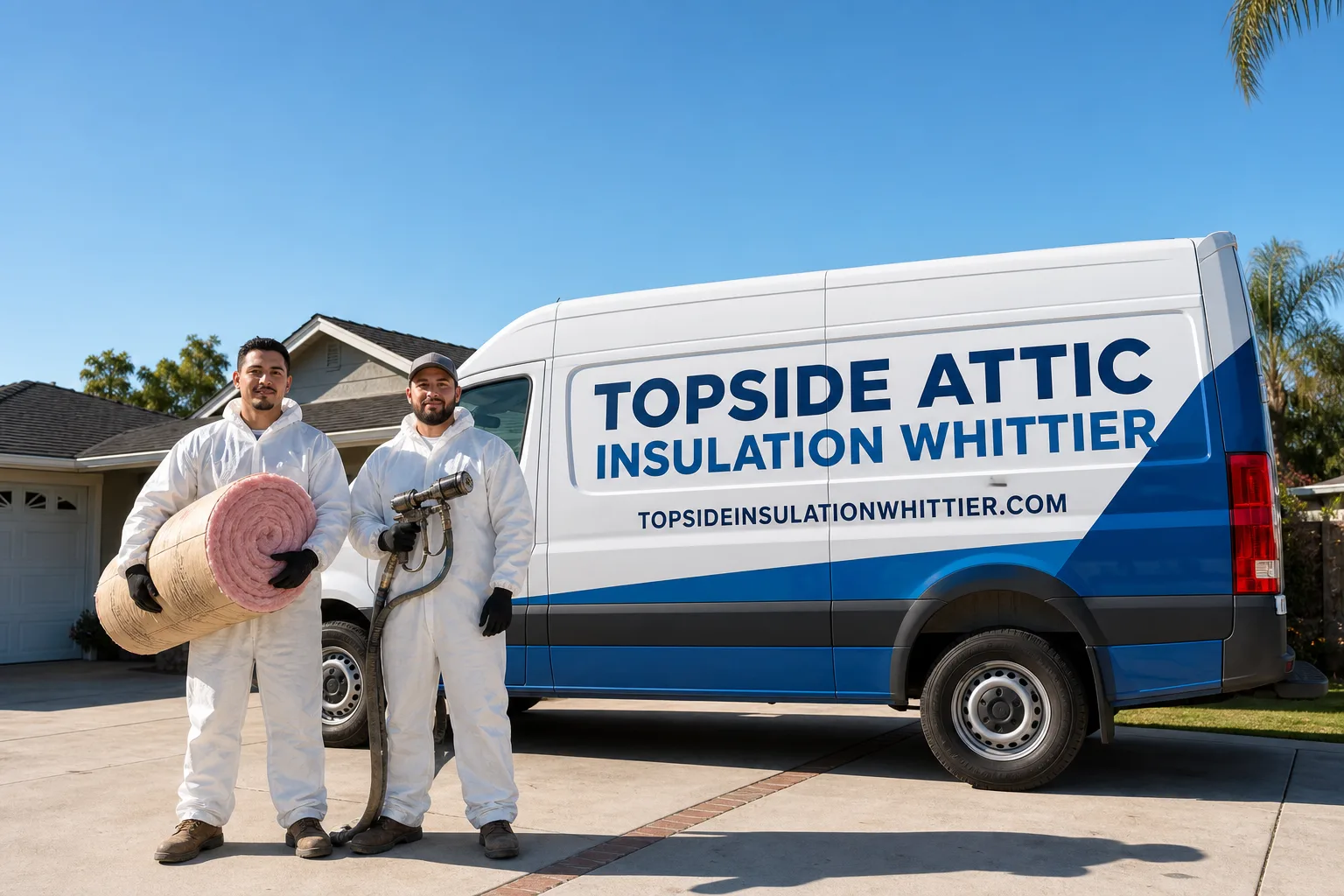
Trusted Crawl Space Encapsulation & Vapor Barrier for Whittier Homeowners
Whittier Crawl Space Encapsulation & Vapor Barrier installation typically costs between $3,500 and $12,000 depending on square footage, existing moisture damage, and whether full encapsulation or a standalone vapor barrier is needed. Most Whittier homes built between 1950 and 1990 have vented crawl spaces that pull humid air from the San Gabriel Valley basin directly into the floor assembly, which is why we start every job with a moisture reading and a written scope before any polyethylene goes down. Call (424) 349-7262 and a live person will pick up, 24/7, to schedule a free estimate with written pricing.
We’ve sealed and insulated more than 9,000 homes since 2016, and every crawl space job in Whittier gets the same documentation: a written price before work starts, a Documented Photo Record of the completed space, and on applicable jobs, before-and-after blower-door readings that show exactly how much conditioned air your home stopped losing. Under The Haven Standard, our 365-Day Done Right Promise means if the crawl space isn’t performing as scoped, we make it right. No voicemail loops. No callback windows measured in business days.
Whittier’s clay-heavy soil and seasonal winter rains create a specific problem: moisture wicks up through foundation walls and evaporates into the crawl space, raising relative humidity above 70% for months at a time. That’s the threshold where mold spores activate, floor joists begin absorbing moisture, and fiberglass insulation starts sagging and falling away from subflooring. We’ve pulled saturated batts out of crawl spaces near Michigan Park and found joist rot in Uptown Whittier homes where the vapor barrier was never properly sealed at the perimeter. The fix isn’t more ventilation, it’s sealing the space from the earth and the outside air.
What Our Crawl Space Encapsulation & Vapor Barrier Service Includes
Crawl Space Vapor Barrier
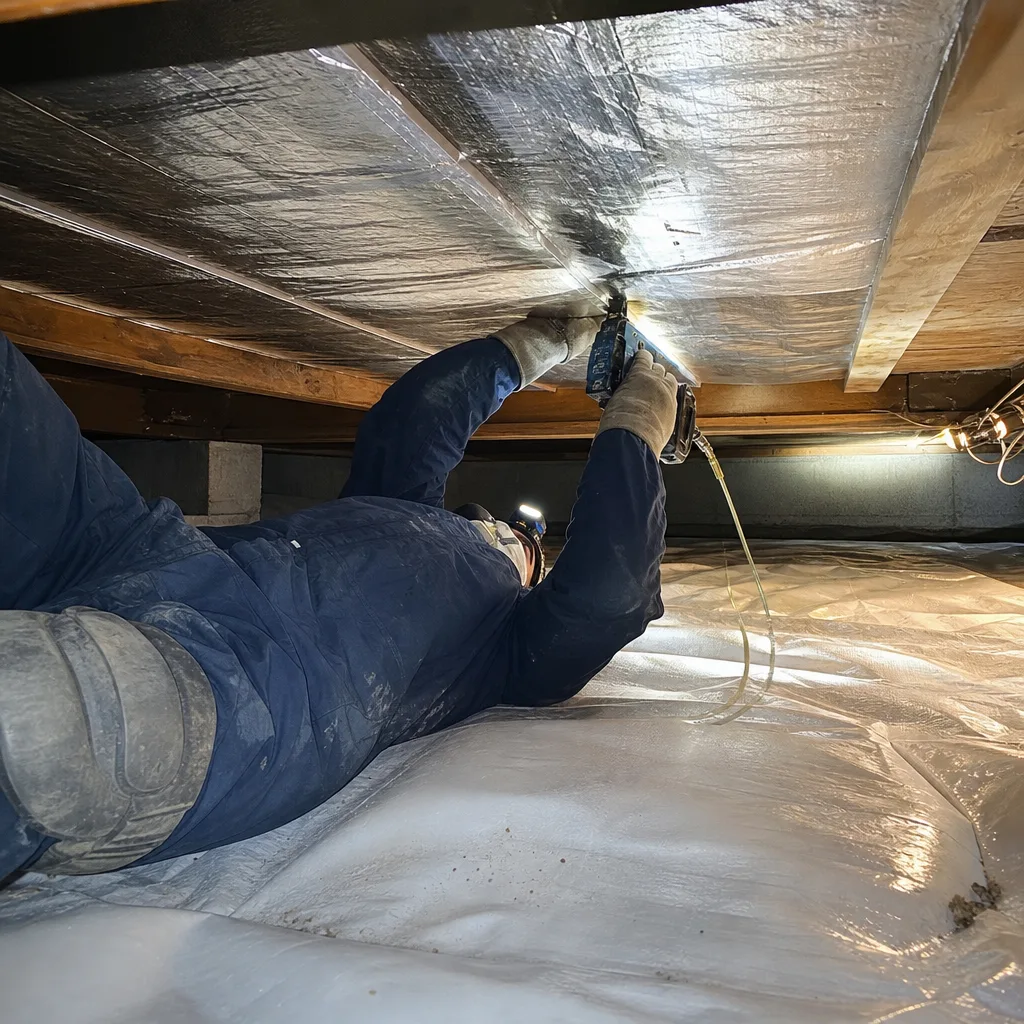
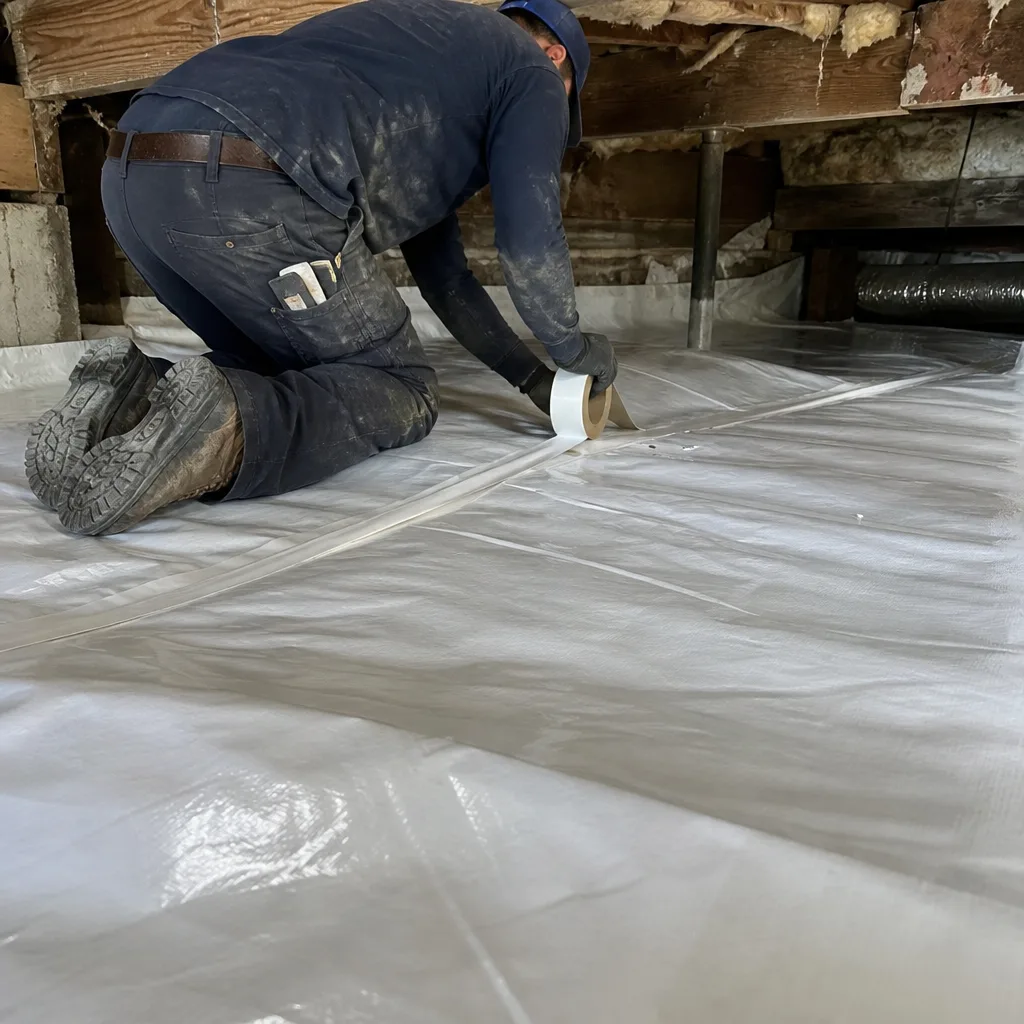
A Crawl Space Vapor Barrier is a polyethylene sheet, typically 6-mil to 20-mil thickness, that blocks soil moisture from evaporating into your crawl space. In Whittier, we install vapor barriers on bare earth or over gravel, with all seams overlapped 12 inches and sealed with pressure-sensitive tape, and the barrier extended 6 inches up foundation walls to create a continuous seal. You need this when your crawl space floor is dirt or thin gravel, when you smell mustiness in first-floor rooms during winter rains, or when your hardwood floors cup seasonally. At Topside Attic Insulation Whittier, we use reinforced polyethylene rated for puncture resistance because Whittier’s clay soil shifts and can tear standard 6-mil sheeting within two years.
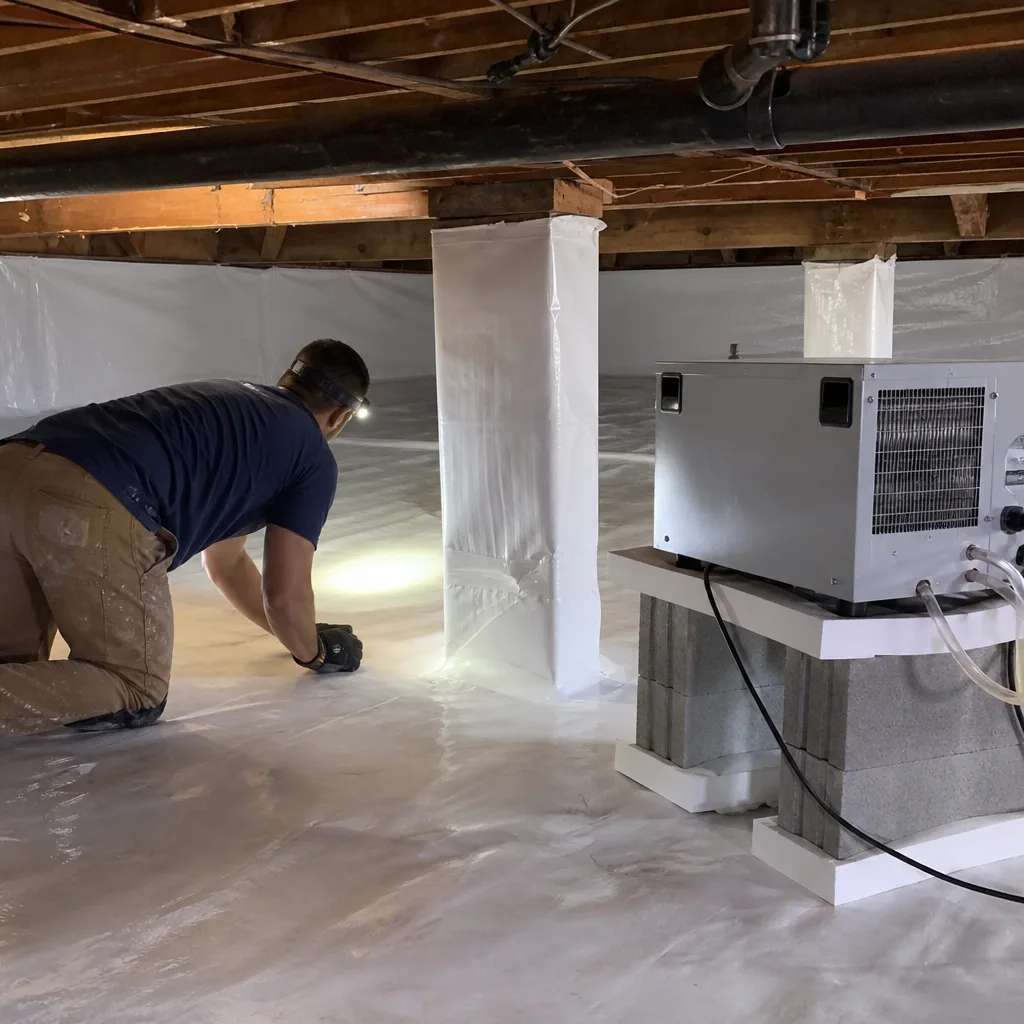
Crawl Space Encapsulation
Encapsulation is the complete sealing of your crawl space: vapor barrier across the floor and up walls, sealed foundation vents, a dehumidifier or conditioning supply, and often rigid foam insulation on walls. This converts a vented crawl space into a conditioned, semi-conditioned, or closed space that no longer exchanges air with the outside. You need encapsulation when you have chronic moisture, mold remediation has already been required, or you’re converting the space to storage use. Our Whittier crews seal all vent openings with rigid foam board and exterior-grade sealant, then install a Santa Fe or AprilAire dehumidifier sized to the cubic footage of your crawl space, with a condensate pump discharging to daylight or a plumbing drain.
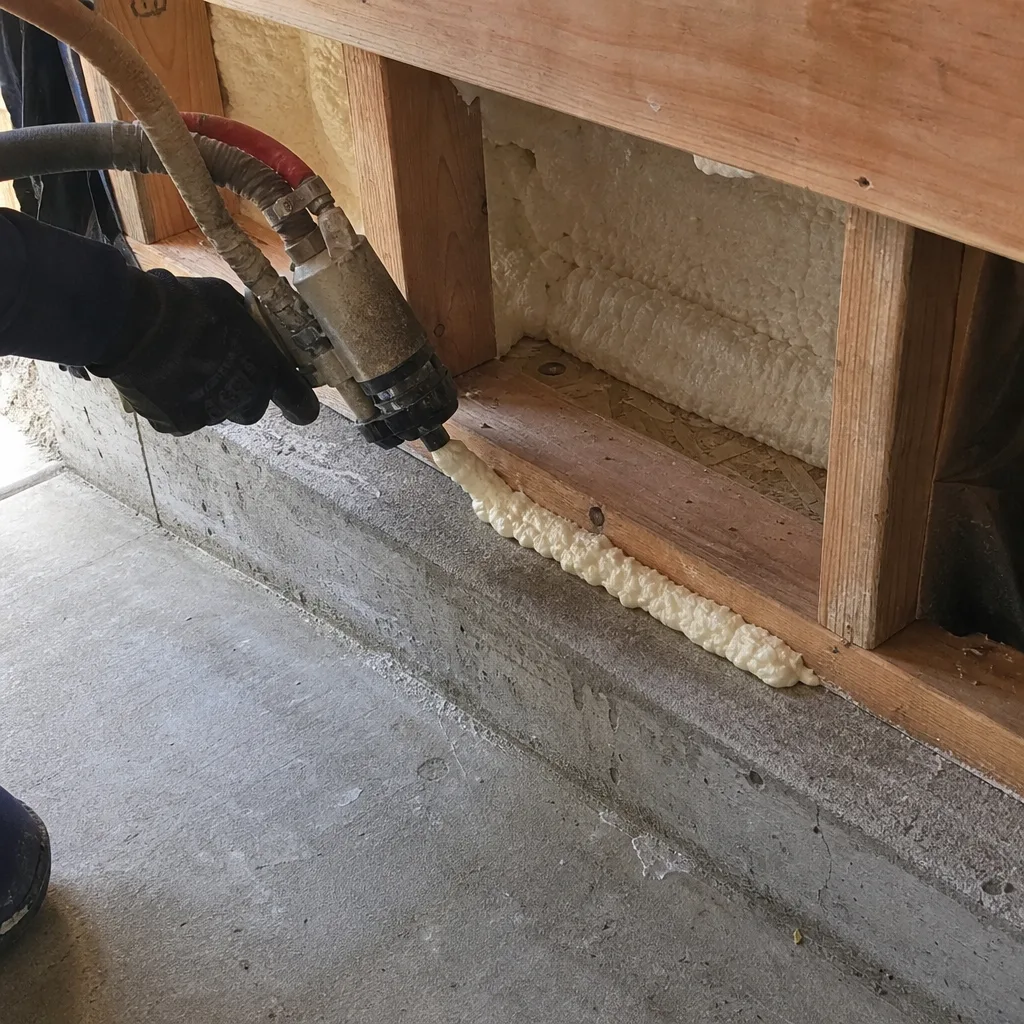
Crawl Space Insulation
Crawl Space Insulation in an encapsulated space typically means rigid foam board on foundation walls, or in vented spaces, fiberglass batts between floor joists. The critical detail is placement: in a conditioned crawl space, insulation belongs on the walls, not the floor, so your ductwork and plumbing stay within the thermal envelope. You need to reconsider your crawl space insulation when batts are falling, when pipes freeze in winter, or when your HVAC ducts sweat in summer. We use Rockwool Comfortboard or Knauf EPS rigid foam for wall applications in Whittier, and we never install new insulation over unsealed air leaks, a standard that has cost us jobs but prevented callbacks.
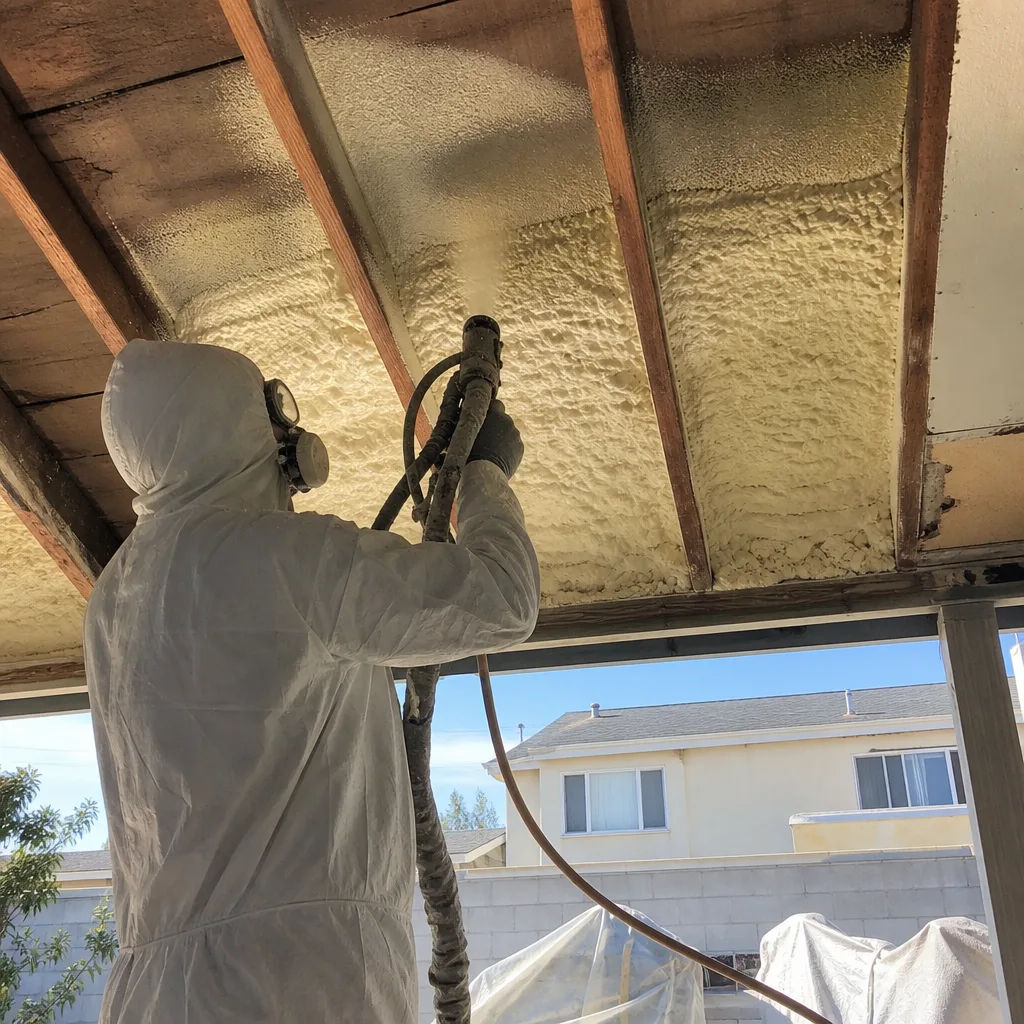
Crawl Space Moisture Control
Moisture control is the active management of relative humidity through source control, dehumidification, and sometimes positive-pressure ventilation. In Whittier, the primary sources are soil evaporation, foundation wall seepage from seasonal rains, and duct leakage that pulls humid outside air into the space. You need dedicated moisture control when relative humidity consistently exceeds 65%, when mold appears on joists or insulation, or when your indoor humidity rises despite HVAC operation. Our crews install digital hygrometers with remote displays so you can verify performance without entering the crawl space, and we specify dehumidifier capacity using ACCA Manual S load calculations, not rules of thumb.
Crawl Space Cleanout
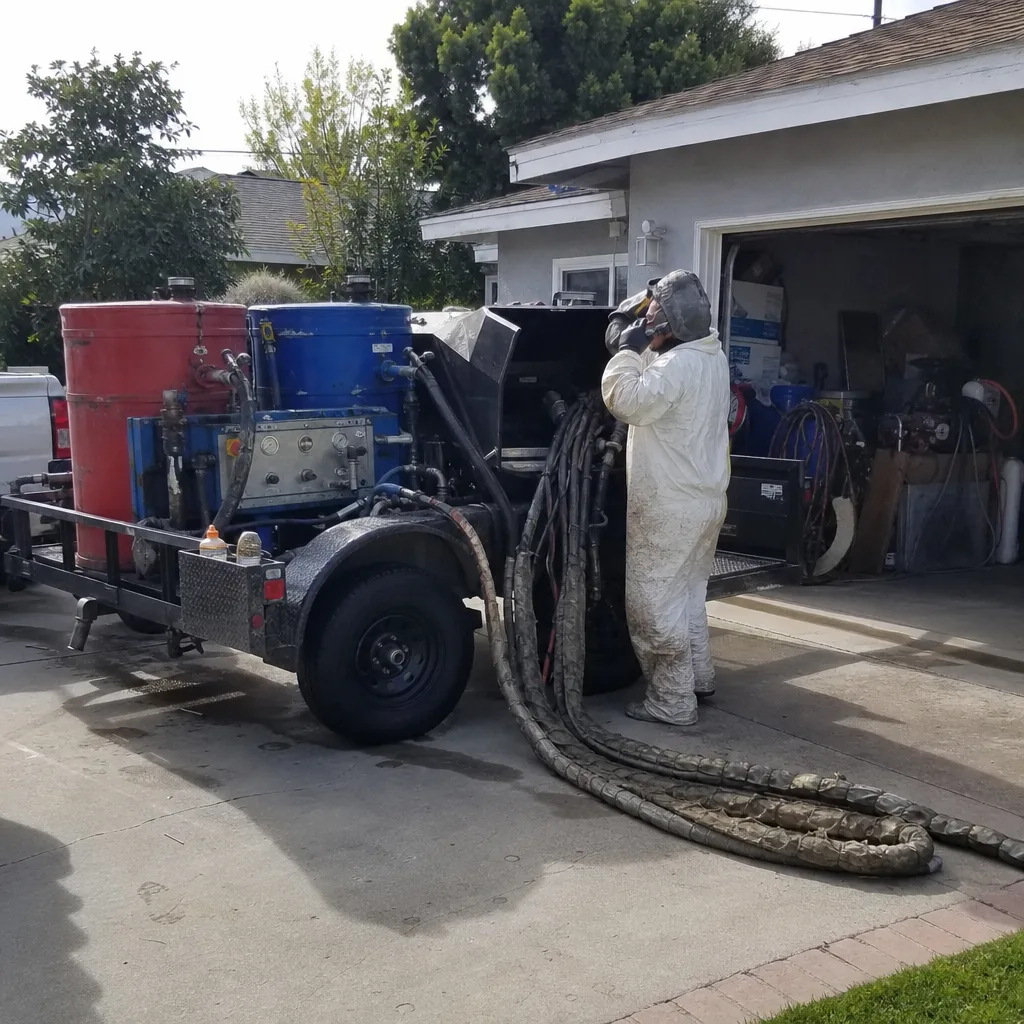
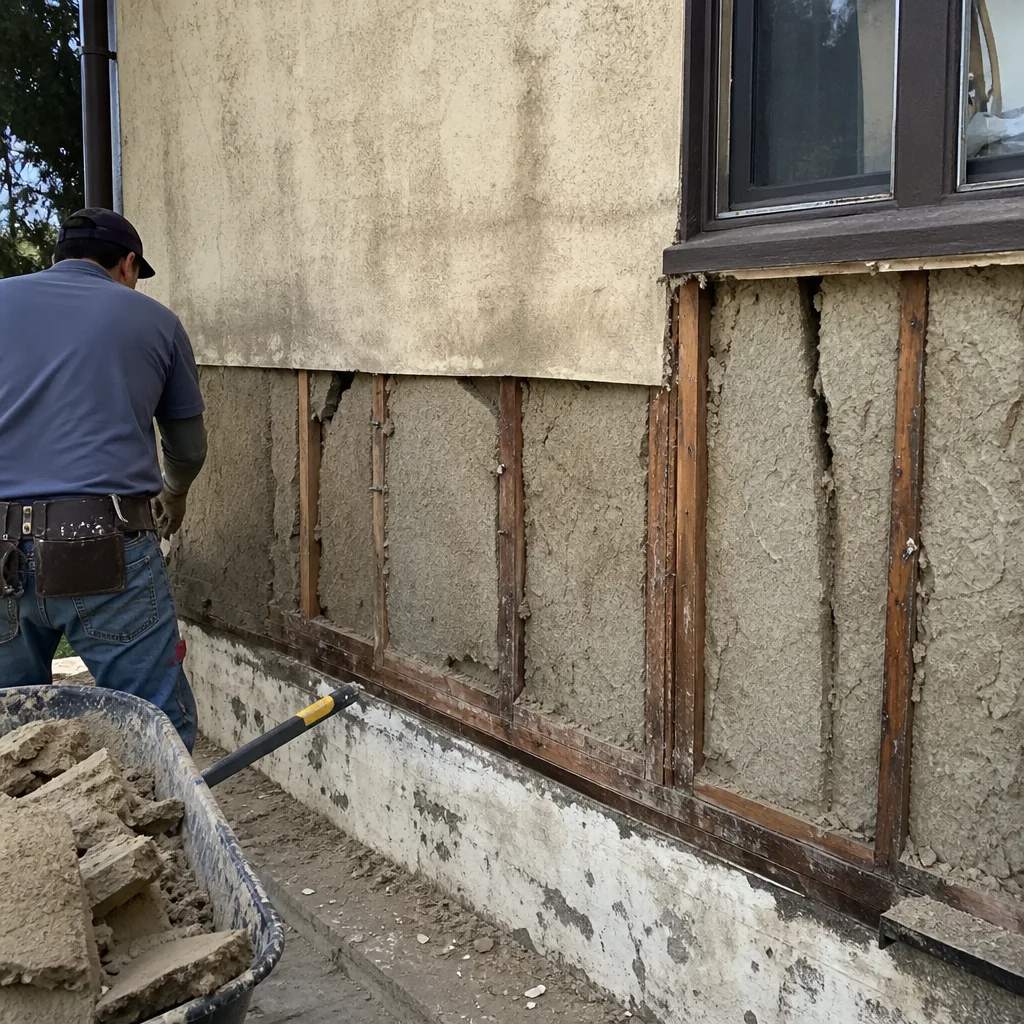
Cleanout is the removal of old insulation, debris, rodent droppings, and contaminated vapor barriers before new work begins. This is not demolition; it’s controlled removal with HEPA filtration, proper PPE, and disposal documentation. You need a cleanout when existing insulation is water-stained, when there’s evidence of rodent activity, or when a previous vapor barrier installation failed and left layered, torn polyethylene. Our Whittier crews use negative-air machines during cleanout, bag removed materials on-site, and photograph the bare space before any new materials enter, so you have a documented baseline. The cleanout scope is written into your price before work starts, never added as a surprise.
What happens when you call
- 1
A real person answersNo phone trees - you reach a local pro.
- 2
You get an upfront price rangeHonest numbers before anyone is dispatched.
- 3
A background-checked tech heads outLicensed & insured, dispatched right away.
- 4
You approve before work beginsNothing starts until you say go.
Brands We Service for Crawl Space Encapsulation & Vapor Barrier
We source materials from Knauf, Rockwool, CertainTeed, Icynene, and other manufacturers specified for below-grade and high-moisture applications. Knauf’s EcoSeal and Jet Stream products appear in our air-sealing phase when we’re closing penetrations before encapsulation, and we’ve found their acrylic latex sealant performs consistently on Whittier’s older concrete foundations that have minor spalling. Rockwool Comfortboard 80 is our default for foundation wall insulation in encapsulated crawl spaces; its hydrophobic properties and dimensional stability matter in spaces where seasonal humidity swings would degrade XPS or EPS over time.
We don’t carry proprietary product lines or exclusive brand agreements. If your home already has CertainTeed membrane products or Icynene spray foam from a previous contractor, we work with what’s there, document its condition, and specify repairs or extensions that match the existing system. Whether you have Knauf, Rockwool, CertainTeed, Icynene, or any other make, we can evaluate it, repair it, or replace it with a written scope and written warranty before anyone lifts a tool.
 Before
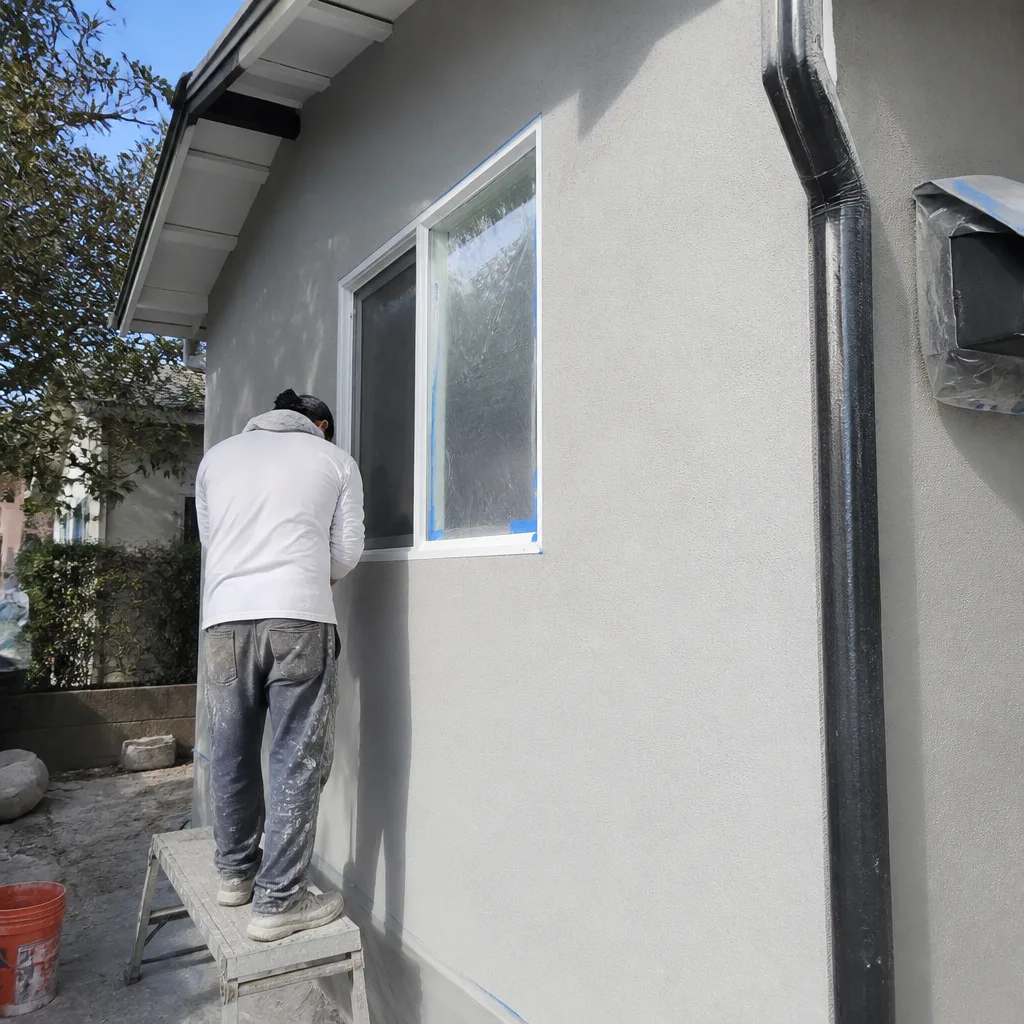 After
AfterSigns You Need Crawl Space Encapsulation & Vapor Barrier Right Now
- Musty odors in first-floor rooms that worsen after rain. This indicates moisture is evaporating from your crawl space and migrating through the floor assembly into conditioned space. In Whittier’s older neighborhoods near the Greenway Trail, we’ve tracked this pattern to failed or missing vapor barriers combined with clay soil that holds water for weeks after a storm. The smell is mold metabolites; by the time you notice it, colonies are established on joists or subflooring.
- Cupping or buckling hardwood floors, especially in winter. Wood absorbs moisture from below and expands across the grain, creating ridges between boards. This is common in Whittier homes with original oak or maple flooring installed directly over unconditioned crawl spaces. A vapor barrier alone won’t reverse cupping, but encapsulation with dehumidification stabilizes moisture content and prevents further damage.
- Fiberglass insulation falling from between floor joists. Saturated fiberglass batts lose structural integrity and detach from staples or wire supports. If you shine a flashlight into your crawl space and see pink or yellow batts dangling or piled on the ground, they’re not insulating anything. We’ve removed hundreds of pounds of failed fiberglass from Whittier crawl spaces, particularly in homes near the 605 corridor built in the 1960s and 70s.
- HVAC ducts sweating or rusting in the crawl space. When humid outside air enters a cool crawl space, metal ductwork drops below the dew point and condenses moisture. This rusts fittings, degrades flex duct outer wraps, and can introduce mold spores into your supply air. Encapsulation raises the crawl space temperature and lowers relative humidity, eliminating the conditions that cause sweating.
- Increased energy bills without thermostat changes. An unsealed crawl space acts as a thermal bypass: in summer, your cooled air leaks down through penetrations; in winter, cold air rises through the floor. The blower-door test, a pressurization reading that shows in one number how much air your building envelope is losing, often reveals crawl spaces as the largest single leakage path in Whittier homes. We’ve seen reductions of 800-1,500 CFM50 from crawl space sealing alone.
Our Crawl Space Encapsulation & Vapor Barrier Process - Step by Step
- 1
Site evaluation and moisture assessment. We arrive with a written appointment time and a text when the technician is en route. In your crawl space, we measure relative humidity at multiple points, photograph existing conditions, and identify moisture sources: foundation cracks, grade problems, downspout discharge, or duct leakage. For Whittier homes, we pay particular attention to perimeter drainage because the clay soil doesn’t percolate water quickly.
- 2
Written scope and written price before any work starts. Under Haven Standard Clause 1, you receive a flat price, detailed scope, and written warranty before anyone lifts a tool. The scope specifies materials by brand and thickness, seam overlap dimensions, dehumidifier model and capacity, and the blower-door target if air sealing is included. We also offer a Free Second Opinion on any written estimate from another contractor; bring us their scope and we’ll read it with you.
- 3
Cleanout and preparation. If existing insulation, debris, or failed vapor barriers need removal, we complete this with negative-air machines and HEPA filtration. We photograph the bare space and take moisture readings on exposed wood. In Whittier, we sometimes find old pest control treatments or asbestos-containing duct tape in pre-1980 homes; if we do, we stop and specify abatement by a licensed specialist, documented in writing.
- 4
Air sealing, then encapsulation or vapor barrier installation. We seal first, then insulate, in that order. Foundation vents are closed with rigid foam and exterior sealant; penetrations for plumbing, wiring, and ducts are sealed with appropriate materials; and the vapor barrier or full encapsulation system is installed with documented overlap and fastening. For full encapsulation, we install the dehumidifier, test condensate pump operation, and set the humidistat to 55% relative humidity.
- 5
Documentation and verification. Every job closes with a Documented Photo Record: before, during, and after images delivered digitally. On jobs with air sealing, we provide before-and-after blower-door readings so you can verify the performance change. Your written warranty, dehumidifier manual, and maintenance schedule are delivered before the crew leaves. Under our 365-Day Done Right Promise, if humidity rises above the scoped level or seams fail, we return and make it right.
How Much Does Crawl Space Encapsulation & Vapor Barrier Cost in Whittier?
A standalone vapor barrier installation for a typical 1,200-square-foot Whittier crawl space runs $3,500-$5,500. Full encapsulation with wall insulation, sealed vents, and dehumidification for the same footprint typically ranges from $8,000-$12,000. These Crawl Space Encapsulation & Vapor Barrier pricing ranges are based on 2024-2025 jobs we’ve completed in Whittier neighborhoods from Friendly Hills to East Whittier; your written estimate will specify exact numbers for your crawl space dimensions and conditions.
Several factors move the price within these ranges. Access difficulty matters: a crawl space with 18 inches of clearance requires different labor and equipment than one with 4 feet of headroom. Existing moisture damage extends the scope if joist sistering or mold remediation is needed before encapsulation. The condition of your foundation walls affects whether we can apply rigid foam directly or need to address spalling or efflorescence first. And the dehumidifier specification depends on crawl space volume and whether we’re conditioning a connected basement area.
To avoid overpaying, get a written scope that specifies material thicknesses, seam overlap, and dehumidifier model. We’ve reviewed competitor estimates in Whittier that quoted “encapsulation” but specified 6-mil vapor barrier only, with no wall sealing and no mechanical dehumidification. That’s not encapsulation; it’s a vapor barrier, and the price should reflect the difference. Our written scope breaks out each component so you can compare line items.
Your free estimate includes the crawl space evaluation, moisture readings, photographs, and a written price valid for 30 days. There’s no obligation to proceed, and if you have a competing written estimate, we’ll review it with you at no charge. Call (424) 349-7262 for an exact quote.
Crawl Space Encapsulation & Vapor Barrier Near Whittier - Our Service Area
We complete crawl space encapsulation and vapor barrier work throughout Whittier and the surrounding San Gabriel Valley communities, including Crawl Space Encapsulation & Vapor Barrier in South Whittier, Crawl Space Encapsulation & Vapor Barrier in Hacienda Heights, Pico Rivera, La Mirada, Norwalk, La Puente, Downey, Cerritos, El Monte, Bell Gardens, and Rosemead. Typical response time for a free estimate in Whittier proper is same-day or next-day; for outlying areas, we typically schedule within 48 hours. Our crews are familiar with the specific foundation types common in each city: post-war slab and raised-foundation homes in South Whittier, hillside construction with crawl space ventilation challenges in Hacienda Heights, and the mixed stock of 1950s-1980s construction throughout the service area.
Serving Whittier, CA - Our Local Coverage Area
We’re based in the Whittier area and know this community well. Use the map below to see our service coverage - if you’re nearby, we can almost certainly help.
Frequently Asked Questions - Crawl Space Encapsulation & Vapor Barrier in Whittier
Crawl space encapsulation is the complete sealing of your crawl space from outside air and soil moisture using a vapor barrier, sealed vents, and often a dehumidifier; a vapor barrier alone is the polyethylene ground cover that blocks soil evaporation without sealing the entire space. In Whittier’s climate, a vapor barrier alone often isn’t sufficient because humid air still enters through foundation vents and wall penetrations. We evaluate your specific moisture sources and specify the appropriate system, documented in writing before work starts. Call (424) 349-7262 for a free evaluation.
A vapor barrier installation in a typical Whittier crawl space takes one to two days; full encapsulation with wall insulation and dehumidification typically takes three to five days. Cleanout of existing failed materials adds one day. We specify the schedule in your written scope, and our crews arrive with all materials so there’s no waiting on deliveries. Your written price includes the complete timeline.
Vapor barrier installation typically runs $3,500-$5,500; full encapsulation ranges $8,000-$12,000 for a standard Whittier home. The exact price depends on square footage, access conditions, existing damage, and whether mechanical dehumidification is included. We provide a flat, written price before any work starts, and we offer a Free Second Opinion on any competing written estimate. Call (424) 349-7262 for your specific quote.
Yes, we source from and install Knauf, Rockwool, CertainTeed, and Icynene materials, and we evaluate existing installations from these manufacturers for repair or extension. We don’t have exclusive arrangements with any brand, so our specifications are based on your home’s conditions, not product availability. Your written scope names the specific materials for your job.
We answer calls 24/7 with a live person, and we prioritize water intrusion, sewage backup, or structural concerns in crawl spaces for same-day response when safety is at risk. For non-emergency encapsulation and vapor barrier work, we typically schedule evaluations within 24-48 hours. Call (424) 349-7262 and we’ll assess urgency and schedule accordingly.
All completed work is covered by our 365-Day Done Right Promise: if it’s not done right, we make it right. The specific warranty terms for materials and workmanship are written into your scope before work starts, so you know exactly what’s covered and for how long. This is Haven Standard practice, not a verbal assurance.
Clear access to the crawl space entrance, remove stored items from the space if possible, and ensure we can access electrical outlets for our equipment. We handle all protective covering of finished floors, and we’ll note any access limitations during your free evaluation. If you have pets, we’ll coordinate entry timing to minimize disruption. Your written scope includes any preparation steps specific to your home.
Schedule Your Crawl Space Encapsulation & Vapor Barrier Service in Whittier Today
Call (424) 349-7262 now and a live person will answer, 24/7, to schedule your free estimate. You’ll get a written price before any work starts, a Documented Photo Record when the crew finishes, and our 365-Day Done Right Promise on every job. For home envelope services throughout Whittier and the San Gabriel Valley, Topside Attic Insulation Whittier operates under The Haven Standard: flat price, written scope, written warranty, no exceptions.
Written by Wes Okafor, Owner at Topside Attic Insulation Whittier, serving Whittier since 2016.